Freedom of Religion or Belief under threat in Southeast Asia

New reports by The International Panel of Parliamentarians for Freedom of Religion or Belief (IPPFoRB) and Asia Centre show that religious freedom appears to be regressing in Southeast Asia.  Serious challenges have arisen in recent years across the region, such as in Brunei, Indonesia and Malaysia, according to the reports.

– The challenges are at least four-fold: rise of religious-based intolerance, discrimination against minorities and indigenous peoples, the securitization of Freedom of Religion or Belief in the context of fighting terrorism and the dire need to uphold international human rights standards in this overall context, says Dr. Robin Ramcharan of Asia Centre who coordinated the research on behalf of IPPFoRB.

“These reports provide a valuable resource for parliamentarians and civil society organisations across South East Asia. It gives them the tools to hold their Governments to account on their obligations and commitments to freedom of religion or belief,” says David Anderson, member of the IPPFoRB Steering Group.

Each of the 11 country reports clearly sets out the progress that has been made as well as the challenges still remaining. They are essential reading for all those wanting to engage in the Universal Periodic Review (UPR) process and more specifically in religious freedom monitoring and advocacy in South East Asia.

“I encourage ASEAN parliamentarians to use these expert reports to press their respective governments for the legislative and policy changes necessary to secure religious freedom for all,” Andersons adds.

The reports were launched in Bangkok October 7th, during a workshop with some 25 Members of Parliament from the ASEAN-countries, hosted by IPPFoRB and ASEAN Parliamentarians for Human Rights (APHR).


Here are the country profiles:

Brunei

Cambodia

Indonesia

Laos

Malaysia

Myanmar

Philippines

Singapore

Thailand

Timor Leste

Vietnam

Saudi Arabia: Official Hate Speech Targets Minorities

Some Saudi state clerics and institutions incite hatred and discrimination against religious minorities, including the country’s Shia Muslim minority, Human Rights Watch said in a report released this week.

The 62-page report, “‘They Are Not Our Brothers’: Hate Speech by Saudi Officials,” documents that Saudi Arabia has permitted government-appointed religious scholars and clerics to refer to religious minorities in derogatory terms or demonize them in official documents and religious rulings that influence government decision-making. In recent years, government clerics and others have used the internet and social media to demonize and incite hatred against Shia Muslims and others who do not conform to their views.

“Saudi Arabia has relentlessly promoted a reform narrative in recent years, yet it allows government-affiliated clerics and textbooks to openly demonize religious minorities such as Shia,” said Sarah Leah Whitson, Middle East director at Human Rights Watch. “This hate speech prolongs the systematic discrimination against the Shia minority and – at its worst – is employed by violent groups who attack them.”

Human Rights Watch found that the incitement, along with anti-Shia bias in the criminal justice system and the Education Ministry’s religion curriculum, is instrumental in enforcing discrimination against Saudi Shia citizens. Human Rights Watch recently documented derogatory references to other religious affiliations, including Judaism, Christianity, and Sufi Islam in the country’s religious education curriculum.

Government clerics, all of whom are Sunni, often refer to Shia as rafidha or rawafidh (rejectionists) and stigmatize their beliefs and practices. They have also condemned mixing and intermarriage. One member of Saudi Arabia’s Council of Senior Religious Scholars, the country’s highest religious body, responded in a public meeting to a question about Shia Muslims by stating that “they are not our brothers … rather they are brothers of Satan…”.

Such hate speech may have fatal consequences when armed groups such as the Islamic State, also known as ISIS, or Al-Qaeda use it to justify targeting Shia civilians. Since mid-2015, ISIS has attacked six Shia mosques and religious buildings in Saudi Arabia’s Eastern Province and Najran, killing more than 40 people. ISIS news releases claiming these attacks stated that the attackers were targeting “edifices of shirk,”(polytheism), and rafidha, terms used in Saudi religious education textbooks to target Shia.

Saudi Arabia’s former grand mufti, Abdulaziz Bin Baz, who died in 1999, condemned Shia in numerous religious rulings. Bin Baz’s body of fatwas and writings remain publicly available on the website of Saudi Arabia’s Permanent Committee for Islamic Research and Issuing Fatwas.

Some clerics use language that suggests Shia are part of a conspiracy against the state, a domestic fifth column for Iran, and disloyal by nature. The government also allows other clerics with enormous social media followings – some in the millions – and media outlets to stigmatize Shia with impunity.

Anti-Shia bias extends to the Saudi judicial system, which is controlled by the religious establishment and often subjects Shia to discriminatory treatment or arbitrarily criminalizes Shia religious practices. In 2015, for example, a Saudi court sentenced a Shia citizen to two months in jail and 60 lashes for hosting private Shia group prayers in his father’s home. In 2014, a Saudi Arabia court convicted a Sunni man of “sitting with Shia.”

The Saudi Ministry of Education religion curriculum al-tawhid, or (monotheism) which is taught at the primary, middle, and secondary education levels, uses veiled language to stigmatize Shia religious practices as shirk or ghulah (exaggeration). Saudi religious education textbooks direct these critiques to the Shia and Sufi practice of visiting graves and religious shrines and tawassul (intercession), to call on the prophet or his family members as intermediaries to God. The textbooks state that these practices, which both Sunni and Shia citizens understand as Shia, are grounds for removal from Islam, punished by being sent to hell for eternity.

International human rights law requires governments to prohibit “[a]ny advocacy of national, racial or religious hatred that constitutes incitement to discrimination, hostility or violence.” Implementation of this prohibition has been uneven and sometimes used as a pretext to restrict lawful speech or target minority groups. Any steps to counter hate speech should be carried out within overall guarantees of freedom of expression.

To address this problem, experts in recent years have proposed a test to establish whether any particular speech can be lawfully limited. Under this formula, the speech Human Rights Watch documented by Saudi religious scholars sometimes rises to the level of hate speech or incitement to hatred or discrimination. Other statements don’t cross that threshold, but authorities should publicly repudiate and counteract it. Given the influence and reach of these scholars, their statements advance a system of discrimination against Shia citizens.

Saudi authorities should order an immediate halt to hate speech by state-affiliated clerics and government agencies.

The United States Commission on International Religious Freedom (USCIRF) has repeatedly classified Saudi Arabia as a “country of particular concern” – its harshest designation for countries that violate religious freedom. The 1998 International Religious Freedom Act allows the president to issue a waiver if it would “further the purposes” of the act or if “the important national interest of the United States requires the exercise of such waiver authority.” US presidents have issued such waivers for Saudi Arabia since 2006.

The US government should rescind the waiver and work with Saudi authorities to end incitement to hatred or discrimination against Shia and Sufi citizens, as well as other religions. The US should also press for removal of all criticism and stigmatization of Shia and Sufi religious practices, as well as practices of other religions, from the Saudi religion education curriculum.

“Despite Saudi Arabia’s poor record on religious freedom, the US has shielded Saudi Arabia from possible sanctions under US law,” Whitson said. “The US government should apply its own laws to hold its Saudi ally accountable.”

Source: Human Rights Watch

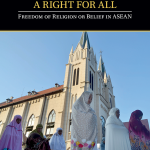
A Right for All: Freedom of Religion or Belief in ASEAN

A new report from USCIRF emphasises the strategic importance of robust U.S. engagement on these issues with ASEAN as a collective and the 10 individual Member States: Brunei, Burma, Cambodia, Indonesia, Laos, Malaysia, the Philippines, Singapore, Thailand, and Vietnam.

The countries of Southeast Asia—bound together in the regional bloc known as the Association of Southeast Asian Nations (ASEAN)—are vastly diverse in their geographic size, governing systems, economies, and cultural and societal heterogeneity.

Also, each country is different in its degree of adherence to international human rights standards and its protection (or denial) of the freedoms therein, including the universal freedom of religion or belief.

In ASEAN’s 50th year, the U.S. Commission on International Religious Freedom (USCIRF) presents A Right for All: Freedom of Religion or Belief in ASEAN. The report documents ASEAN’s and the Member States’ approaches to this fundamental right, underscores the religious freedom-related chal­lenges in the region that transcend country borders, and emphasizes the strategic importance of robust U.S. engagement on these issues.

ASEAN’s approach to human rights often has been diminished by two competing interests: the Member States’ desire to integrate as a bloc and their deeply embedded reliance on independence and non-interference in one another’s affairs. In an increasingly interdependent, interconnected com­munity such as ASEAN, it is vital that governments and societies recognize—both within and across their borders—when the right to freedom of religion or belief is being abused and take steps to protect indi­viduals and groups whose rights are violated.

ASEAN and the individual Member States have an inconsistent record protecting and promoting human rights, and even more so with respect to freedom of religion or belief. Often, ASEAN countries have lacked cohesion and a strong will to act in response to seri­ous violations within their own borders and among the other members of the bloc.

Key findings about freedom of religion or belief in the 10 Member States include:

Brunei: The identification of the state and the public sphere with Islam in the person of the sul­tan sometimes challenges the religious freedom of non-Muslims or heterodox Muslim residents, whose communities may be banned or ruled by Shari’ah despite their affiliation.

Burma: While the year 2016 marked a historic and peaceful transition of government in Burma, outright impunity for abuses committed by the military and some non-state actors and the depth of the humanitarian crisis for displaced persons continue to drive the ill treatment of religious and ethnic groups.

Cambodia: Cambodia has few internal challenges with freedom of religion or belief, but could do more to uphold its human rights commitments, particularly under the Refugee Convention.

Indonesia: The Indonesian government often intervenes when religious freedom abuses arise, particularly if they involve violence. Non-Mus­lims and non-Sunni Muslims, however, endure ongoing difficulties obtaining official permission to build houses of worship, experience vandalism at houses of worship, and are subject to discrim­ination as well as sometimes violent protests that interfere with their ability to practice their faith.

Laos: In some areas of Laos, local authorities harass and discriminate against religious and ethnic minorities, and pervasive government control and onerous regulations impede freedom of religion or belief.

Malaysia: Malaysia’s entrenched system of government advantages the ruling party and theSunni Muslim Malay majority at the expense ofreligious and ethnic minorities, often through government-directed crackdowns on religious activity, expression, or dissent.

Philippines: With the strong influence of the Catholic Church, as well as the needs of other religious groups, the Philippines grapples with the separation of church and state, and also with the violence that continues to dominate relations with Muslims on the island of Mindanao.

Singapore: Singapore’s history of intercommunal violence informs its current policies, which prior­itize harmony between the country’s major reli­gions, sometimes at a cost to freedom of expression and the rights of smaller religious communities.

Thailand: The primacy of Buddhism is most problematic to freedom of religion or belief in the largely Malay Muslim southern provinces, where ongoing Buddhist-Muslim tensions contribute to a growing sense of nationwide religious-based nationalism.

Vietnam: Vietnam has made progress to improve religious freedom conditions, but severe viola­tions continue, especially against ethnic minority communities in rural areas of some provinces.

Challenges

The 10 Member States experience a number of com­mon and crosscutting challenges that underscore how violations of freedom of religion or belief occur across borders and within the context of broader and related regional trends. ASEAN should acknowledge and work to address the following problems: protection gaps for refugees, asylum seekers, trafficked persons, and those internally displaced; the use of anti-extremism and antiterrorism laws as a means to limit religious communities’ legitimate activities, stifle peaceful dissent, and imprison people; the use of nationalistic sentiment by individuals and groups who manipulate religion to the detriment of other religious and ethnic groups; arrests, detentions, and imprisonments based on religious belief, practice, or activities; and the exis­tence and implementation of blasphemy laws that are used to incite or inspire violence, generally by mem­bers of a majority religious group against those from a religious minority community.

Conclusion

ASEAN and the individual Member States must understand that the global community of nations is grounded in the premise that everyone observe a rules-based international order, which includes the responsibility to uphold freedom of religion or belief and related human rights. This means ASEAN and the Member States should take steps to:

adhere to international human rights instruments; welcome visits by international human rights monitors; ensure unfettered access by aid workers, indepen­dent media, and other international stakeholders to vulnerable populations and conflict areas; repeal blasphemy and related laws; release prisoners of conscience; and strengthen interfaith relationships.

Read the full report

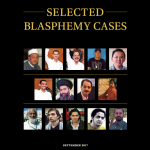
Selected Blasphemy Cases – new report from USCIRF

Blasphemy laws are a global concern, present in all of the world’s regions. These laws, which punish expression or acts deemed blasphemous, defamatory of religions, or contemptuous of religion or religious symbols, figures, or feelings, have punishments ranging from fines to imprisonment and death. They also embolden vigilante groups who mete out their own extrajudicial “justice,” including killings, often with state impunity.

According to their proponents, blasphemy laws promote religious harmony and public order. Unfortunately, they do the opposite, often leading to instability and violence in countries around the world, with negative consequences for individuals, communities and nations. USCIRF believes that all human beings should be accorded dignity, respect, and freedom no matter their convictions, and the Commission affirms the right of private individuals and groups to peacefully oppose expression they consider to be blasphemous.

However, while it is legitimate to speak out against blasphemy, the Commission maintains that government has no role in policing blasphemy and that laws against blasphemy are detrimental to religious freedom and related human rights and are deeply problematic because they:

• Violate international human rights standards;

• Often are vaguely worded, and few specify or limit the forum in which blasphemy can occur for purposes of punishment;

• Are inconsistent with the approach agreed to in UN Human Rights Council Resolution 16/18;

• Inappropriately make governments the arbiters of ultimate truths or religious doctrines;

• Are used disproportionately against religious minorities or dissenting members of the majority community and are ripe for abuse;

• Often carry draconian penalties; and

• Embolden religious extremists to commit acts of violence.

USCIRF urges the repeal of blasphemy laws worldwide. We must continue to confront blasphemy laws and the horrific acts they unleash as an assault on human rights and dignity and press offending nations to repeal these laws, protect those who have been accused, and release people arrested, charged, imprisoned, and sentenced to death for blasphemy.

The Commission believes that when discussing blasphemy, it is important to focus on the real people impacted, and not just the laws themselves. The individuals highlighted here are only a sample of those who have been negatively impacted by blasphemy laws. For some we have pictures, but for many we do not. Read their stories, the charges against them, and their sentences to better understand the devastating impact of these laws and the need for repeal.

Read the report


New report on communal violence in central Nigeria

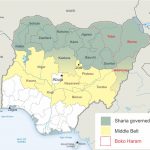
Map: World Watch Monitor

Herders against Farmers: Nigeria’s Expanding Deadly Conflict is the title of a new report from the International Crisis Group.

Propelled by desertification, insecurity and the loss of grazing land to expanding settlements, the southward migration of Nigeria’s herders is causing violent competition over land with local farmers. To prevent the crisis from escalating, the government should strengthen security for herders and farmers, implement conflict resolution mechanisms and establish grazing reserves.

World Watch Monitor reports that In Nigeria, it isn’t only the northeast regions, stronghold of the radical Islamist sect Boko Haram, that have witnessed severe violence. The Middle Belt of the country, which straddles the divide between the largely Muslim north and the majority-Christian south, is also the scene of ever-continuing violence between settled farmers, who are mostly Christian, and mainly Muslim Hausa-Fulani herdsmen.

Many experts on Nigeria now believe that the violence across the Middle Belt, which World Watch Monitor has reported at length, has been responsible for more deaths than Boko Haram.

Yet to date, the response to the crisis at both federal and state levels has been poor, says the International Crisis Group (ICG) in a new report, published on 19 September 2017. ‘Herders against Farmers: Nigeria’s Expanding Deadly Conflict’ highlights several initiatives at various levels which, it says, have failed to curb the violence.

The Executive Summary of the report

Violent conflicts between nomadic herders from northern Nigeria and sedentary agrarian communities in the central and southern zones have escalated in recent years and are spreading southward, threatening the country’s security and stability. With an estimated death toll of approximately 2,500 people in 2016, these clashes are becoming as potentially dangerous as the Boko Haram insurgency in the north east. Yet to date, response to the crisis at both the federal and state levels has been poor. President Muhammadu Buhari’s administration and affected state governments need to work together, taking immediate steps to shore up security for herders and famers, strengthening conflict-resolution mechanisms and initiating longer-term efforts to reform livestock management practices, address negative environmental trends and curb cross-border movements of both cattle rustlers and armed herders.

Familiar problems – relating to land and water use, obstruction of traditional migration routes, livestock theft and crop damage – tend to trigger these disputes. But their roots run deeper. Drought and desertification have degraded pastures, dried up many natural water sources across Nigeria’s far-northern Sahelian belt and forced large numbers of herders to migrate south in search of grassland and water for their herds. Insecurity in many northern states (a consequence of the Boko Haram insurgency in the north east and of less-well-reported rural banditry and cattle rustling in the north-west and north-central zones) also prompts increasing numbers of herdsmen to migrate south. The growth of human settlements, expansion of public infrastructure and acquisition of land by large-scale farmers and other private commercial interests, have deprived herders of grazing reserves designated by the post-independence government of the former Northern region (now split into nineteen states).

Herders migrating into the savannah and rain forests of the central and southern states are moving into regions where high population growth over the last four decades has heightened pressure on farmland, increasing the frequency of disputes over crop damage, water pollution and cattle theft. In the absence of mutually accepted mediation mechanisms, these disagreement increasingly turn violent.

The spread of conflict into southern states is aggravating already fragile relations among the country’s major regional, ethnic and religious groups. The south’s majority Christian communities resent the influx of predominantly Muslim herders, portrayed in some narratives as an ‘‘Islamisation force’’. Herders are mostly Fulani, lending an ethnic dimension to strife. Insofar as the Fulani spread across many West and Central African countries, any major confrontation between them and other Nigerian groups could have regional repercussions, drawing in fighters from neighbouring countries.

As these conflicts increase in frequency, intensity and geographical scope, so does their humanitarian and economic toll. The increasing availability of illicit firearms, both locally-produced and smuggled in from outside, worsens the bloodshed. Over the past five years, thousands have been killed; precise tallies are unavailable, but a survey of open source reports suggests fatalities may have reached an annual average of more than 2,000 from 2011 to 2016, for some years exceeding the toll from the Boko Haram insurgency. Tens of thousands have been forcibly displaced, with properties, crops and livestock worth billions of naira destroyed, at great cost to local and state economies.

The reaction from Nigeria’s federal and state authorities, so far, has been wanting. Aside from the recent push against Boko Haram and military operations against cattle rustling, they have done little else to address rural insecurity in the north. Federal security and law enforcement agencies have established neither early-warning nor rapid response mechanisms; they have not arrested and prosecuted perpetrators of violence or offered redress to victims. Until recently, officials have paid little if any attention to improving livestock management practices to minimise friction with agrarian communities. State governments’ responses overall have been short-sighted; most have failed to encourage community-level dialogue. As a result, both herders and farmers are taking matters into their own hands, further aggravating conflicts.

President Buhari’s government, which is increasingly viewed with misgivings by many in central and southern states, should make it a priority to take firm and transparent steps to ensure better protection for both herders and farmers. Affected state governments also should better coordinate with federal authorities to reduce risks of violence. The federal government’s failure to define a clear and coherent political approach to resolving the crisis, or even acknowledge its scope, is putting Nigerian citizens at risk. Federal and state authorities should implement five steps.

In the short term, these include:

  • Strengthen security arrangements for herders and farming communities especially in the north-central zone: this will require that governments and security agencies sustain campaigns against cattle rustling and rural banditry; improve early-warning systems; maintain operational readiness of rural-based police and other security units; encourage communication and collaboration with local authorities; and tighten control of production, circulation and possession of illicit firearms and ammunition, especially automatic rifles, including by strengthening cross-border cooperation with neighbouring countries’ security forces;
  • Establish or strengthen conflict mediation, resolution, reconciliation and peacebuilding mechanisms: this should be done at state and local government levels, and also within rural communities particularly in areas that have been most affected by conflict;
  • Establish grazing reserves in consenting states and improve livestock production and management in order to minimise contacts and friction between herders and farmers: this will entail developing grazing reserves in the ten northern states where governments have already earmarked lands for this purpose; formulating and implementing the ten-year National Ranch Development Plan proposed by a stakeholders forum facilitated by the UN Food and Agriculture Organization (FAO) in April 2017; and encouraging livestock producers’ buy-in through easier access to credit from financial institutions.

In the longer term, federal and state governments should consider the following:

  • Address environmental factors that are driving herders’ migration to the south: this will require stepping up implementation of programs under the Great Green Wall Initiative for the Sahara and the Sahel, a trans-African project designed to restore drought-and-desert degraded environments and livelihoods including in Nigeria’s far northern belt; and developing strategies for mitigating climate change impact in the far northern states;
  • Coordinate with neighbours to stem cross-border movement of non-Nigerian armed herders: Nigeria should work with Cameroon, Chad and Niger (the Lake Chad basin countries) to regulate movements across borders, particularly of cattle rustlers, armed herders and others that have been identified as aggravating internal tension and insecurity in Nigeria.

Although some of the proposed steps will not yield immediate results, Nigeria’s federal and state authorities, as well as other relevant actors, need to take remedial actions with a greater sense of urgency. Failure to respond, decisively and effectively, would allow Nigeria to continue sliding into increasingly deadly conflict.

World Watch Monitor concludes:

The report backs up the views of analysts including Professor Yusufu Turaki, Director of the Centre for the Study of Religion, Church and Society at Jos ECWA Theological Seminary in Nigeria, who spoke to World Watch Monitor recently.

“They [the authorities] will start something as if they are serious about it, but after a few weeks the thing sinks and nothing happens again,” he said. “We have seen a lot of that. This for me has become the culture: the culture of making ripples, making a noise and fooling the people into thinking that you are doing something, but actually not meaning it.”

The Catholic Bishop, Joseph Bagobiri, from the Diocese of Kafanchan, southern Kaduna, who has counted at least 800 deaths between 2011 and the end of 2016, accused the government of siding with the herdsmen, to the disappointment of the majority of southern Kaduna’s indigenes and Christians.

“[Buhari] unabashedly takes sides with the armed herdsmen, his kinsmen, thereby failing in his responsibility as a true statesman, becoming therefore a biased umpire who blames and criminalises southern Kaduna victims as the cause of the mayhem,” he said after a Fulani attack on Easter Saturday.

Meanwhile, a 2016 report from the World Watch Research unit of Open Doors, said: “The administration of President Buhari has been very slow to recognise the severity of the problem and come up with a plan to address it. While [he] made it a priority for the Nigerian armed forces to defeat Boko Haram in northern Nigeria and demanded that this be accomplished in a relatively short period of time, he has paid little attention, in comparison, to the situation in the Middle Belt.”

Burma and the Rohingyas – in Parliament and global comment

URGENT QUESTION
Yasmin Qureshi 5 Sept To ask the Secretary of State for Foreign and Commonwealth Affairs if he will make a statement on the recent violence in the Rakhine state of Myanmar full transcript below

PRIVATE NOTICE QUESTION
The Bishop of St Albans 5 Sept To ask Her Majesty’s Government what it is doing to respond to the crisis facing the Rohingya people in Myanmar – full transcript below

DEBATE: INTERNATIONAL DAY OF DEMOCRACY Jim Shannon 6 Sept

WRITTEN QUESTIONS asked by Jim Cunningham; Lord Ahmed; Stephen Kerr; Lord Carlile; Lyn Brown; Layla Moran; Bishop of Coventry; Marquess of Lothian; Catherine West; Lord Alton; 

EARLY DAY MOTION
255    FLIGHT OF ROHINGYA REFUGEES FROM BURMA
240    PERSECUTION OF ROHINGYAS

THE TIMES Aung San Suu Kyi says persecution of Rohingya is fake news
DHAKA TRIBUNE  Modi mum on Rohingya persecution during meeting with Suu Kyi
UK BUSINESS INSIDER, VIA REUTERS Myanmar working with China, Russia, to avoid UN rebuke over persecution of Muslims
TRTWORLD Persecution of Muslims in Myanmar is countrywide says rights group
REUTERS Crowded Bangladesh revives plan to settle Rohingya on isolated island

Violence in Rakhine State

House of Commons 5 September 2017​

Yasmin Qureshi (Bolton South East) (Lab)

(Urgent Question): To ask the Secretary of State for Foreign and Commonwealth Affairs if he will make a statement on the recent violence in the Rakhine state of Myanmar.

The Minister for Asia and the Pacific (Mark Field)

I am grateful to the hon. Member for Bolton South East (Yasmin Qureshi) for raising this matter and giving the Government the opportunity to detail the significant action we have taken. Overnight on 24 August, members of the Rohingya militant group the Arakan Rohingya Salvation Army—the ARSA—attacked numerous police posts in northern Rakhine. Even in the days prior to that escalation of hostilities, our embassy in Rangoon had been monitoring the situation very carefully, including travelling to the Rakhine state capital, Sittwe. We understand that tens of thousands of people have crossed the border into Bangladesh.

Kofi Annan’s Rakhine advisory commission report was published immediately prior to the attacks. The Minister of State, Department for International Development, my right hon. Friend the Member for North East Bedfordshire (Alistair Burt), and I issued a joint statement at that time welcoming the report, but also condemning the attacks by Rohingya militants on Burmese security forces. At the same time, the UK strongly urged the security forces in Rakhine to show restraint and called for all parties to de-escalate the tensions.

On 30 August, at the UK’s request, the UN Security Council discussed the situation in Rakhine. Our UK representative in New York led the condemnation of attacks by Rohingya militants, and urged a measured and proportionate response from the security forces. We also called for humanitarian aid to reach those in need as soon as possible and offered UK support for the Rakhine advisory commission, encouraging the international community to do likewise. The recent violence serves to underline how important it is to address the long-term issues in Rakhine and deliver for all communities; it should not deflect the Burmese Government from the key task of addressing the underlying issues that have caused people to flee. As my right hon. Friend the Foreign Secretary has said, it is vital that the civilian Government of Burma receive the support of the Burmese military, and that Aung San Suu Kyi is not thwarted in her attempts to stabilise the situation.

Along with de-escalating the fighting, our immediate priority is how urgent food and medical assistance can be provided to displaced citizens from all communities. Our ambassador in Rangoon has rightly been lobbying the Burmese Government on that, and they have confirmed that they are trying to get humanitarian aid through to communities most in need. As many will know, that is being hampered by the security situation and by inter-communal tensions.

Our high commissioner in Dhaka, Bangladesh, has also discussed the increasingly acute humanitarian situation with the Government there, and I discussed the situation with the Bangladeshi high commissioner last week. I look forward to discussing these issues further tomorrow at a meeting arranged some weeks ago with my hon. Friend the Member for Sutton and Cheam (Paul Scully), the co-chair of the all-party group on Burma, as well as to paying a ministerial visit to Burma in the near future.

Yasmin Qureshi

Thank you for granting this urgent question, Mr Speaker. I am a little disappointed by the Minister’s response, as he started by suggesting that somehow the Rohingya Muslims and these people had caused this to occur. He must be aware that for a number of years there has been the systematic rape, murder, burning and beheading of people from the Rohingya community. If it is suggested that there may have been some attacks on the police stations, that is not a sufficient reason to attempt almost to explain away what the Burmese Government are now doing to these people. Everyone knows that for years now that the Government, the security forces and the Buddhist monks have been ransacking and killing people—murdering and raping women and children. This is only a climax to the brutality that the Burmese have been carrying out against these people.

Is the Minister aware that because of what has happened recently, many young children have been beheaded and civilians have been burned alive by the military forces? Is he aware that 120,000 Rohingya have fled for their lives to Bangladesh? Will he actually condemn this campaign of ethnic cleansing of the Rohingya Muslims? Is he aware that Human Rights Watch has satellite imagery showing the destruction of entire Rohingya villages, and that there are reports of people there being rounded up into huts and burned alive? Recent reports also show a massive cover-up by the soldiers who have carried out massacres of Rohingya, by gathering their bodies up and burning them.

This is one of the worst outbreaks of violence in decades, yet the international community is, in effect, remaining silent as we watch another Srebrenica and Rwanda unfold before our eyes. Does the Minister agree that the situation requires urgent intervention? What concrete action have the Government and the Prime Minister taken to date to deal with it? Is he aware that UN aid and monitors have not been allowed in? Will the Government make further representations to the UN Security Council about the ethnic cleansing now taking place? Can consideration be given to an immediate intervention by the UN Security Council to deal with this situation? As journalist Peter Oborne said in this morning’s Daily Mail:

“The Rohingya people were loyal allies of Britain in World War II. Now they face their darkest hour.”

We must take immediate action to help them, and I am very sorry about, and disappointed in, the Minister’s starting response.

Mark Field

I am sorry that the hon. Lady is so disappointed; had she heard what I had to say, it would have been clear that we have been monitoring this situation for some time. Indeed, through diplomatic sources, we have made sure that our heartfelt concerns have been heard. It was thanks to a British lead that the issue was discussed at the UN over the past week. One has to remember that obviously a huge amount of attention has been given to issues relating to the Democratic People’s Republic of Korea, which the House will discuss later.

The hon. Lady asked precisely what we are now doing. It is worth pointing out some aspects of the humanitarian aid we are going to put in place. As she is well aware, the UK has rightly and proudly been one of the largest development and humanitarian donors to Burma, and particularly to the Rakhine state, over many years. ​Since 2012, the Department for International Development has provided more than £30 million in humanitarian assistance, including for food and sanitation, for more than 126,000 people. More important, given the unfolding situation, the UK is the largest single bilateral donor supporting displaced Rohingya refugees and the vulnerable communities that host them in Bangladesh. DFID has allocated some £20.9 million for humanitarian aid responses between 2017 and 2022.

Because of the acute nature of the problems, to which the hon. Lady referred, we will keep an eye on exactly what happens. Please rest assured that the Government will do all they can to condemn when condemnation is the right way forward, but she is well aware that the politics of Burma are incredibly tense and difficult. We have hopefully moved away from a 55-year period of military rule. As far as we can, the international community should support civilian rule under Aung San Suu Kyi.

Tom Tugendhat (Tonbridge and Malling) (Con)

How is my right hon. Friend’s relationship with China going? As we all remember, the Chinese influence in the seeking of a peace agreement in some of the northern areas of Burma was instrumental in delivering humanitarian effects like those we wish to achieve in the Rakhine state. Will he say a little more about the Bangladeshi Government, and perhaps praise them for their extraordinary work in welcoming so many Muslim Rohingya people? I welcome the Foreign Office’s efforts in supporting that work.

Mark Field

I thank my hon. Friend for his kind words. I was in Beijing only 10 days ago; he will appreciate that attention was focused largely on the DPRK and, to an extent, issues relating to Afghanistan and Pakistan. I suspect we will have a chance before too long to discuss the issues relating to Burma with counterparts in China. I echo my hon. Friend’s words about the Bangladeshi authorities, with whom I had a strong relationship as a member and officer of the all-party group on Bangladesh for some seven years before I took up ministerial office. He is absolutely right that a terrific amount of work has taken place, and it will continue to take place in what is a fraught situation.

Liz McInnes (Heywood and Middleton) (Lab)

The vast majority of Rohingyas want nothing but peace, but it is they who have suffered most as a result of the violence committed, supposedly in their name, by a small number of armed militants. Because of so-called collective punishment for such attacks, more than 100,000 innocent Rohingya men, women and children have been forced to flee their homes in a campaign that UN officials say may amount to ethnic cleansing. Many displaced Rohingyas have ended up in squalid camps, ​and, according to UN figures published today, some 35,000 have fled across the border to Bangladesh in the past 24 hours alone. There, and in Myanmar itself, these families are in desperate need of our aid.

I am sure the Minister will share the deep disappointment of many Members of this House at the failure of Aung San Suu Kyi, the de facto leader of Myanmar’s civilian Government, to speak out more forcefully against human rights abuses in Rakhine. It is, though, General Min Aung Hlaing, commander-in-chief of Myanmar’s armed forces, who of course bears ultimate responsibility for the army’s atrocities. It is he who ultimately must be held to account.

The Minister must do more than express disappointment, important though that is. The Government must do everything they can to help to bring an end to this senseless violence. Ministers must set clear and unambiguous red lines for Myanmar’s authorities—civilian and military—when it comes to respecting human rights. If those red lines are crossed, there should be consequences. For instance, in the light of recent events, it seems wholly inappropriate that in the past three years this Government have sold weapons worth more than half a million pounds to the Government of Myanmar.

Will the Minister now accept that his colleagues in the Ministry of Defence demonstrated shockingly poor judgment in spending a quarter of a million pounds—from the aid budget no less—on training members of Myanmar’s army? Will he also accept that it was a serious error of judgment for the Minister of State for Defence, the hon. Member for Milton Keynes North (Mark Lancaster), to say by way of explanation that such programmes ensure that other countries learn about British values and human rights?

Does the Minister agree that it simply cannot be right for Britain to continue to provide military aid to a country where human rights abuses are so rampant? If he accepts that, will he demonstrate his Government’s commitment to the Rohingya people by immediately suspending military aid until Myanmar’s army can demonstrate that it is both able and willing to protect the rights of all the country’s citizens?

Mark Field

I thank the hon. Lady for her heartfelt comments. Those issues, which are clearly for the Ministry of Defence, will be under review, and I will ensure that her comments are passed on and that she is kept up to date. Contrary to some of the press reports, I think it is important to clarify precisely what the UK does provide. We do not provide any form of combat training to the Burmese military. The UK provides vocational courses, focused on language training, governance, accountability, ethics, human rights and international law. The UK rightly believes in using elements of our DFID money on programmes of real and lasting change. Such change will only come about from engaging with the Burmese military. Exposing them to how modern militaries operate in a democracy is more effective than isolating them. The content of the educational courses that we provide—the hon. Lady referred to a quarter of a million pounds—complies entirely with the UK’s commitments under the EU arms embargo.

Sir Hugo Swire (East Devon) (Con)

There is more that the Government can do as a convening force, bringing together the countries that are involved with ​the Rohingya. There are problems not just in Rakhine or in Cox’s Bazar in Bangladesh, but with the hideous trafficking of the Rohingya people down through Thailand and into Malaysia. Given the goodwill that we have in Bangladesh and Burma and, to a lesser extent, in Thailand and Malaysia, will the Foreign Office consider convening a meeting to look at this issue and at how we can improve the lives of these people?

Mark Field

I thank my right hon. Friend for his words. I know that he, having held the post that I now hold, has a lot of knowledge of the area. As I pointed out in my initial comments, after the violence broke out on 25 August, the UK, as a matter of urgency, spoke out and took a lead not just in issuing statements but in ensuring that we had a UN Security Council discussion on 30 August—at a time when the UN was looking at other matters. He is absolutely right to suggest that this situation must be looked at in the context of Malaysia and of other neighbouring states in the region, and not just in the context of Bangladesh. Our ambassador has lobbied the Burmese Government, and our high commission in Dhaka has also discussed the situation with the Government of Bangladesh. We will continue to keep a close eye on developments. I hope that we can do that partly through the UN and other international bodies. My right hon. Friend’s suggestion that the UK brings things together is something that, uniquely, we have some authority to do. I hope that we shall do so if there is any escalation of the situation in the weeks ahead.

Chris Law (Dundee West) (SNP)

The recent violence in Rakhine state and the long-standing persecution of the Rohingya are appalling and must end immediately. In the past two weeks alone, some 120,000 refugees have fled the violence in Rakhine state, and the two main UN camps in Bangladesh are now overflowing. We ask the Government and the military of Myanmar to remove all restrictions on entry to Rakhine state for the media, aid agencies and non-governmental organisations, as the world must be allowed to see what is happening and to help people in need.

While attacks by Rohingya militants are not to be condoned, the Government and military of Myanmar have a responsibility to protect civilians in all communities from violence and displacement, and they must begin to do so immediately. Will the Minister therefore make a commitment to work immediately with the UN and the Bangladeshi Government to provide urgent aid, food and water to refugees both inside and outside the camps?

Mark Field

I thank the hon. Gentleman for his words. He will appreciate that I have already touched on some of the issues in relation to Bangladesh.

I, too, am concerned on behalf of the UK Government that Burma has dissociated itself from elements of the fact-finding mission to which the hon. Gentleman referred. Following the last set of attacks in October 2016, the UK co-sponsored a resolution at the Human Rights Council setting up a fact-finding mission to look into the human rights situation in Burma. We will continue forcefully to urge Burma to co-operate with the mission and its mandate, and as the hon. Gentleman rightly said, the more the world sees what is going on, particularly on the border of Bangladesh and Burma, the more urgent attention we can give to the Burmese authorities to ensure that this terrible humanitarian crisis comes to a close at the earliest opportunity.

Paul Scully (Sutton and Cheam) (Con)

We must acknowledge the wrongdoings of the minority armed group, the Arakan Rohingya Salvation Army, but the disproportionate response has escalated violence and enflamed a long-running human rights problem. It has also left other states such as Bangladesh, as we have heard, to carry a significant burden. Does the Minister agree that we should recognise the pivotal role that Aung San Suu Kyi plays in bringing democracy to what remains a fragile country, but if we are ever to get back to talking about democratic structures, trade, healthcare and education in that country we need a long-standing solution that will work to bring the human rights crisis to an end, so that the Rohingya Muslims can live peacefully? Will the Minister outline what we are doing, so that we can cope without UK aid for the increasing numbers of people who are fleeing to Bangladesh?

Mark Field

I thank my hon. Friend for all the work that he does, both as an officer of the all-party group on Burma and for Bangladesh. He will be aware that the 2008 constitution in Burma grants the military 25% of seats in Parliament as well as control of defence, border affairs and home affairs Ministries. That situation has entrenched the role of the security forces since the coup in 1962 and makes it difficult for life to have any normality as we understand it. In that context, we have to recognise the amazingly courageous behaviour of leader Aung San Suu Kyi. I can understand the disappointment of the hon. Member for Heywood and Middleton (Liz McInnes), but we have to look at this in the context of Aung San Suu Kyi trying to play a role that has made life better for many Burmese citizens—not, I accept, for the Rohingya population down in the south-west.

Imagine the situation if there were another coup d’état and Aung San Suu Kyi was removed from the scene and we went back to fully fledged military rule. That would be a calamitous outcome for the Burmese people. We need to do all that we can to support the moves, slow as they are, towards some sort of democracy as we would understand it in Burma. As my hon. Friend the Member for Sutton and Cheam (Paul Scully) rightly said, the role of Aung San Suu Kyi and her international standing is critical in ensuring that some sort of normality comes to pass in the years to come.

Jo Swinson (East Dunbartonshire) (LD)

I welcome the Minister’s remarks, because it is incongruous and incomprehensible that Aung San Suu Kyi, for so long a beacon for human rights, has not stepped in to intervene in the face of an horrendous military crackdown that has burned down 17 villages and left 250,000 people without access to food. What is his assessment of the power struggles between the Burmese Government and the military, and how can we best help those who wish to uphold human rights to gain the upper hand?

Mark Field

I thank the hon. Lady for her words. As she says, the one person many British folk with relatively little knowledge or experience of Burma remember is Aung San Suu Kyi, so they are dismayed. It is worth pointing out the sectarian complexities of Burmese society, along with the lack of democracy as we would understand it for over five decades, as that plays an important role in the concerns that the hon. Lady has expressed.​
After the most recent escalation in Rakhine state, a number of statements were released by the Burmese information office. I have to say that these were not released with the consent of, or directly by, Aung San Suu Kyi. The information office is run by a former military officer. We understand that the State Counsellor, Aung San Suu Kyi, has now removed her name from that office. That gives some indication of the level of tensions and the complexity of what is going on in Burma.

Crispin Blunt (Reigate) (Con)

May I congratulate the hon. Member for Bolton South East (Yasmin Qureshi) on the tone and manner of her question, associate myself with the direction of her interrogation of the Minister and gently say how disappointed I was with the Minister’s tone, which sounded pretty close to dumping the blame for this ethnic cleansing on the victim community? Will he say a little more about our expectations of Aung San Suu Kyi, who is leading a Government and military forces who are associated with behaviour that is utterly unacceptable by any standard at all?

Mark Field

I am sorry that my hon. Friend chooses to use the opportunity to grandstand in the way that he does—[Interruption.] The House has voted on that matter already, as we know. As far as this matter is concerned, we have made it very clear that we feel that Aung San Suu Kyi and her Government need to step up to the plate. We are not in any way forgiving or understanding of the terrible violence and its impact. It is worth pointing out that the entrenched security forces, including the army, police and border guard force, are responsible for the security operations that are currently under way in Rakhine state. We have made that absolutely clear. We will support Burma’s ongoing transition from military dictatorship to a civilian-led democracy. This is very much an ongoing process, led by the democratically elected Aung San Suu Kyi.

Stephen Twigg (Liverpool, West Derby) (Lab/Co-op)

The appalling persecution of the Rohingya is longstanding and well documented. I concur with the remarks of the former Chair of the Select Committee on Foreign Affairs, the hon. Member for Reigate (Crispin Blunt); I was very disappointed with the statement made in response to the urgent question.

I have two questions for the Minister. On aid, reports today suggest that 30,000 Rohingyas are stranded in the mountains between Bangladesh and Burma. What is being done to address that in practical terms? There has to be a political solution in the long term. Does the Minister agree with the Nobel laureate, Malala, who yesterday appealed to Aung San Suu Kyi, saying that the citizenship of Myanmar has to be given to the Rohingya, so that they cease to be stateless people?

Mark Field

The hon. Gentleman will recognise just how complicated the situation with the Rohingya is. I suspect that the matter has been in his in-tray throughout his time as Chair of the Select Committee on International Development. In fairness, we are trying our best to get reliable information on the ground, which is difficult, as he will appreciate. We understand that 123,000 people have fled from Burma into Bangladesh. He may well be right that there are tens of thousands more in some halfway house, not able to make their way but desperate to do so.​

I have tried to point out that we are not standing by innocently. We are doing all we can. In many ways, Britain has taken a lead at the UN, which will ultimately be the body that will have to deal, to a large extent, with elements of this humanitarian crisis. It is also worth pointing out that we have to be realistic about the manner in which the UN operates. The Security Council will require a unanimous vote or at least no veto. It is very difficult to see how, even within the P5, we would be able to get that for the reasons alluded to by my hon. Friend the Member for Tonbridge and Malling (Tom Tugendhat).

These are difficult issues. We have done all we can and will continue to do so on the ground in Rangoon and—probably even more importantly in the months and years ahead—in Dhaka. We will do our bit and more to ensure that the humanitarian aspects of this crisis are kept to an absolute minimum.

Ms Nusrat Ghani (Wealden) (Con)

Over 120,000 Rohingyas have been displaced and 17 villages have been torched, with thousands of deaths. Does my right hon. Friend share my disappointment that Aung San Suu Kyi is yet to live up to her Nobel peace prize, call out what is fast becoming a genocide and assist Rohingyas fleeing persecution?

Mark Field

I thank my hon. Friend for her comments. I have tried to explain the situation as it applies to statements that were put out in Aung San Suu Kyi’s name that did not reflect her views on these matters. As I have said, there is disappointment for many people; there was a sense that the moment Aung San Suu Kyi came into office—only a year ago—somehow everything would be transformed. The issues in Burma are, I am afraid, considerably more complex than that. It is vital that we do as much as we can to support Aung San Suu Kyi and the transition—slow as it may be—towards a fully fledged democracy. There remains a huge amount of good will for her work, which will be critical if we are to get any sort of resolution to these terrible events in the months ahead.

Catherine West (Hornsey and Wood Green) (Lab)

In the Minister’s last conversation with the trade envoy to Burma, did he raise the humanitarian crisis?

Mark Field

I thank the hon. Lady. Yes, I did. Obviously, this is a fluid situation. The trade envoy will be heading out to Burma again before too long, as well as to other parts of the world. Let us be honest about it: as far as Burma is concerned, the issues around trade are entirely secondary to the humanitarian issues to which she referred. It is perfectly legitimate for those on the Opposition Front Bench to make the statements they did about past trade in weaponry and the like, but, equally, we are now in a very different, much more critical humanitarian situation. The hon. Lady can rest assured that, as far as our diplomats on both sides of the Bangladesh-Burma border are concerned, the focus will be exclusively on humanitarian rather than trade issues.

Rehman Chishti (Gillingham and Rainham) (Con)

I raise this as a genuine point to the Minister. Having looked at civilian transitions from military Governments in other parts of the world, will he say today whether, according to his moral conscience, Aung San Suu Kyi has done enough to challenge the mass murder of Rohingyas in Burma?

Mark Field

I thank my hon. Friend for his comments. The truth of the matter is that we do not know precisely what is going on. That is one of the difficulties about Burmese society and the complexities around the Burmese political and military situation. Just what is happening out there is difficult to gauge. I have obviously spoken to our ambassador in Rangoon. He has reassured me that representations are being made on a regular basis. My understanding from what he has said is that the concerns my hon. Friend pointed out are being felt in the very highest ranks of the Burmese Government. So there is no suggestion, to my mind at least, that Aung San Suu Kyi has been guilty of anything other than keeping a very close eye on what is a desperate situation. However, the notion that she has full control over what happens in the military, particularly down in Rakhine, is, I am afraid, a long way from the reality of the situation in Burma and Burmese politics.

Angela Smith (Penistone and Stocksbridge) (Lab)

I participated in the induction programme for the new Parliament last year, and I appreciate the challenges facing Burma as it transitions towards democracy. I also appreciate the efforts made by the UK Government and Parliament—let us not overlook its role—in supporting that democratic development. Surely, though, it is vital that the UK Government and this Parliament continually restate their belief that citizenship for the Rohingya is an essential part of that transition.

Mark Field

I thank the hon. Lady for her words. Prior to taking on this role, I was vice-chairman for international affairs in the Conservative party and worked with the Westminster Foundation for Democracy, and although I did not specifically do work myself in Burma, I am well aware that a lot of work goes on in a cross-party, integrated programme. Yes, I accept that the citizenship issue is live. As the hon. Lady will be well aware, the sectarian divisions are very pronounced in that part of the world. As many will know, there was a suggestion that when Burma was formed in the aftermath of the second world war or when Bangladesh was formed in 1971, the Rohingya, as ethnic Bengalis, should have been in that part of the world. I fear that all those are very live issues in Burmese politics. They are very complicated issues for us to entirely make a judgment on, but that is not to say that there will not be an open debate on them from our diplomats on the ground.

Mr Philip Hollobone (Kettering) (Con)

My right hon. Friend the Minister is right to say that it must be difficult to get reliable and accurate information on the ground, in which case his offer of a ministerial visit should come sooner rather than later. When he goes, will he make sure that he visits both sides of the border, with a particular emphasis on following the DFID aid stream to satisfy himself that our aid is getting to where it is needed?

Mark Field

Yes, I am obviously keen to see on the ground what is happening throughout Burma but also Bangladesh, which is a country I know well. I should perhaps point out that the Minister of State, Department for International Development, my right hon. Friend the Member for North East Bedfordshire (Alistair Burt), is the Minister with DFID responsibilities in this regard. He visited only a matter of a few weeks ago and saw ​what was happening before the latest outbreak of inter-communal ethnic violence. He has been confident that there has been a positive flow of DFID money for a whole range of different projects, both in Bangladesh and in Burma. A lot of the DFID money that is spent, and will continue to be spent, in that regard is on much broader infrastructure and other projects that are going to make life better for all Burmese. That is not for one minute to say that we should not be focusing attention now on some humanitarian aid, but there is a huge amount of aid that this country can rightly be proud of in that part of the world that is making life better, and will do so for all citizens, for the decades to come.

Afzal Khan (Manchester, Gorton) (Lab)

Despite the extensive support— economic, cultural and political—that we have given to the Myanmar Government, we are now seeing that the Rohingya community is in danger of genocide. Does the Minister agree that we need to ask that Government for three things? First, the Government security forces need to be brought under control. Secondly, the aid organisations need to have free access there. Thirdly, the key thing is that the Rohingya need to be recognised as full citizens of Burma.

Mark Field

The hon. Gentleman’s comments will be passed on; they will be heard not just here but in Rangoon. We are making representations at diplomatic level. It is difficult, given the political situation there, to make demands, in the way that he perhaps suggests, about the role or otherwise of the military, or indeed any demands about Rohingya citizenship. However, he can rest assured that the concerns addressed to this House today will be made very clear.

Mary Creagh (Wakefield) (Lab)

You will be aware, Mr Speaker, of the Burmese army’s six-year campaign against the Rohingya Muslims in Kachin and Rakhine provinces, during which 100,000 civilians have already been forced to flee their homes under very repressive laws and are unable to work freely. The UN has said that war crimes have been committed, yet nobody has been held accountable. This looks like the ethnic cleansing that is the precursor to genocide, with stateless citizens who cannot be counted and therefore their bodies cannot be counted either. We need our Foreign Secretary and the Minister to say unequivocally that we want full humanitarian access, that we want the violence to end and that we want to end the culture of impunity that allows these people to be murdered and nobody brought to justice.

Mark Field

I concur with the hon. Lady. As well as the condemnation to which she refers, we will do our best to get that message across through the international community. One hopes that not just British Ministers but Ministers from across the globe will make that clear, on a bilateral basis but also at the UN. Any judgment on whether crimes under international law have occurred is evidently a matter for judicial determination rather than for Governments or non-judicial bodies. We will continue, however, to call for an end to the violence and to prevent escalation, irrespective of whether incidents fit the definition of specific international crimes to which she referred.

Tom Pursglove (Corby) (Con)

I note the significant humanitarian aid that the Minister has set out, but will the Government continue to urge foreign Governments to follow suit?

Mark Field

We work in partnership through the UN and through other international bodies. It is worth pointing out that we should be proud of our own expenditure, particularly in that part of the world. Bangladesh is a member of the Commonwealth and Burma was at one time part of India, so there are long-standing connections between our countries. Although one hopes that the international community will also take on some of the burden, we recognise through our DFID commitments that we have particular responsibilities and connections in that part of the world. Although I hope that we will do a lot on an international basis, I do not think we should be frightened by the fact that Britain may well, initially, very much take the lead in humanitarian aid.

Mr Tanmanjeet Singh Dhesi (Slough) (Lab)

We need to appreciate that the sustained discrimination against, and killing of, Rohingya Muslims has been ongoing for years. To their credit, Bangladesh and other nations have attempted to accommodate and assist Rohingya refugees. Surely, the de facto leader of Myanmar, Aung San Suu Kyi, of all people, should respect the rights of all, especially minorities. Extraordinary respect and honour were accorded to her by our Parliament for her own long struggle for democracy. Has the Minister reminded her of this, and of the urgent need to stop the ethnic cleansing of the Rohingya in her country? Will the Minister also confirm whether the Myanmar Government will be taking any positive steps openly to encourage the Rohingya back to their own country?

Mark Field

I thank the hon. Gentleman for his heartfelt comments. He will appreciate that the diplomatic process means that a lot of attention is being paid in Burma to the nature of the debate; that is probably unique among other Parliaments in which there is a passion for issues concerning Burma. To be fair, it is too early to talk in terms of commitments about Rohingya being brought back to Burma at any point. One issue will be whether many of them wish to return to Burma, even once the situation begins to stabilise. He will forgive me if I say that this is something to which we will return at a future stage.

Stephen Timms (East Ham) (Lab)

Will the Minister urge the Government of Myanmar to review—or, preferably, repeal—the 1982 citizenship law so that Rohingya Muslims can be granted citizenship of the country where they have always lived?

Mark Field

This is a live debate, and we will continue to make representations such as that which the right hon. Gentleman has made. He is well aware of the difficulties that face us in our relationship with Burma, which will regard this as largely an internal matter. It is not for us to dictate that on an international agenda, ​but his voice has been heard loud and clear, and this is not the only time that such an issue has been raised. We will do our level best to make sure that, apart from anything else, Bangladeshi citizens who live on the border are properly represented.

Jim Shannon (Strangford) (DUP)

Some 90,000 Rohingya are estimated to have fled to Bangladesh. What help can the Minister give to the displaced who now live in the open and in forests, without tents or food? Bangladesh cannot afford to keep them and wishes them to leave.

Mark Field

The hon. Gentleman will be well aware that DFID is already the biggest single donor of bilateral aid to Bangladesh. We will continue to do as much work as we can, without in any way prejudicing important existing projects, particularly infrastructure projects, which have been under way for some time. He can rest assured that we have significant equities and significant expertise on the ground, particularly around the Cox’s Bazar area, which is the district adjacent to the Burmese border. I very much hope that those will come into play, and I suspect that that work is already going on as we speak.

Stella Creasy (Walthamstow) (Lab/Co-op)

May I press the Minister further on his answer to my hon. Friend the Member for Liverpool, West Derby (Stephen Twigg)? The Minister says it is very difficult to find out what is going on in Burma, but is it so difficult or is it that we do not believe the reports? I have a report from the Burma Human Rights Network, which specifies that 30,000 Rohingya are trapped on the hillsides in Tha Win Chaung and Inn Din near Maungdaw township. These people are trapped without food, water and medicine. What is the Minister doing to find out what is going on? Frankly, if 30,000 people are trapped in such a situation, they cannot await a ministerial visit.

Mark Field

No one was suggesting that knowing about such a situation would be dependent on a ministerial visit. We are working on the ground, but we do need to verify the facts. I accept what the hon. Lady says and there is no sense of disbelief in what an NGO says—NGOs on the ground are working hard, including with DFID and other parts of the UK Government apparatus—but we need to verify the facts before making such statements. However, she should rest assured that a significant amount of work is going on, on both sides of the Burmese-Bangladeshi border, as we speak.

Tony Lloyd (Rochdale) (Lab)

When the Minister has finally clarified the facts, will he condemn as genocide what everybody else believes to be genocide? What is the value of having a democratic dialogue if the result is the persecution and massacre of a whole group of people?

Mark Field

As the hon. Gentleman rightly points out, our immediate priority has been to establish the facts, but it has also been to ensure that we provide urgent food and medical assistance to as many displaced citizens as we can. As I say, we are at the forefront of that.

On making any judgment about whether crimes have occurred under international law—this goes back to the issue discussed earlier—that is really a matter for judicial determination, not something that we should condemn ​here as politicians. Whether that is done through the UN—through a UN Security Council referral to the International Criminal Court, for example—lies some steps ahead. None the less, this must ultimately be a legal, rather than a political, intervention. As a P5 Member of the United Nations, we have obviously taken that particular aspect very seriously. As I pointed out in my initial comments, over a week ago we began the process of asking the UN to take seriously the issues that I fear have only deteriorated further in the past few days.

Kate Hoey (Vauxhall) (Lab)

The Minister keeps repeating that the situation in Burma is very complex; I think we know that. What is really disturbing for those of us who went to listen to Aung San Suu Kyi and were so moved by her speech is that it seems that not only is she not doing anything, but she is not actually saying anything. In view of our relationship with the country and with her, does the Minister not think that someone should pick up the phone and speak to her? Has he done so? Has the Foreign Secretary spoken to her? Has anyone telephoned her and had a conversation in which they have repeated what some of us are saying in the Chamber today?

Mark Field

I believe that my right hon. Friend the Foreign Secretary has spoken to Aung San Suu Kyi in recent weeks, when the situation was obviously already beginning to deteriorate. I know that he has regular conversations with her, and I am sure he will be on the phone to her again in that regard.

I am sorry if my constituency neighbour, the hon. Member for Vauxhall (Kate Hoey)—the Thames lies between our constituencies—feels that I am repeating myself. It has to be said that there are only so many ways in which I can answer the same questions from Opposition Members. I do understand the heartfelt concerns expressed by Members on both sides of the House. As I say, I think the message will go out loud and clear to Rangoon and, indeed, to other parts of Burma.

Faisal Rashid (Warrington South) (Lab)

I heard the Minister’s statement, and to be honest, I am quite disappointed. It is a really big issue, and he has mentioned a number of times that the Government are working on the ground. What exactly does he mean by “working on the ground”? What exactly has he been doing and what exactly has he done during the past few weeks? Will he please explain?

Mark Field

To be fair, the nature of diplomacy is to try to keep open lines of communication as far as possible. We obviously have connections at both ministerial level and also, and probably more importantly, through our embassy on the ground in Burma.

Above all, as I have said, there is the humanitarian aid that we are putting in place—a huge amount of work is going on—for the displaced communities that have been leaving. It is a massive humanitarian problem. At one level, it is clearly a problem for the international community, but vast amounts of DFID money—not least because of our expertise on the ground in that part of Bangladesh—are being put to good use to meet this humanitarian crisis.​
I am sorry if the hon. Gentleman feels that not enough is being done. The reality, however, is that if 25,000 or 30,000 more people are pouring across the border daily, that is amazingly difficult to deal with. I do believe—I am confident and satisfied—that Britain is doing all we can in the current circumstances, and as the situation unfolds in the weeks ahead, I hope that we can redouble our work. It is unrealistic to think anything else.

Graham Jones (Hyndburn) (Lab)

Over the past six years, the British public have witnessed the murderous persecution of the Rohingya in Rakhine province. At the same time, they have turned on their television screens and heard some of the Burmese Buddhists using language that suggests that the Rohingya are almost subhuman. We have seen that persecution going on. Given that we have given some £80 million a year in DFID aid over this period, the British public will want to know why the Foreign and Commonwealth Office has no influence over the situation at all.

Mark Field

I appreciate that the hon. Gentleman seems to think that we have no influence. The reality is that even in the past six years, when I accept some terrible things have gone on for the Rohingya population in Burma, there has been a move towards some sense of democracy. There was an election of some sort and Aung San Suu Kyi came into office, albeit with the constitutional constraints she is under and the difficulties brought by the civil war that is going on.

Nothing could be further from the truth than the idea that we have done nothing. There has been a huge amount of energy, particularly from the UK Government. Sometimes that has happened quietly behind the scenes. We shall continue to do that on behalf of the many tens of thousands who find themselves displaced.

Mr Mark Hendrick (Preston) (Lab/Co-op)

The Minister started his statement by talking about a Rohingya attack on the Burmese military. That flies in the face of what is an emerging genocide. When will the Government take a much stronger line with the Burmese Government, which in spite of the election of Aung San Suu Kyi are allowing the military to continue as it did before?

Mark Field

As I said to the hon. Gentleman earlier, the constitution unfortunately constrains that to a certain extent. The military have essentially been in control for most of the time since the successful coup of 1962. The moves towards democracy have, by British standards, been relatively small. The constraint we are under is that the hand of the military still plays a very important role from day to day.

I started my statement with that issue simply to say that the escalation we have seen in the past 10 days came about as the result of a terror attack and the reaction of the security services to it. That is the moment at which things reached the crisis point that we have seen over the past 10 days. However, I accept what has been said by many Members of the House: this is not something that has come out of the blue sky; the persecution of the Rohingya population has been a profound issue for decades.

Mohammad Yasin (Bedford) (Lab)

The Rohingya were the loyal allies of Britain in world war two and now they face their darkest hour. Will the Minister give ​us a clear answer? Will the Government make representations to the UN Security Council, calling for its immediate intervention to protect the Rohingya?

Mark Field

As I pointed out, we are in touch with the UN Security Council. We led the discussions that took place last week in this regard. Clearly, as the situation unfolds, we will be happy to make further representations.

Chi Onwurah (Newcastle upon Tyne Central) (Lab)

The Newcastle in solidarity with the people of Rohingya group meets on Monday. Does the Minister recognise that many people there—and there will be many people there—will take his word as evidence that he sees the ethnic cleansing of the Rohingya people as collateral damage in the establishment of democracy in Myanmar and, therefore, that the Rohingya people have no friend in this Government?

Mark Field

I really think that that is a very partisan view of the situation. I have tried to explain the constraints that the Government in Burma find themselves under. That is not to say that the Rohingya are collateral damage. We want to see democracy and, as has been pointed out by many Members, the persecution of the Rohingya minority is not something that has come out the blue in the last year or two; it has been going on for some considerable time. I refute the analysis that the hon. Lady has put into play. We are doing our level best to ensure that this issue is dealt with and she should feel proud, as a UK parliamentarian, that it is the UK Government and our permanent representative in the UK who are taking a lead in raising the profile of this issue in international quarters.

Imran Hussain (Bradford East) (Lab)

Over the weekend, I met members of the Rohingya community in my constituency. They told me horrific stories of some of the most grave crimes against humanity. They did not even know whether their friends and family were dead or alive. They told me horrific stories of women and children being burned and tortured. They also told me that during her time in custody, they had led some of the biggest campaigns in this country for the immediate release of Ms Suu Kyi. Now, in their hour of need, they hear a deafening silence. Why will the Minister not condemn this grave crime against humanity; why will he not condemn the persecution and ethnic cleansing; and why will he not condemn the deafening silence of Ms Suu Kyi?

Mark Field

I will not condemn an elected politician who, in my view, is doing her level best in the most incredibly difficult circumstances. I have pointed out that we condemn violence, and we have done our level best to ensure that tensions are defused as far as possible. That is the position that we will put across to all sides in Burma. We want to see the tension reduced, not raised to a higher level as the hon. Gentleman perhaps suggests, in his passionate plea, would be the right way forward. I do not think that it would be.

Naz Shah (Bradford West) (Lab)

The Minister may struggle with identifying the situation as genocide, but systematic rape, massacres and the burning of buildings ​of a minority community amount to ethnic cleansing to try to force it out of the country, if not out of existence. That is genocide. When can we expect an appropriate response to that effect from the Minister or the Government?

Mark Field

As I have said, that is a legal issue that has to go through the United Nations. It is not for the Government to make such a condemnation or to grandstand, either in the Chamber or elsewhere. The issue will need to be dealt with through the United Nations if it is to go to an International Criminal Court action, and at the moment we judge that it would be unlikely to get through the UN because at least one of the permanent five members of the Security Council would look to impose a veto. We will do our best to make the statements that we need to make in the international community, but this is ultimately a legal rather than a political matter. It would be easy for me to say words from the Dispatch Box to satisfy the hon. Lady now, but it makes much more sense to do things in a systematic manner.

Dr Lisa Cameron (East Kilbride, Strathaven and Lesmahagow) (SNP)

The Department for International Development can and will do excellent work, but there are reports that authorities are restricting access to international aid. What will be done to ensure that the most vulnerable get the aid that they so desperately need? What political steps will be taken, and will the Government condemn those who will not allow access to aid in this humanitarian crisis?

Mark Field

The hon. Lady makes a fair point. Particularly on the Burmese side of the border, it is desperately difficult to get our DFID representatives the access that we would like them to have. By contrast, once people have crossed that border and are in refugee camps just inside the Bangladeshi border—I accept that that is by no means an ideal situation—we are able to do terrific work on the ground, and will continue to do so, to try to ensure that a looming humanitarian crisis is kept at bay.

Louise Haigh (Sheffield, Heeley) (Lab)

One issue inhibiting the UN’s work is the almost complete absence of in-country staff of the United Nations High Commissioner for Human Rights. Will the Minister urgently raise that with his counterparts to ensure that the commissioner’s staff are granted regular visas?

Mark Field

We will raise that. The hon. Lady will know that Mark Lowcock has just taken up his role, and we will want to discuss that issue with him at the first opportunity.

Julie Cooper (Burnley) (Lab)

The message that seems to be coming over loud and clear today, as it has in the Foreign Secretary’s comments in recent days, is that the British Government are most concerned about defending the de facto leader and the worthy pursuit of democracy, at the expense of the suffering of the Rohingya Muslims. We have heard talk of getting the UN to take the situation seriously, but when are we going to escalate that? Given that children are being beheaded, villages burned and people raped in huge numbers, how serious does it have to get before we escalate our action?

Mark Field

I understand the upset that the hon. Lady feels. Anyone watching the desperate scenes unfold out in Burma and Bangladesh can only be moved by them. The truth is that if Aung San Suu Kyi were removed from office and Burma’s road towards democracy were closed off, it would be a calamity not just for the Rohingya but for every Burmese citizen, so we should not support that. We must work towards getting Burma on the road to democracy as much as possible rather than trading one off against the other.

I think the hon. Lady makes an unfair interpretation of the British Government’s position. We want to do our level best with what we have in place, but we recognise that things would be even worse if there were not some semblance of democracy in the Burmese Government.

Ben Lake (Ceredigion) (PC)

Over the past five years, the UK Government have allocated over half a million pounds towards the provision of educational training to the Burmese security forces, which, among other things, aims to promote awareness of international humanitarian law, ethics and leadership. What assessment has the Minister made of the efficacy of such training, and, if it has been found wanting, will the Government divert such military aid towards humanitarian efforts?

Mark Field

I am not sure whether the hon. Gentleman heard my words earlier on this issue. We are providing the money for educational courses, not military training. Their content complies with the UK’s commitments under the EU arms embargo. The UK is, and will remain, a very strong supporter of continuing the EU arms embargo. We will continue to comply with it as it applies to Burma.


Myanmar: Rohingya People

House of Lords Private Notice Question 5 September 2017

The Lord Bishop of St Albans

To ask Her Majesty’s Government what it is doing to respond to the crisis facing the Rohingya people in Myanmar.


Baroness Goldie (Con)

My Lords, Her Majesty’s Government are deeply concerned by the situation in Rakhine and the plight of the Rohingya. We immediately raised the situation in the United Nations Security Council on 30 August, where we urged a restrained security response and that all sides de-escalate tensions. Our priority now is ensuring that urgent food and medical assistance can be provided to displaced civilians. Our heads of mission in Rangoon and Dhaka have ​been discussing the situation in Rakhine with their respective host Governments, including enabling humanitarian aid to reach where the need is greatest.

The Lord Bishop of St Albans

I thank the Minister for her Answer. The United Nations is reporting that 35,000 people have crossed from Myanmar into Bangladesh in the past 24 hours alone. The two UN camps for refugees are now full. What action do Her Majesty’s Government plan to take in response to this humanitarian crisis? In particular, what representations are being made to the Myanmar Government concerning the blocking of vital humanitarian aid to certain parts of Rakhine district?

Baroness Goldie

I thank the right reverend Prelate for a very important Question. As he will be aware, the UK has long been one of the biggest bilateral development and humanitarian donors to Burma and to Rakhine state. We have provided very significant sums of money in humanitarian assistance, including food and sanitation. We are very concerned by the recent developments. We are monitoring the situation closely through our embassy in Rangoon. We raised the current situation in Rakhine in the United Nations Security Council on 30 August. Our ambassador has lobbied the Burmese Government, and our high commissioner in Dhaka has discussed the situation with the Government of Bangladesh. We also urge the Burmese Government to do everything they can to facilitate the transportation of aid to the communities that most need it.

Lord Collins of Highbury (Lab)

My Lords, there are two consequences of the situation here. There is of course the impact on Bangladesh, as the right reverend Prelate referred to, but there is also the situation of Rohingya Muslims in Myanmar, which has been ongoing for a long time. Could the noble Baroness explain what actions the Government are taking to put pressure on the Government of Myanmar? I know there are a lot of views about San Suu Kyi, but the people responsible in the Myanmar Government are the ministry of defence and the military. Can she explain what actions we can take and what pressure we can put on those responsible for these actions?

Baroness Goldie

I thank the noble Lord, Lord Collins. The United Kingdom Government have been active at diplomatic level. He will be aware of the facts surrounding the regime in Burma: the military remains heavily involved in Burmese politics and in the political institutions, and controls some of the primary ministries. The UK continues to support Burma’s ongoing transition from military dictatorship to civilian-led democracy. It is an ongoing process. We have to be respectful of that democratic structure, but we regularly make clear our concerns and indicate our anxieties about some of the developments within Burma.

Baroness Berridge (Con)

My Lords, yesterday saw nearly a million people take to the streets in Chechnya, so this crisis has the potential to cause instability beyond the region. In response to a Question back in July, my noble friend mentioned that the UK Government ​since 2014 have given £8 million to the Bangladeshi Government to help support the Rohingyas who have crossed the border. Could my noble friend outline how much additional money has been given in the last week or so to enable the Bangladeshi Government to support those crossing the border?

Baroness Goldie

I do not have information to hand on that specific point, although I have information about the general trend of contributions made by the UK Government. As I said earlier, the UK Government have been one of the largest development and humanitarian donors to Burma and to Rakhine State. Within Bangladesh, we are the largest bilateral donor and are supporting displaced Rohingya refugees and the vulnerable communities that host them. My understanding is that DfID has allocated £20.9 million for responding to humanitarian needs between 2017 and 2022. That is a general indication of the position, but I do not have information on the specific amount of money within the timeframe of a week or a fortnight.

Baroness Smith of Newnham (LD)

My Lords, the noble Baroness talked earlier about the Minister of State for the Foreign Office bringing in the North Korean ambassador. What have Her Majesty’s Government done vis-à-vis the Government of Myanmar? Have there been diplomatic representations, and what actions does the noble Baroness envisage the Government taking to demonstrate our abhorrence at what is happening in Myanmar at present?

Baroness Goldie

There has been regular diplomatic activity. I indicated earlier that the UK Government are extremely concerned about developments, and we are concerned. We condemn these attacks on police posts by Rohingya militants and urge the security forces to show restraint and all parties to de-escalate tensions. To respond to some of the questions posed earlier, our immediately priority is how urgent food and medical assistance can be provided to displaced civilians from all communities. That is where we are focusing endeavours, and I hope I have given some indication of how we are trying to assist with meeting that need.

Lord Alton of Liverpool (CB)

My Lords, during a visit to Burma I was able to visit a village where Buddhists and Muslims had coexisted for many years and where there had been a savage attack on the Muslim community: homes had been burned down and the madrassa had been destroyed. I had the opportunity of raising this, and the treatment of the Rohingya, with Daw Aung San Suu Kyi. She specifically said that one of the problems has been the recognition of the citizenship rights both of those legitimately in Burma and of those who had come there illegitimately. Are we able to help in sorting out the constitutional issues to ensure that those who are entitled to citizenship are given it urgently? Can the Minister also say a word about those Rohingyas who have taken to the seas, many of whom now again face devastating consequences as those little boats are wracked by storms?

Baroness Goldie

I thank the noble Lord, Lord Alton, who as usual speaks with authority and knowledge on these matters. He raises a very important point, but I do not have a specific answer as to when an initiative has been undertaken by the UK Government in that respect. The noble Lord makes a positive observation, and I will certainly undertake to investigate that further.

Baroness Hussein-Ece (LD)

My Lords, I have listened carefully to the Minister’s responses. She used the word “condemnation” in a previous answer, and that is the first time I have heard that. Have the Government officially condemned the actions, which are being described as genocide and ethnic cleansing, and the appalling scenes that we are witnessing, on social media and our TV screens, of families and children being driven out in the most horrible circumstances, thousands dying and villages being burnt down? I have heard her say we are sensitive about the transition from military to democracy, but surely there is no excuse for these actions in that transition.

Baroness Goldie

I reassure the noble Baroness that, after the violence broke out on 25 August, the UK immediately spoke out. We issued a joint Foreign and Commonwealth Office and DfID statement. We are monitoring the situation through our embassy in Rangoon, and we raised the current situation in Rakhine in the UN Security Council on 30 August. In addition to that, our ambassador has lobbied the Burmese Government, our high commissioner in Dhaka has discussed the situation with the Government of Bangladesh and on 2 September the Foreign Secretary released a statement calling for an end to the violence, so I think the UK is clearly on the record as making obvious to those involved our profound unease at what is going on. We condemn this violence and, along with other partners, are trying to look to ways both to assist Burma and to assist the plight of those who are directly affected.

Respecting Rights: Measuring the World’s Blasphemy Laws

71 of the world’s 195 countries have blasphemy laws. Penalties for violating blasphemy laws in these countries can range from fines to imprisonment and death. USCIRF’s latest report examines and compares the content of laws prohibiting blasphemy worldwide.

Blasphemy is defined as “the act of insulting or showing contempt or lack of reverence for God.”

According to the study:

  • Blasphemy laws are astonishingly widespread. Seventy-one countries, spread out across many regions, maintain such statutes.
  • Every one of these blasphemy statutes deviates from at least one internationally recognized human rights principle. Most of these laws fail to respect fully the human right of freedom of expression.
  • All five nations with blasphemy laws that deviate the most from international human rights principles maintain an official state religion.
  • Most blasphemy laws studied were vaguely worded, as many failed to specify intent as part of the violation. The vast majority carried unduly harsh penalties for violators.
  • Most blasphemy laws were embedded in the criminal codes and 86 percent of states with blasphemy laws prescribed imprisonment for convicted offenders. Some blasphemy statutes even imposed the death penalty.

Press comment

www.secularism.org

Dozens of countries from all corners of the globe retain laws which punish blasphemy and most of them punish the ‘crime’ severely, according a report from the US government.

The paper, from the US Commission on International Religious Freedom, was entitled Respecting Rights? Measuring the World’s Blasphemy Laws. Its authors said blasphemy laws were “astonishingly widespread”. They found laws restricting freedom of expression on religious issues in 71 countries.

Two of those featured – Denmark and Malta – have recently repealed their laws. But elsewhere the report appeared to have underestimated the scale of the problem, as it did not include Northern Ireland or Scotland. The National Secular Society played a vital part in their repeal in England and Wales in 2008.

Every country featured was criticised for “deviating from some international human rights law principles”. Most of the laws deviated from “a significant number” of those principles.

Around a quarter of the laws found were in the Middle East and North Africa; another quarter were from Asia and the Pacific. More than a fifth were in Europe, with 15.5% coming from sub-Saharan Africa and 11.2% from the Americas.

An overwhelming majority of the laws were found in national penal codes. The report said punishments ranged from “moderately to grossly disproportionate”. Fifty-nine states sanctioned a prison sentence for ‘blasphemers’; some imposed other sentences such as lashings and forced labour.

The laws were ranked according to a series of indicators, including how far their language threatened freedom of expression; how severe the penalty was; and how far they were used to discriminate against minority groups. These showed how far they deviated from international human rights principles.

The authors said the laws often put particular strain on “the forum, either public or private, in which a person can express or display his/her opinions or beliefs and control written or spoken words”. They also said the legislation was often vaguely worded, with only one-third of the criminal laws specifying that intent must be part of the ‘crime’.

The six countries with the most severe blasphemy laws were all Muslim-majority countries. Iran and Pakistan were given the worst rankings, mainly because both countries’ laws explicitly allow the death penalty for insulting Muhammad. They were followed by Yemen, Somalia, Qatar and Egypt.

In some cases, the rankings underestimated the reality of the impact of a country’s blasphemy laws. For example, in Afghanistan, Saudi Arabia and Eritrea, there was no sanction specified in written law. This meant none of those countries were given points on the indicator for the severity of the punishment. But their laws mean the punishment can be prescribed in other laws or open to judicial interpretation.

This has particularly harsh consequences in Saudi Arabia, where judges often impose long prison terms or public floggings for ‘blasphemers’. In April a man arrested on a blasphemy charge was sentenced to death for apostasy.

The report also said: “In states where there are unresolved conflicts between two or more religious groups, accusations of blasphemy can be used as a tool to strengthen one group’s power over another”. And in countries such as Pakistan and Bangladesh, ‘blasphemers’ are often punished through extrajudicial actions and mob ‘justice’.

Italy, which came seventh on the list, had the most severe blasphemy laws in Europe. In 2015 an Italian court upheld a fine imposed on an artist who had publicly depicted a sexual act involving the former Pope Benedict and one of his clerical advisers. The judgment said religion could be legitimately criticised by qualified people with relevant experience.

Most European states which have blasphemy laws on the books rarely invoke them. Ireland, which introduced a blasphemy law in 2009 and has not convicted anyone for the offence since, was the lowest-ranked country.

But Mairead McGuinness, an Irish politician who works as vice-president of the European Parliament, has said blasphemy laws weaken European politicians’ ability to protect ‘blasphemers’ abroad. “The local authorities frequently accuse us of hypocrisy,” she said.

The authors also said the report raised criticisms of established state religions. The five worst-ranked countries all had state religions, and countries with official state religions tended to get higher scores than those without them.

Responding to the report Chris Sloggett, the NSS’s communications officer, said: “Blasphemy should never be illegal. Religious ideas should be as open to challenge, insult or ridicule as any other.

“This report – which, in places, understates the damage done by blasphemy laws – is an important reminder of the pointless punishment which many face for speaking their minds. It highlights the work that needs to be done around the world to protect free expression.

“And it should nudge countries that retain these laws to realise they are not harmless, as they undermine international standards on free expression and solidarity with free thinkers.”


World Watch Monitor

Over a third of the world’s countries have blasphemy laws that violate at least one internationally recognised human rights principle, according to a new report by the US Commission on International Religious Freedom (USCIRF).

Most blasphemy laws are “embedded in criminal codes” and are “vaguely worded”, with “unduly harsh penalties for violators”. Of the 71 countries with blasphemy laws, 86% prescribe imprisonment for convicted offenders, while some, like Pakistan and Iran, even prescribe the death penalty.

Over a third of the world’s countries have blasphemy laws that violate at least one internationally recognised human rights principle, according to a new report by the US Commission on International Religious Freedom (USCIRF).

USCRIF notes that all five of the nations that “deviate the most from human rights principles” – Iran, Pakistan, Yemen, Somalia and Qatar – have an official state religion.

In Muslim countries like Pakistan, which is perhaps the most notorious for its blasphemy laws, Christians are often the subject of the accusations – disproportionately so compared to their population size. For example, Pakistani Christians make up only 1.5 per cent of the total population, but over a quarter (187) of the 702 blasphemy cases registered between 1990 and 2014 were against Christians, noted Pakistani newspaper Dawn in 2015.

Several Christian neighbourhoods in Pakistan have been attacked and set on fire following blasphemy accusations against Christians: in 2009, seven people died after an arson attack on a Christian neighbourhood in Gojra; then in 2013 a mob set fire to more than 100 Christian homes in Lahore’s Joseph Colony.

Recently, several blasphemy cases have been registered against Christians related to their actions on social media. For example, in September 2016, a 16-year-old Christian boy was accused of blasphemy after “liking” and sharing a post on Facebook which “defamed and disrespected” the Kaaba in Mecca, the building at the centre of Islam’s most sacred mosque. He has since twice been refused bail, despite his lawyers’ insistence that, as a child with no prior convictions, he should be released.

A 2011 Pew survey found that only 16 per cent of Pakistanis had a positive view of Christians. Because most Pakistani Christians come from low socio-economic backgrounds, they are often subject to criminal violence, and are sometimes accused of committing blasphemy by people who want to settle personal scores or take their land or property.


The Economist

DfID and religious minorities – Lord Alton’s questions

Department for International Development: Middle East: Internally Displaced People HL1053

Her Majesty’s Government whether they have received evidence that those working for (1) the UNHCR, and (2) other UN agencies, are failing to protect internally displaced (a) Christians, (b) Syriacs, and (c) Chaldeans, in Northern Iraq and Syria; and if so, what was their response.

Answered by Lord Bates on 27 July 2017

The UK Government recognises the specific risks faced by religious minorities in Iraq and Syria, including those who have suffered so horrifically at the hands of Daesh. We have not received evidence indicating that staff of UN agencies are failing to discharge their protection mandates with regard to these minorities in Northern Iraq and Syria. DFID considers reports from a wide range of sources, including field visits by UK officials where these are possible, to assess the effectiveness of UN agencies, including in discharging their protection mandates. DFID takes any allegations that they are not being applied effectively very seriously, and stands ready to follow up specific allegations with the partners concerned.

Lord Bates and Minister Burt have arranged a joint meeting with Lord Alton and interested parties to discuss this important issue.


Department for International Development: Syria: Refugees  HL1054

Her Majesty’s Government what assessment they made of (1) the written evidence submitted by the All-Party Parliamentary Group for International Freedom of Religion or Belief to the International Development Committee on 20 October 2015 that local workers employed by UNHCR were giving preferential access to aid and food resources to Syrian refugees in Jordan, Lebanon and Turkey who shared the religious beliefs of those workers, and (2) the extent to which such practices are continuing.

Answered by Lord Bates on 27 July 2017

The Government takes extremely seriously any allegations that UN staff are giving preferential access to aid on the basis of the religious affiliation of beneficiaries. This would contravene international humanitarian principles and the UN’s own guidelines. Lord Bates and Minister Burt have arranged a joint meeting with Lord Alton and interested parties to discuss this important issue.


Department for International Development  HL852

Her Majesty’s Government, in the light of the freedom of information response issued by the Department for International Development (DfID) on 13 March which stated that “whoever needs our help the most gets it first”, what assessment they have made of the needs of religious minorities in Northern Iraq and Syria; whether those minorities fall within the definition of humanitarian assistance applied by UN agencies; what assessment they have made of claims by NGOs that religious identity is the basis for human rights abuses including abduction and murder; what data DfID collect about the ethnic and religious diversity of those receiving its aid in those regions; and if such data is not collected, why not.

Department for International Development  HL854

Her Majesty’s Government what assessment they have made of the extent to which UN agencies have operated impartially and neutrally in responding to the needs of religious minorities facing persecution and genocide in Northern Iraq and Syria; and on what evidence they base that assessment.

Department for International Development  HL855

Her Majesty’s Government, in the light of the freedom of information response issued by the Department for International Development (DfID) on 13 March which stated that “the vast majority of Syrian refugees across the Middle East, as well as internally displaced persons in Iraq and Syria, live in host communities rather than in camps” and that DfID is active in providing them with support, what funds have been made available to Yazidis and Christians living outside the camps; how much will be provided for (1) urgent humanitarian assistance, and (2) the rebuilding of those communities; and how much DfID funding is provided through the Bishops Emergency Committee.

Department for International Development  HL856

Her Majesty’s Government (1) what contact they have had with, and (2) what support they intend to provide to, the Nineveh Reconstruction Committee, regarding (a) the rebuilding of 13,000 homes on the Nineveh Plains, and (b) the need to ensure that those Christians internally displaced from the Plains are provided with adequate food supplies.

Answered by Lord Bates on 25 July 2017

The UK Government recognises the specific risks such as abduction and murder faced by religious minorities in Iraq and Syria, including those who have suffered so horrifically at the hands of Daesh, and is deeply concerned by reports of human rights abuses motivated by religious or ethnic identity.

All people in need, from any community, irrespective of religious affiliation, are eligible for humanitarian assistance. DFID’s humanitarian implementing partners, including the UN, consider a wide range of issues when assessing an individual’s vulnerability such as the impact of physical or mental disabilities, income, age, missing family members, and whether individuals are already receiving assistance from other sources.

The organisations through which we channel our support do not identify or record beneficiaries by their religion. The reason for this is because there is a risk that collecting information about the ethnicity or religion of people receiving aid could be obtained by others, including extremist groups, and used to persecute them.

We do not therefore hold information on how much UK-funded support is channelled to Yezidis and Christians either inside or outside camps. This year the UK will provide £40 million for urgent humanitarian assistance in Iraq and £4 million for the UN’s Funding Facility for Immediate Stabilisation (FFIS) to help rebuild communities affected by Daesh, including for minority communities in newly liberated areas in Iraq. The UK is also providing £500 million to support people, including refugees and internally displaced Syrians, affected by the Syria crisis in 2017. DFID does not fund the Bishops Emergency Committee.

The Nineveh Reconstruction Committee comprised of Church representatives has not contacted the UK Government or submitted a proposal for UK support for the construction of homes on the Nineveh Plains.

The UK is funding the UN’s Funding Facility for Immediate Stabilisation (FFIS), which is supporting 152 projects in mainly Christian communities in the Ninewa Plains and 70 projects in Yezidi communities in Sinjar, Rabia and Sinuni.

UN agencies are obliged to operate by the humanitarian principles of neutrality and impartiality which aim to ensure that no one is excluded or discriminated against on the grounds of race, ethnicity, or religion; and to also ensure that the specific risks facing minorities are addressed and that assistance reaches those who need it most. DFID considers reports from a wide range of sources, including field visits by UK officials where these are possible, to assess the effectiveness of UN operations and their compliance with humanitarian principles. The UN carries out vital work in both Syria and Iraq, and UN staff frequently risk their lives to deliver assistance to people in need, including to areas where Daesh or the Assad regime seek to prevent aid being delivered.


Department for International Development  HL857

Her Majesty’s Government, in the light of the freedom of information response issued by the Department for International Development (DfID) on 13 March which stated that “Our aid … to millions of people across the Middle East … is carefully tracked and monitored”, what form that tracking and monitoring takes; what evidence they have to demonstrate its success; and what percentage of people from different religious and ethnic backgrounds receive that aid.

Answered by Lord Bates on 24 July 2017

In countries with live conflicts such as Iraq, Syria and Yemen it is especially difficult for DFID to operate and monitor delivery. In these countries, DFID finances partners that have experience of delivering successfully and in conformity with international humanitarian principles in conflict environments. In addition, in Syria and Yemen (where HMG staff are unable to travel), we have contracted independent monitoring agencies to provide objective evidence of programme delivery.

DFID’s results in the Middle East include helping 3.6 million people in Syria to sustainably access clean water and sanitation and 182 thousand children in Syria to gain a decent education. In Iraq DFID has helped 42,000 people access emergency life-saving medical care and provided safe drinking water for more than 200,000 people. In Yemen 1.1 million women, adolescent girls and children under five have been reached through nutrition related interventions.

DFID’s partners do not identify or record beneficiaries by their religious affiliation or ethnicity.


Department for International Development  HL853

Her Majesty’s Government whether they intend to call for ethnic and religious minorities to be added to the UN’s diversity approach to humanitarian assistance; and what assessment they have made of the extent to which UN agencies have (1) protected religious freedom, (2) guaranteed the safety of religious minorities within their remits, and (3) provided equal and impartial support and access to services.

Answered by Lord Bates on 20 July 2017

The UK’s humanitarian aid operates under International Humanitarian Law and is provided based on need. It must be available to people of all faiths and of none. All UN agencies are required to carry out comprehensive vulnerability assessments to ensure aid is reaching those most in need, including those from religious minorities. We do not intend to call for ethnic and religious minorities to be added. The Multilateral Development Review restated our vision of building open societies, where no-one is held back by their gender, ethnic group, sexual orientation, disability or belief system.


Department for International Development  HL830

Her Majesty’s Government what assessment they have made of reports (1) that Christians and Yazidis who have been victims of genocide in Syria and Iraq do not use UN camps because of oppression and persecution that they have experienced within them, and (2) from Jordanian military officials that ISIS jihadis have infiltrated many such camps.

Answered by Lord Bates on 20 July 2017

  • The UK Government recognises the specific risks faced by religious minorities in Iraq and Syria, including those who have suffered so horrifically at the hands of Daesh. We are aware of reports that fear of persecution or discrimination in camps may be deterring some people from using them, and are in close touch with our partners involved in the management of camps and the delivery of services within them, including UN agencies. They have clear guidelines, mechanisms and accountability frameworks in place to prevent discrimination by their own staff or those of their partners. DFID takes any allegations that these are not being applied effectively very seriously, and stands ready to follow up specific allegations with the partners concerned.
  • The security of the camps and all those living in them is the responsibility of the appropriate civil authorities (e.g. in Iraq, it lies with the Government of Iraq) and is monitored by independent humanitarian actors such as UNHCR. UK officials stand ready to report any specific allegations of persecution or violence against religious minorities within the camps to those authorities. The Government is concerned about Daesh infiltration inside camps. In Iraq the Iraqi authorities carry out screening of those entering camps in order to seek to prevent such infiltration. UN agencies have set up grievance mechanisms that allow any minority member to anonymously report abuse, persecution or discrimination; these can also be used to report on suspected extremist activity.
  • DFID’s funding for Iraq is targeted towards those who are most in need including vulnerable people from minority communities such as Yazidis and Christians. It is delivered in line with the 2017 Humanitarian Response Plan (HRP) for the whole of Iraq, which is based on comprehensive needs assessments carried out by a wide range of partners. The humanitarian principles of neutrality and impartiality aim to ensure that no one is excluded or discriminated against on the grounds of race, ethnicity, or religion, that the specific risks facing minorities are addressed and that assistance reaches those who need it most. In the difficult environments in Syria and Iraq, where access to vulnerable people is often very challenging especially as some actors such as Daesh and the Assad regime deliberately prevent humanitarian access, DFID regularly challenges our partners to demonstrate that they are doing all they can to meet the needs the most vulnerable people, including those from religious minorities. We welcome information from all sources to help us to hold them to account.
  • DFID is not aware of scheduled meetings in 2015 with Christian representatives in Iraq that officials did not attend, but DFID officials regularly meet with representatives of Iraqi Christian and Yezidi communities. DFID Ministers have also met representatives of these communities.

Sam Brownback the new International Religious Freedom Ambassador

The announcement by President Trump that he will appoint Sam Brownback, Governor of Kansas, as the US Ambassador-at-Large for International Religious Freedom has drawn a wide range of responses.

It was warmly welcomed by USCIRF:

The U.S. Commission on International Religious Freedom (USCIRF) welcomes the White House nomination of Governor Sam Brownback of Kansas as the Ambassador-at-Large for International Religious Freedom. As a Senator from 1996-2011, he was at the forefront of international religious freedom issues.

USCIRF Chairman Daniel Mark stated that, “The Ambassador-at-Large for International Religious Freedom is a vital post and Gov. Brownback is an outstanding choice for it. The person who fills this position will be America’s primary voice for the freedom of religion abroad and Gov. Brownback has impressive qualifications in this area. The Ambassador-at-Large also plays a key role in USCIRF’s work as an ex officio member of the Commission, so we look forward to working with him.”

While in the Senate, Gov. Brownback consistently supported religious freedom and human rights for all, serving as co-chair of the Congressional Human Rights Caucus.  His record included: legislation condemning Iran for its treatment of Baha’is; sanctions on Vietnam for human rights abuses; legislation to protect religious communities in Russia; and actions providing for humane treatment of immigrant detainees. In addition, he was a key sponsor of the 1998 International Religious Freedom Act that established USCIRF and the State Department’s Office of International Religious Freedom.

In May 2000, then Sen. Brownback chaired a Senate Foreign Relations Committee hearing to review the first USCIRF annual report. He described an atmosphere that was more open to a public discussion of religious freedom. He added that he hoped it was not a “cyclical thing, but rather something…on a trajectory toward growth, that we recognize this most fundamental of human rights.”

“We are very pleased that President Trump has made this selection,” added Chairman Mark. “Gov. Brownback understands that religious freedom violations must be sharply highlighted and that progress must be clearly recognized, precisely what USCIRF aims to do in its work. We hope that the Senate confirms his nomination swiftly.”

But a blog from Erasmus in The Economist highlighted the doubts of many:

Donald Trump has made big waves with his nomination for the post of ambassador for issues of liberty of belief—the person who heads the department’s religious-freedom bureau and issues an annual survey (both of government oppression and “societal” persecution like the case just mentioned), a work which carries great authority.

Conservatives, especially on the Christian right, are pleased by the selection while those who watch the religious scene from a more liberal standpoint are in a state of shock.

For most people, the contentious thing is Mr Brownback’s passionate embrace of the cause of “religious freedom” in the domestic American sense. For example, earlier this year the governor addressed a rally in Kansas that defended the right of a Christian florist to withhold her services from a same-sex wedding. He has also made a series of alterations to the state law on abortion, including signing a bill which would require doctors to give detailed information about their qualifications before carrying out a termination.

Some (including Jews and Muslims in his home state) have voiced the fear that if confirmed in his new job, he will focus on the rights of Christians instead of promoting freedom for all beliefs, including atheism, as the job supposedly requires.

Mr Brownback seemed to anticipate those criticisms in an emotional public appearance after receiving the nomination. The governor, who became Catholic in 2002 but sometimes attends an evangelical church, began by declaring he had just done something for which people in certain parts of the world could be put to death: he had taken part in holy communion, Christianity’s most important rite.

Without denying that the welfare of Christianity would be his special concern, he said he would be inspired by the maxim of Mother Teresa, who had said she loved all religions, but was “in love with” her own faith alone. Among the professional diplomats whose job is to investigate and document the religious situation as objectively as possible in over 190 countries, those words won’t be completely reassuring.

Andrea Picciotti-Bayer, legal advisor for The Catholic Association Foundation, wrote

President Trump’s choice of Governor Brownback as IRF ambassador at-large is a welcome reminder of the importance this administration — and our country — places on religious freedom. The Senate would do well to quickly confirm their former colleague.

There was disagreement from Peter Henne, formerly of the Pew Research Centre, who wrote under the headline:

Why Religious Freedom Advocates Should Be Concerned About Sam Brownback

With Sam Brownback’s appointment as U.S. International Religious Freedom Ambassador (IRF), many religious freedom advocates may be slightly hopeful. Donald Trump made a relatively quick appointment for a human rights position, one that has tended to be downplayed in previous administrations. But Brownback will be at best an ineffective and at worse a counterproductive champion of religious freedom. All religious freedom advocates should be concerned about this move, and the broader human rights community should be worried.

Just a word about where I am coming from on this. Prior to becoming a professor, I ran the Pew Research Center’s work on global religious freedom. The Pew Research Center is nonpartisan and objective, so I happily refrained from political debates while I worked there. While there, I did work with the State Department’s IRF office, and admired their efforts. I also engaged closely with international religious freedom groups, and enjoyed their attempt to remain principled and bipartisan. Particularly, as a liberal, I was heartened to be able to work alongside many conservatives on this issue. I come at this as someone who is part of the religious freedom community, and wants it to succeed.

So why might this appointment seem encouraging? Well, the fact that the IRF ambassador was appointed within a few months is a big deal. George W. Bush took about a year for his IRF ambassador to be appointed. It was about a year before Obama’s first IRF ambassador took office and the post sat empty for about a year after she stepped down. That this appointment seems to have such priority appears a good thing. Moreover, Brownback was a sponsor of the International Religious Freedom Act in 1998 — that created the IRF office — and advocated for Christians in Sudan when he was a Senator.

That is the extent of the encouraging signs about this appointment, however. International religious freedom advocates should be worried for a few reasons.

The first is his lack of a recent record on international religious freedom. Over the past several years, Brownback was primarily known for his efforts to advance conservative causes as Governor of Kansas. It is difficult to engage on international religious freedom issues without having closely followed them prior to taking office. By contrast, David Saperstein — President Obama’s last IRF Ambassador — had a long career focused on religious engagement, including as part of the United States Commission on International Religious Freedom. Indeed, the importance of recent experience was the reason many conservative religious freedom groups opposed President Obama’s first IRF Ambassador, Susan Johnson Cook.

Another concern — which my conservative religious freedom advocate friends may not share — has to do with Brownback’s stance on culture war issues. As Governor, Brownback put in place abortion restrictions and signed controversial laws on campus religious groups. Having conservative views does not disqualify someone from championing international religious freedom, which is a bipartisan issue. But Brownback may focus on the intersection between the culture wars and religious freedom to the exclusion of clear cases of religious repression. Indeed, debates similar to those in the United States about women’s health care and reproductive rights have occurred in Europe; previous IRF office reports have highlighted some of these.

Additionally, even if Donald Trump chose the perfect advocate for religious freedom, this person would still be serving the Trump Administration. There is little indication human rights will be a concern for the Trump Administration. And while Trump has claimed he will defend religious freedom, he mostly talks about the freedom to say “Merry Christmas.” Meanwhile, his policies and rhetoric about Muslims hardly seem a defense of religious freedom. Even if Brownback wanted to be a dedicated champion of religious freedom, it is likely the rest of the administration would ignore or block him.

Ultimately, Brownback’s nomination seems to me like a political move. This is not a sign of dedication to religious freedom on the part of Donald Trump, and religious freedom groups should not celebrate it as such. Brownback’s political future does not look good in Kansas, and leaving now saves him any potential embarrassment. Additionally, some religious freedom groups had suggested Brownback as IRF Ambassador. By nominating Brownback, Trump keeps conservative Christians — whose support has been crucial so far — happy. He also undercuts attempts by religious freedom advocates to organize opposition, as his supporters can point to his apparent defense of religious freedom with this appointment.

And this is why the entire human rights community should care about this nomination. Religious freedom is often a lower tier issue, even for those concerned about human rights. Many see it as secondary or part of human rights like freedom of expression. And some on the left see religious freedom as primarily a conservative cause. I’ve long tried to argue that religious freedom should be of primary concern and a bipartisan issue, but these attitudes persist. But this move by Trump suggests a rocky path for other human rights advocates. Trump is using an important human rights appointment to keep friends happy and avoid critics from mobilizing. He will likely handle other human rights positions in a similar manner.

So as someone who works on religious freedom, it’s nice we seem to be getting attention. But we should not be so happy about this nomination that we view Trump as a potential ally. Nothing Donald Trump has said or done indicates he will support international religious freedom. If religious freedom advocates rush to celebrate this move, and refrain from criticizing Trump because of it, we will be seriously undermining the effectiveness and credibility of this cause.

Freedom of religion – a letter published in Pakistan’s Express Tribune

KARACHI: Freedom of religion has been protected in several treaties and declarations. Article 18 of the United Nations Covenant on Civil and Political Rights 1966 says that every person shall have the right to freedom of thought, conscience and religion. This right shall include freedom to have or adopt a religion and freedom, either individually or communally, and in public or private, to manifest his religion or belief or belief in worship, observance, practice and teaching.

The protection of freedom of religious belief and practice of all communities was indeed the predominant right asserted in several propositions and resolutions passed by the All-India Muslim League. One of the famous Fourteen Points enumerated by Mohammad Ali Jinnah on proposed constitutional changes was “full religious liberty, or liberty of belief, worship and observance, propaganda, association and education shall be guaranteed to all communities.” Thus, the very genesis of Pakistan was grounded in the protection of religious rights of all, especially those of minorities.

The right to religious freedom is not subject to any other provision of the Constitution; it is only subject to law, public order and morality and not to any religious clause of the Constitution of Pakistan. There is a general lack of awareness in Pakistan about minority rights, among the public and those entrusted with the enforcement of law are also not fully conscious of this issue either. Under the Constitution of Pakistan of 1973, minorities have a special status. Of all the articles relating to minorities’ rights, Article 20 is of key significance. It would be counterintuitive if the right to freedom of religion enshrined in Article 20 is interpreted in the manner which has the effect of encroaching upon religious freedoms of minority religions in Pakistan. As per Article 251 of the constitution, any section of citizens having a distinct language, script or culture shall have the right to preserve and promote the same and subject to law, establish institutions for that purpose.

Article 20 does not merely confer a private right to profess but confers a right to practise both privately and publicly. The state shall safeguard the legitimate rights and interests of minorities and the ultimate goal of the state should be to eradicate religious intolerance in Pakistan.

Arsalan Raja

Published in The Express Tribune, July 30th, 2017.