Interim Report on FoRB launched at European Parliament

The European Post reported today on the launch of the annual Interim Report of the European Parliament Intergroup for Freedom of Religion or Belief and Religious Tolerance.

“We are particularly concerned about the lack of religious freedom especially in three countries: Saudi Arabia, Pakistan and India!” said Peter Van Dalen (Netherlands, ECR/ECPM), a Member of the European Parliament and co-chair of the EP Intergroup on Religion Freedom or Belief outside the EU, during the presentation of the Interim Report on FoRB 2017 at the European Parliament today.

“Saudi Arabia continues to support wahhabism (identified by the European Parliament in Strasbourg as the main source of global terrorism in 2013) which is a threat for us all, while in Pakistan there are many “Asia Bibi” because of the continuing death sentences for blasphemy ,” continued the Dutch MP.

Van Dalen also stressed the dramatic situation in India, a country with which the EU maintains close ties.

“Since Narendra Modi rose to power with his nationalist party in 2014, the situation has become worse and worse and now the position of religious minorities have become even more alarming,” he denounced.

During an event held at the European Parliament in March 2017, a representative from the Indian Embassy in Brussels shouted down delegates, telling them their allegation of mistreatment of minorities in the country were fabrications that belonged in the past, the Report FoRB 2017 reminds.

“Anti-conversion laws” in seven Indian states, and discrimination based upon caste and religion, are among the issues also highlighted by the U.S. Commission on International Religious Freedom (USCIRF).

The Report of the European Parliament Intergroup on Religious Freedom in 2017 also noted that during the EU High Representative for Foreign Affairs Federica Mogherini’s recent trip to India, trade and security seemed to be the priority but no mention of human rights were made.

“If we don’t take human rights seriously within the EU we cannot be credible outside of the EU” the other co-chairman of the Intergroup MEP Denis De Jong added.

EU Special Envoy for Religious Freedom Jan Figel also attended the event and called religious freedom “the litmus test of all human rights. If FoRB is not present, then other freedoms are surely suffering. Eliminating religious freedom means helping the terrorists to achieve what they want!”

About Figel’s role, Vice President of the European Parliament Mairead McGuinness highlighted during the event’s introduction that the Special Envoy post needs to be strengthened and noted the importance of working to promote and defend religious freedom at European level.

Moving intervention given by Meriam Ibrahim telling the audience about her experience as sentenced in Sudan to death for being a Christian.

The Report considers ‘shocking‘ Professor Francois Foret‘s research results revealing that among EU diplomats, the awareness and expertise on EU Guidelines for FoRB are very low. The Intergroup recommended the EEAS to set up a targeted campaign to raise more awareness of FoRB within all the EU delegations and its diplomats.

The full Interim Report on FoRB 2017 and its recommendations

The General Conclusion of the Report

IT IS NOT UNFAIR TO SAY THAT HARDLY ANY OF THE 2016 RECOMMENDATIONS TO THE EEAS, THE COMMISSION AND THE COUNCIL WERE IMPLEMENTED.

To simply repeat, similar recommendations, year after year, is pointless. We therefore asked ourselves why the European institutions are not giving more prominence to human rights and fundamental freedoms in general, and to freedom of religion or belief in particular.

Firstly, we cannot help but notice that in the international arena, the EU has less allies than before in its fight for the promotion and protection of human rights. Recent developments in the US, Turkey and Russia are not encouraging, to say the least. At the same time, ever more governments of third countries deny the universal nature of human rights and see these as a reflection of ‘western societies’.

Secondly, it has become more difficult for the EU to be convincing in its relations with third countries, since within the EU there are also certain governments who see human rights and the rule of law as obstacles for their own policies, instead of values on which the EU is based…

At the same time, we have to acknowledge that freedom of religion or belief continues to be imperilled throughout the world. Places of worship and assembly continue to be attacked, religious and belief groups continue to suffer on account of their convictions and governments continue to oppress the right of their citizens to exercise their freedom of thought, conscience, religion or belief.

Faced with these challenges, the importance of the EU sticking to its tradition of promoting and protecting freedom of religion or belief cannot be overestimated. If even the EU or any of its member states deny the universal value of the freedom to manifest one’s religion or belief, the global picture will become even gloomier.

Hence, we call upon the European institutions to show their determination to fight for human rights and fundamental freedoms, including the freedom of religion or belief….

We hope that next year’s report can be a reflection of strengthened engagement of the EU-institutions with the promotion and protection of freedom of religion or belief. The EU itself, its citizens and the world deserve this.


The Finsbury Park mosque attack: a statement

“As Officers of the APPG for International Freedom of Religion or Belief we are deeply saddened to learn of the attack, in the early hours of 19 June, in which a van was driven into a crowd of Muslim worshippers who were leaving Ramadan prayers at Finsbury Park mosque in North London. Our thoughts and prayers are with the families of the man who died, and with those who were hurt, and are now in hospital. We welcome the Prime Minister’s earlier statement on the attack declaring that ‘part of our bond is in the fundamental freedom… to practice religion in peace’ and that this attack was a ‘sickening attempt to destroy this freedom and break our bonds as citizens of the United Kingdom’.

“After significant public support from the Muslim community in the wake of the Manchester and London Bridge attacks, it is horrifying to see such violence against innocent people, just because of their faith. According to ‘Tell MAMA’, an organisation recording anti-Muslim hate crime, there has been a 5-fold increase in reports of hate crime since the London Bridge attack.

“In her Shrove Tuesday speech and Easter Message, the Prime Minister agreed that the Her Majesty’s Government must take further measures to ‘stand up for the freedom of people of all religions to practice their beliefs openly and in peace and safety’. We urge HMG to uphold its commitments to protect all those discriminated against or attacked because of their religion or belief, both in the UK and abroad.”

APPG states concern on Taimoor Raza’s blasphemy conviction

The APPG for International Freedom of Religion or Belief today issued the following statement:
“The APPG is deeply concerned about Taimoor Raza’s conviction of blasphemy on social media on 10 June by the Pakistani Anti-Terrorism Court, for which he has been handed the death penalty. Not only is this sentence a flagrant violation of international law but it is the first time someone has been charged under Article 295(c) of the Penal Code, which prohibits ‘blasphemy’, for an offence on social media.

“Raza allegedly made derogatory comments about the Prophet (PBUH), his wives and others on Facebook and having ‘blasphemous content’ in 3,000 posts on his mobile phone. The sentence sets a deeply worrying precedent from the Anti-Terrorism Court and raises serious questions about the use of anti-terrorism legislation to deny citizens their right to freedom of religion or belief and expression.

“We join with other organisations in expressing concern that this sentence will also encourage misuse of social media to lodge false accusations against innocent individuals. We urge the UK Government to join with others in making representations to the Government of Pakistan to review Taimoor Raza’s sentence and Article 295(c) of the Penal Code. We will be writing to the Pakistani High Commissioner to seek a meeting on this case.”

More on this case

APPG statement on Eritrean Orthodox Patriarch

ERITREA: 87-year-old Patriarch still held incommunicado under house arrestThe APPG for International Freedom of Religion or Belief today issued the following statement:

“The APPG expresses its deep concern regarding the Eritrean Orthodox Patriarch, His Holiness Abune Antonios, who, now aged 89, has spent over ten years under house arrest. We are particularly concerned to learn of recent reports from Christian Solidarity Worldwide detailing the Patriarch’s transportation to a healthcare facility in May 2017 where he was allegedly injected with a substance causing him to fall gravely ill.

“The escalation of this case coincides with an increased crackdown on Eritrean Christians by the Eritrean authorities, 122 of whom have reportedly been rounded-up and detained in May. The detention of Christians began in May 2002 when the Eritrean Government effectively outlawed religious practice not affiliated with Sunni Islam or Evangelical Lutheran, Catholic and Orthodox Christian denominations. Many of those detained have been subject to torture, for example, by being kept in metal shipping containers without water and flogged.

“While the Orthodox Archbishop was not removed under the religious practice law, he had refused Government requests to close the Medhanie Alem Church, linked with the Orthodox renewal movement, and excommunicate 3,000 of its members.

“We urge the UK to join France, the Netherlands, the U.S. and Canada, who have endorsed the UN Special Rapporteur on Eritrea’s call to the Eritrean Government to immediately release all those unlawfully and arbitrarily detained for their beliefs. We shall be writing to the Secretary of State for Foreign and Commonwealth Affairs to request that the UK Government make representations to the Eritrean Government about the unlawful treatment of Eritrean Christians.”

More information on the Patriarch

More information on recent arrests

The French government statement on the Patriarch


General Election Manifestos on Freedom of Religion or Belief

The party manifestos published before the June 2017 General Election made the following references to issues related to international Freedom of Religion or Belief

Conservative Party: We will expand our global efforts to combat extremism, terror, and the perpetration of violence against people because of their faith, gender or sexuality’.

Labour Party: We will appoint dedicated global ambassadors for women’s rights, LGBT rights and religious freedom to lead the government’s work to fight discrimination and promote equality globally – working alongside a Labour government’s Minister for Peace and Disarmament

Liberal Democrats: We will appoint an ambassador-level champion for freedom of belief to drive British diplomatic efforts in this field, and campaign for the abolition of blasphemy, sedition, apostasy and criminal libel laws worldwide, having already been responsible for ending them in this country.


And here is what the parties that mentioned Freedom of Religion or Belief said in their official manifestos before the 2015 election:

Conservative Party: We will stand up for the freedom of people of all religions – and non-religious people – to practise their beliefs in peace and safety, for example by supporting persecuted Christians in the Middle East.

Labour Party: We will appoint a Global Envoy for Religious Freedom, and establish a multi-faith advisory council on religious freedom within the Foreign and Commonwealth Office.

Liberal Democrats:  We will appoint an Ambassador-level Champion for Freedom of Belief to drive British diplomatic efforts in this field, and we will campaign for the abolition of blasphemy, sedition, apostasy and criminal libel laws worldwide, having already been responsible for ending them in this country.

DUP: Supporting Persecuted Minorities – In the last Parliament, the DUP urged the government to take seriously international human rights abuses against Christians and other faith groups. We continue to be concerned about the persecution of religious
minorities. We will continue to use our influence to ensure that this issue is taken seriously and that the Foreign and Commonwealth Office actively engage with the leadership of the countries in which these human rights violations occur.

Green Party: We will uphold the principles of freedom of speech and peaceful protest, including support for vulnerable communities of all religious faiths and none.

UKIP mentioned only the situation in the UK, with a specific mention of Article 18:

UKIP: UKIP will recognise that British values include tolerance of religion. UKIP is committed to protecting religious freedoms for all believers in the UK, in accordance with Article 18 of the Universal Declaration of Human Rights. We believe, however, that those faiths and beliefs must exist firmly within a British framework. We will not condone any faith position which is itself intolerant and refuses to recognise the human rights of others

Dissolution of Parliament and election period

According to the Parliamentary rules governing the election period, All-Party Parliamentary Groups must suspend all activity in the period between the Dissolution of Parliament (which takes place on 3 May 2017) and the Return of Parliament (date to be announced).

While the House is dissolved, there are no Members of Parliament and therefore we can have no status as an All-Party Parliamentary Group.

Parliamentary rules prohibit groups from making public comment, holding events, undertaking research or issuing communications, or allowing others to do so in their name.

During this time we welcome visitors to our website, but please note that it will not be updated from this point until the new Parliament is sworn in.

USCIRF issues its 2017 Annual Report: situation is worsening

Today the U.S. Commission on International Religious Freedom (USCIRF) released its 2017 Annual Report on the state of religious freedom in selected countries.

“Overall,” said USCIRF Chair Thomas Reese, S.J., “The Commission has concluded that the state of affairs for international religious freedom is worsening in both the depth and breadth of violations. In the 2017 report, the Commission calls for Congress and the administration to stress consistently the importance of religious freedom abroad, for everyone, everywhere, in public statements and public and private meetings.”

The International Religious Freedom Act requires the U.S. government to designate as a “country of particular concern,” or CPC, any country whose government engages in or tolerates particularly severe religious freedom violations that are systematic, ongoing, and egregious. To fulfill USCIRF’s mandate to advise the State Department on which countries should be designated as CPC, the Commission researches and monitors religious freedom conditions abroad and issues an annual report on countries with serious violations of religious freedom.

This year’s report calls on the Secretary of State to designate Russia as a CPC partly due to its continued use of its “anti-extremism” law as a tool to repeatedly curtail religious freedoms for various faiths, most recently the Jehovah’s Witnesses. “The Jehovah’s Witnesses’ right to religious freedom is being eliminated through a flawed application of this law,” commented USCIRF’s Chair, Thomas Reese, S.J. “The recent Russian Supreme Court ruling bans the legal existence of the group throughout Russia.”

In 2017, USCIRF recommends that the State Department again designate the following 10 countries as CPCs: Burma, China, Eritrea, Iran, North Korea, Saudi Arabia, Sudan, Tajikistan, Turkmenistan, and Uzbekistan. USCIRF also finds that six other countries meet the CPC standard and should be so designated: Central African Republic, Nigeria, Pakistan, Russia, Syria, and Vietnam.

In 2017, USCIRF places the following 12 countries, where religious freedom violations are severe but do not fully meet the CPC standard, on the Commission’s Tier 2 list: Afghanistan, Azerbaijan, Bahrain, Cuba, Egypt, India, Indonesia, Iraq, Kazakhstan, Laos, Malaysia, and Turkey.

USCIRF remains concerned about the “securitization” of religious freedom, citing Bahrain as an example where the government has cracked down on the Shi’a Muslim majority yet the U.S. administration is lifting human rights conditions on weapons sales to that country. USCIRF Chair, Thomas Reese, S.J., said that “Religious freedom should not suffer under the guise of seeking to ensure national security.”

Some governments have made efforts to address religious freedom concerns. For example, USCIRF does not recommend Egypt and Iraq for CPC designation in 2017, as it had for Egypt since 2011 and Iraq since 2008. In Egypt, while ISIS affiliates increasingly targeted Coptic Christians, the government took some positive steps to address religious freedom concerns, although the rest of its human rights record has been abysmal. In Iraq, while the Iraqi government has sought to curb sectarian tensions, ISIS has committed genocide, ruthlessly targeting anyone who does not espouse its extremist ideology.

For years, USCIRF has recognized and documented how non-state actors are some of the most egregious violators of religious freedom. The Frank R. Wolf International Religious Freedom Act of 2016 requires the President to identify non-state actors engaging in particularly severe violations of religious freedom and designate each as an “entity of particular concern” (EPC). The act defines a non-state actor as “a non-sovereign entity that exercises significant political power and territorial control; is outside the control of a sovereign government; and often employs violence in pursuit of its objectives.”

Accordingly, for the first time, USCIRF recommends that the following three non-state actors be designated as EPCs: the Islamic State of Iraq and Syria (ISIS) in Iraq and Syria; the Taliban in Afghanistan; and al-Shabaab in Somalia.

View the full USCIRF 2017 Annual Report


Yemen: ominous wave of Baha’i arrests raises alarm

The Bahá’í World News Service reports that orders for the arrest of at least 25 Baha’is have been issued by certain authorities in Sana’a who are harassing the Yemeni Baha’is and pressuring them to recant their faith.

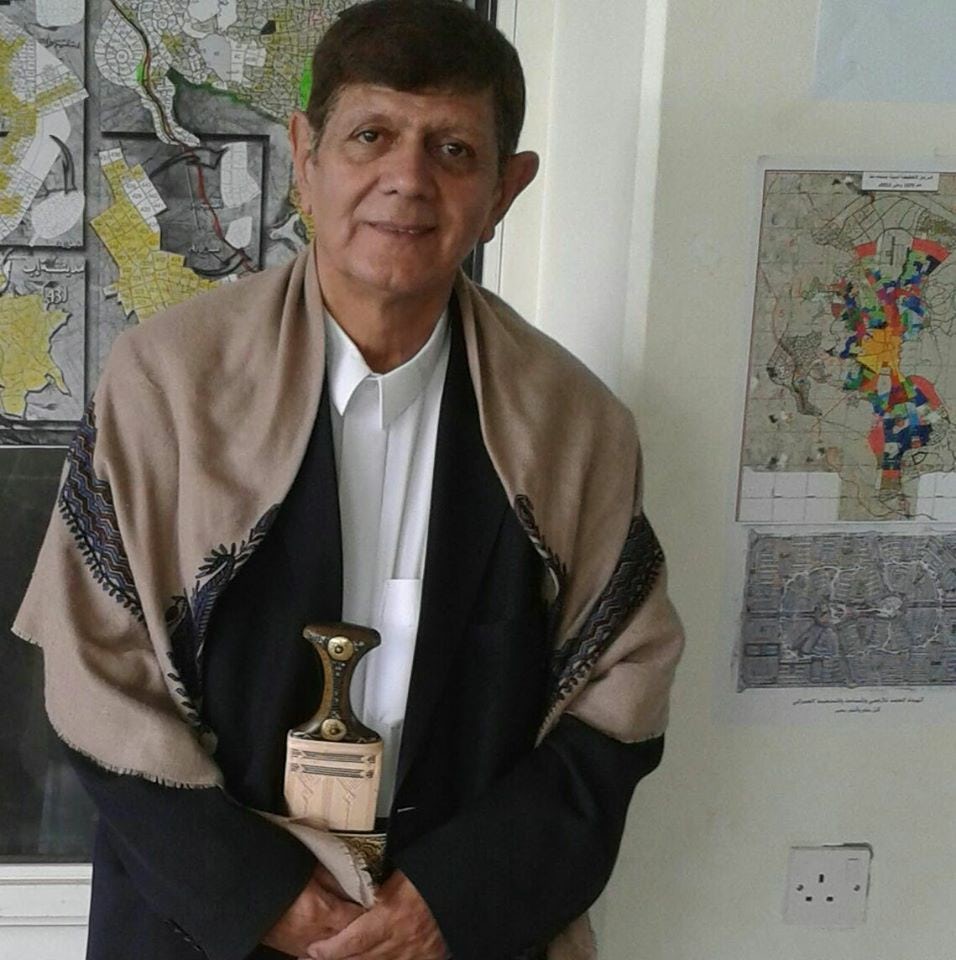
Mr. Badi’u’llah Sana’i, a prominent civil engineer in Sana’a Yemen, recently arrested for being a Baha’i.

The baseless and nonsensical accusations levelled against the Baha’is include showing kindness and displaying rectitude of conduct in order to attract people to their Faith. These accusations bear a striking resemblance to those encountered by the Baha’is in Iran, and in fact, reports indicate the influence of Iranian authorities behind incidents transpiring in Yemen.

Recent events constitute disturbing developments in a series of assaults heaped upon the Yemeni Baha’i community. These include the 2013 arrest and ongoing court case of Mr. Hamed bin Haydara, as well as the mass arrest of over 60 participants, half of whom were Baha’is, at an educational gathering in 2016. Mr. Kaiwan Qaderi, who was among those arrested, has been in prison for over eight months. Also, just weeks ago, an employee of the Red Cross who is a Baha’i was arrested on 5 April in Sana’a simply because of his faith.

“We call upon the international community to unitedly denounce these alarming and ominous actions undertaken by specific authorities in Yemen, including the National Security and the Prosecutor’s Office and demand that they stop this recent wave of arrests and release the Baha’is in prison, who are in grave danger,” said Bani Dugal, principal representative of the Baha’i International Community to the United Nations.

“Let us not,” was her strong plea, “stand by and allow a case of tyranny and injustice against a religious community to unfold.”

Immediately preceding the call for their arrest, on Monday 17 April, dozens of Baha’is received telephone calls between 10:30 p.m. and midnight and were told that they should appear in court the following morning. Aware of recent efforts to persecute the Baha’is and given that no official court order had been presented to them, the Baha’is agreed to send several lawyers in their stead.

However, one Baha’i, Mr. Badi’u’llah Sana’i, a prominent civil engineer in Yemen followed the advice given to him at his workplace and appeared at court on 18 April. He was immediately arrested, confirming the suspicion that the request for Baha’is to appear at court was a ploy for their arrest.

On 19 April, two additional Baha’is, including Mr. Walid Ayyash, a member of a prominent Yemeni tribe, were arrested by authorities as they were driving from the city of Ibb on route to Hudaydah. Their whereabouts are presently unknown and concerns are mounting as to their safety.

Many Baha’i families in Sana’a had to leave their homes in order to avoid being unjustly detained, including Mr. Haydara’s wife, who has been fighting for his release for over three years while caring for their three daughters and is now herself on the list of those to be arrested.

During a turbulent period of civil conflict in Yemen in recent years, the members of the Baha’i community there have refused to side with one group or another and have instead endeavoured to serve all people, placing particular emphasis on a youthful generation eager to dedicate its energies to the regeneration of their society.

Many Yemeni leaders from various factions have already expressed sympathy with the Baha’i community. Even amongst the Houthi authorities in Sana’a within whose jurisdiction these persecutions are taking place, some key figures, including a minister, have expressed dissatisfaction with the continuous persecution of the Baha’is, and some have even condemned these recent attacks through social media.

“We are confident in the support of many more fair-minded people of Yemen of whatever group or strata, who surely agree that the Baha’i community should be permitted to live alongside others and contribute to the betterment of their society, especially during such a difficult time for their country,” said Ms. Dugal.

Rohingya Persecution in Burma: Strategic Embrace to Genocide

An Evolution of Rohingya Persecution in Myanmar: From Strategic Embrace to Genocide is the title of an essay by Alice Cowley, Doctoral Candidate – Queen Mary University of London, and Maung Zarni, Non-Resident Fellow – Sleuk Rith Institute – Permanent Documentation Centre (of Genocide) in Cambodia.

Here is an extract (read the full essay here):

Following hundreds of allegations and coordinated documentation by Rohingya groups of mass killings, mass rape, and destruction of whole villages, the Office of the U.N. High Commissioner for Human Rights (OHCR) sent a team to interview Rohingya refugees who had recently fled to Bangladesh — 70,000 of whom had arrived in four months.

Based on over 200 interviews, OHCR issued a damning Flash Report (Feb 3) complete with harrowing tales of burning elderly Rohingya men alive and slitting children’s throats. The U.N. estimates that Myanmar may have killed as many as 1,000 Rohingya men in recent violence alone. This information, presented at the 34th session of the Human Rights Council, did not result in the much-hoped-and-lobbied-for U.N. Commission of Inquiry with a view towards the International Criminal Court. The result was a compromise — a ‘Fact Finding Mission’ — which both the military and the National League for Democracy (NLD)-led government are determined not to accept or cooperate with.

We have previously argued that far from being a new phenomenon, waves of state-directed violence and communal destruction such as these have been occurring since 1978 and are part of a process of ‘slow-burning genocide.’ Two other independent studies published a year later reinforce our findings.

Over these decades, Rohingya experiences and sufferings have been tossed across multiple discourses that deny the central role of the military such as “communal violence” or since the October 9 raids, “Muslim insurgency” pregnant with potential for escalations involving “international terrorism.” In recent years, these have run concurrently with human rights bodies and organizations framing the situation as “ethnic cleansing” and “crimes against humanity”— U.N. Special Rapporteurs and the OHCHR included.

Despite these shifting narratives, the fundamental nature of the problem has remained constant. The military-controlled state has attempted to “cleanse”the nation of the largest Muslim minority in Myanmar, unique with legitimate claims to Northern Rakhine as their ancestral home.

RUSSIA: Jehovah’s Witnesses banned, property confiscated

Forum 18 reports that Russia’s Supreme Court in Moscow yesterday declared the Jehovah’s Witness national headquarters in St Petersburg and all 395 local organisations “extremist”, banned all their activity immediately, and ordered their property seized by the state. Judge Yury Ivanenko took just over two minutes to read out his decision after nearly 30 hours of hearings across six days. Jehovah’s Witnesses intend to appeal against the ban.

Judge Ivanenko explicitly stated only that the “halting of activity” is to be enforced immediately. Jehovah’s Witnesses believe the other parts of the decision will take effect only after any subsequent unsuccessful appeal.

This is the first time that a court has ruled that a registered national centralised religious organisation is “extremist” and banned.

Russia’s estimated 170,000 Jehovah’s Witnesses now risk criminal prosecution for “extremist activity” if they continue to meet for prayer or Bible study.

Any attempt by Jehovah’s Witnesses to share their beliefs, even within the restrictions of the July 2016 so-called “missionary amendment” to the Religion Law, will now be illegal, as the amendment prohibits any missionary activity by former members of banned “extremist” organisations.

Three United Nations Special Rapporteurs warned before the Supreme Court hearings began that any ban on Jehovah’s Witnesses would be “a threat not only to Jehovah’s Witnesses, but to individual freedom in general in the Russian Federation”. Russian human rights defenders and members of other religious communities also spoke in their support.

Once the Supreme Court has issued its full decision in writing, the Administrative Centre will have one month to appeal to a three-person panel at the Supreme Court, but Jehovah’s Witnesses say they anticipate serious problems, regardless of any pending appeal.

Jehovah’s Witnesses added that, if necessary, they will take their case to the European Court of Human Rights in Strasbourg.

In a report of the verdict on the jw-russia.org website, Jehovah’s Witnesses described the outcome of the case as “a black day for fundamental human freedoms in Russia”. They noted that “this decision could lead to the saddest consequences for believers of different faiths, as well as for Russia’s image on the world stage”.