“The quagmires of Syria and Iraq have forced millions to flee, both internally displaced people and new refugees escaping across borders. The international community is failing to meet their needs, with UN agencies announcing cuts in food programs due to a lack of funds. Ethnic and religious communities have suffered attacks from terrorist extremists, militias, and the Assad regime because of their identities. Just as media attention has alerted the world to the Islamic State’s (ISIS or ISIL) destruction of cultural heritage in Syria and Iraq, so too should it look to the human cultural dimension under threat.
“Among the suffering, Christian communities in Syria and Iraq must contend with incredible pressures. In the cradle of Christianity, Syrian and Iraqi Christians face an existential threat. On a recent visit to Beirut, Christian refugees from Syria and Iraq conveyed tragic personal stories: a sobering conversation that demonstrated the vulnerability of Christian communities. Despite cheerful dispositions, their outlook for their countries and their faith community was grim.”
At a Parliamentary meeting yesterday the All Party Parliamentary Group for International Freedom of Religion or Belief – officers, members and stakeholders – highlighted their determination to fight for freedom of religion or belief around the world.
The All Party Group is genuinely all party – its officers are cross benchers, Conservative, Labour, SNP and DUP members – and it combines MPs and members of the House of Lords committed to this cause.
Baroness Berridge, the founder of the Group in the last Parliament and now Co Chair, emphasises that “Whether it involves Shias in Pakistan, Yazidis in Iraq, Baha’is in Iran, or Christians in Syria, the fact you are ‘the other, defined by religious difference, is a factor that determines these people’s fate. There was a clear commitment in the Conservative manifesto that: ‘We will stand up for the freedom of people of all religions—and non-religious people—to practise their beliefs in peace and safety, for example by supporting persecuted Christians in the Middle East’. The Group is keen to see how this commitment will be worked out in the Foreign & Commonwealth Office and DfID under this Government – and encourage and support positive steps forward.”
Vice Chair Lord Alton of Liverpool underlines that “Understanding authentic religion and the forces that threaten it is more of a foreign affairs imperative than ever before, and the resources we put into promoting Article 18 should reflect that reality. I hope that freedom of religion and belief will be a specific priority for this Government.”
Group Treasurer Jeremy Lefroy MP stated in the House last year that “It is up to the UK Government, in whatever way they interact with another Government, in Pakistan, Afghanistan or elsewhere around the world, to oppose any discrimination against and persecution of minorities simply because of who they are, and wherever that discrimination and persecution are taking place. It is for the UK Government at each and every opportunity, whether it be through development, military, diplomatic or even economic relations, to make that point. It is a duty to protect minority citizens and give them equal rights with others.”
Jim Shannon MP is the Chair of the Group. He said in Parliament “I have spoken on it many times, but it continues to be an issue, and this is a grand opportunity to underline that. I feel extremely passionate about representing those in my constituency, other constituencies and elsewhere in the world who face hardships—in this case, those who are persecuted for their beliefs.”
The meeting was addressed by Baroness Anelay of St Johns, Minister of State, Foreign and Commonwealth Office. In the recent debate on the Queen’s Speech she said “In the coming years we will continue to champion freedom of religion or belief at the Foreign Office. Where freedom of religion or belief is protected, extremist ideologies should not be able to take root. “
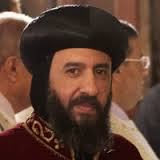
The APPG took this opportunity to warmly congratulate His Grace Bishop Angaelos, General Bishop of the Coptic Orthodox Church in the United Kingdom, following the announcement in the Queen’s Birthday Honours List of his award of an OBE.
He commented on his award by saying “I am humbled by this award because I see it as my role and duty to advocate for religious freedom as part of my ministry. While I am thankful for this great honour, it also comes with a sense of sadness that in the 21st Century we still need to defend people’s God-given rights and freedoms in this way. I consider this an award to every person who has worked with and supported me along the way and pray that God rewards and blesses them for all they have done and all they will continue to do.”
Baroness Berridge said “The APPG recognises how well-deserved this honour is: Bishop Angaelos has worked tirelessly in this cause. As Parliamentarians we can echo his words: it is part of our role and duty to advocate for Freedom of Religion or Belief; we share his sadness that this becomes more pressing with every passing day.”
Rev. Gerald Ragan wrote a guest column in The Augusta Chronicle on Saturday under this heading, inviting his readers to join him in an act of solidarity on Thursday. Here’s the column in full:
Even before ISIS launched its ultra-violent campaign targeting Iraqi Christians in the summer of 2014, Pope Francis proclaimed that the current wave of Christian persecution in the Middle East is worse than the suffering inflicted on believers in the centuries of the early Church. A well-known journalist, Shiela Liaugmina, posted the following on her blog as she wondered why there was such great silence about this Christian persecution: “Pope, patriarchs and prelates are crying out for intervention. Where are the presidents and prime ministers?”
Some Jewish leaders see with clarity history repeating itself, and have cried out about the silence as it unfolds in sheer, graphic and now-widely known brutality – such as Ronald Lauder in The New York Times, in an Aug. 19 column titled “Who will stand up for the Christians?”
Why is the world silent while Christians are being slaughtered in the Middle East and Africa? As the leader of the World Jewish Congress, Lauder slammed global apathy to persecution of Christians in the Middle East and other parts of the world, saying more countries should be moved to action.
“The general indifference to ISIS, with its mass executions of Christians and its deadly preoccupation with Israel, isn’t just wrong; it’s obscene,” Lauder wrote. “The Jewish people understand all too well what can happen when the world is silent. This campaign of death must be stopped.”
Lauder stated that while the international community has rallied to defend the persecution of other minorities in other conflicts, “the barbarous slaughter of thousands upon thousands of Christians is met with relative indifference.” Noting a range of offenses against “Christian communities that have lived in peace for centuries” in the Middle East and parts of Africa, he decried a lack of action.
“Historians may look back at this period and wonder if people had lost their bearings,” Lauder warned. He noted that international organizations have mostly remained quiet on “the Nazi-like wave of terror that is rolling across” Iraq. Additionally, he said, celebrities or public figures have not spoken on the persecution, and he wondered “why doesn’t the slaughter of Christians seem to activate their social antennas?”
Cardinal Donald Wuerl of Washington, D.C., wondered the same thing out loud, with a profoundly heavy heart. “Where are the voices?” he asked. “Why a silence? …Today our solidarity with brothers and sisters of our faith and of other faiths in a part of the world where there is clearly an effort to eliminate them is something that we simply cannot in conscience ignore. …
“I’m sharing these thoughts with you because I don’t want to have on my conscience that I was complicit in something as horrendous as this simply by being quiet. And I ask myself where are these voices? Where are the voices of parliaments and congresses? Where are the voices of campuses? Where are the voices of community leaders? Where are the voices of talk show hosts and radio programs? Where are the voices of the late night news? Where are the voices of editorial columns? Where are the voices of op-ed pieces? Why a silence?
“I think each one of us has at least the power to raise our voice and be in solidarity with people distant from us, unknown to us, not a part of this campus, not a part of this family, not a part of this university, not a part of our nation. But they are a part of our human community. I think it should rest on the conscience of each one of us. Atrocities happen because there are those who commit them and those who simply remain silent.”
Do not remain silent.
**
The Catholic churches of the Augusta Deanery ask you to participate in a special Mass for persecuted Christians at 7 p.m. Thursday, June 18, at St. Teresa of Avila Catholic Church, 4921 Columbia Road in Grovetown.
(The writer is pastor at St. Mary on the Hill Catholic Church in Augusta.)
His Grace Bishop Angaelos, General Bishop of the Coptic Orthodox Church in the United Kingdom will be conferred the honour of Officer of the Order of the British Empire for services to International Religious Freedom by Her Majesty The Queen as announced in the Queen’s Birthday Honours List, published in the London Gazette on 13 June 2015.
Bishop Angaelos said the following in response to the announcement:
“I am humbled by this award because I see it as my role and duty to advocate for religious freedom as part of my ministry. While I am thankful for this great honour, it also comes with a sense of sadness that in the 21st Century we still need to defend people’s God-given rights and freedoms in this way. I consider this an award to every person who has worked with and supported me along the way and pray that God rewards and blesses them for all they have done and all they will continue to do. I must also express my sincere gratitude to Her Majesty The Queen and the Prime Minister for considering this cause worthy of such public acknowledgement.”
The Government of Eritrea is responsible for systematic, widespread and gross human rights violations that have created a climate of fear in which dissent is stifled, a large proportion of the population is subjected to forced labour and imprisonment, and hundreds of thousands of refugees have fled the country, according to a UN report released on Monday. Some of these violations may constitute crimes against humanity.
Citing an array of human rights violations on a scope and scale seldom witnessed elsewhere, the report by the UN Commission of Inquiry on Human Rights in Eritrea describes a totalitarian state bent on controlling Eritreans through a vast security apparatus that has penetrated all levels of society.“Information gathered through the pervasive control system is used in absolute arbitrariness to keep the population in a state of permanent anxiety,” the 500-page report says. “It is not law that rules Eritreans – but fear.”
The release of the report comes as the international community, particularly governments in Europe, North Africa and the Middle East, struggles to cope with a growing exodus of refugees, asylum seekers and migrants across the Mediterranean and along other irregular routes. Many of them are Eritreans, a significant proportion of whom fall victim to human traffickers while trying to reach Europe. The UN refugee agency placed the number of Eritreans under its concern outside the country at more than 357,400 in mid-2014.
The report strongly urges continued international protection for Eritrean refugees fleeing human rights violations, and warns against sending them back to danger in a country that punishes anyone who tries to leave without permission.
“Faced with a seemingly hopeless situation they feel powerless to change, hundreds of thousands of Eritreans are fleeing their country,” the report says. “In desperation, they resort to deadly escape routes through deserts and neighbouring war-torn countries and across dangerous seas in search of safety. They risk capture, torture and death at the hands of ruthless human traffickers. To ascribe their decision to leave solely to economic reasons is to ignore the dire situation of human rights in Eritrea and the very real suffering of its people. Eritreans are fleeing severe human rights violations in their country and are in need of international protection.”
An opinion piece in the South Asia Channel of Foreign Policyurges the US to designate Pakistan a Country of Particular Concern.
It includes a devastating summary of the reality for minorities in Pakistan, and concludes “Unless the Pakistani state, civilian and military, puts all its efforts into reforming laws to provide equality and protection to all its citizens, Pakistan must and should be designated a CPC, for the sake of the people of Pakistan.”
The article says “What has trickled into the West’s consciousness are only bits and pieces of the deadly tales of Pakistan’s religious minorities: 93 Ahmadi worshippers killed in 2010; 80 Christians slaughtered at the All Saints Church in 2013; 60 Shiite Muslims murdered at a mosque in Sindh in January; 43 Ismaili’s gunned down inside a bus last month.
“The stories are horrific, but they hardly begin to convey the pervasive sense of dread that the nearly 40 million members of Pakistan’s religious minority communities live with on a daily basis.
“The problem has become so serious that religious minorities are fleeing the country in droves. As many as 10,000 Pakistani Christians (but official United Nations’ figures say 4,000) are now believed to be living ‘under the radar’ in Thailand, fending off arrest by Thai police for illegal entry as they cling to the hope of making it through the gruelling U.N. refugee resettlement process.
The U.S. Senate has unanimously passed an amendment calling on the government to weigh a nation’s religious freedom picture when conducting trade deals.
“We believe every person should have protection of the government to live (his) faith, not the compulsion of government to practice any one faith or to be forced to reject all faith altogether,” Sen. James Lankford, R-Okla., who sponsored the amendment, said. “We should encourage trade with another country when that country acknowledges our basic value of the dignity of every person to live their own faith… When people have freedom of conscience and faith, they are also better trading partners,”
Lankford asserted. “Their country is stable, their families are stable and their economy will grow.”
Critics have been sceptical, pointing out that the amendment does no more than require the government to “take into consideration” a nation’s religious freedom policies – and there is no guarantee that the overall trade bill will become effective.
But if signed into law, this would be the first time in history that religious freedom considerations would be a requisite for international trade discussions with other countries.
In the lead-up to the vote, Sen. Lankford drew upon the research of Religious Freedom & Business Foundation president, Brian Grim, for the rationale supporting the connection between religious freedom and socio-economic development.
Grim, commenting on the outcome, said, “We are very pleased that the work of the Religious Freedom & Business Foundation has contributed to something that is not easy to achieve – the unanimous support of all parties on legislation.” Grim added that “because we do not take positions on political issues, this may be one reason that we can contribute to consensus on issues that are of common concern to all.”
Taslima Nasrin’s relocation comes after three well-known atheists, Avijit Roy, Washiqur Rahman and Ananta Bijoy Das, were murdered in Bangladesh this year in the course of three months, Religion News reports. Al-Qaida in the Indian Subcontinent has claimed responsibility for the brutal murder of Das and has sent threatening messages to Nasrin.
Nasrin’s move was organised by the American Center for Inquiry (CFI), which promotes secularism and has been working with atheists in countries where atheism is unprotected by blasphemy laws.
Michael de Dora, CFI director of public policy and president of the United Nations NGO Committee on Freedom of Religion or Belief said that the cause for his organisation’s concern was that “extremist groups have been pretty public that they want Taslima killed.”
Nasrin, 52, a gynecologist by profession, became famous when she wrote her first novel Shame in 1993. The novel describes the religious and political tensions between Muslims and Hindus in Bangladesh, and argued against religion. The Bangladeshi government banned the novel and Nasrin herself received a fatwa, which called for her death for blasphemy. Nasrin then moved to India.
She has been threatened several times before, but this time the threats were too serious for her to stay in Asia.
Gulf Times reports that Bangladesh has seen a rise in religious attacks by religious extremists in recent years. At least five atheist bloggers have been attacked since 2013 by Islamists. Bangladesh is officially a secular country, but majority of the people are Muslims.
Left to right: MEP Dennis de Jong, USCIRF’s Katrina Lantos Swett, EEAS’s Silvio Gonzato, and MEP Peter van Dalen at the report’s launch in Brussels on 3 June. Courtesy European Parliament Intergroup
The European Parliament Intergroup on Freedom of Religion or Belief and Religious Tolerance launched their 2014 Report this month, saying still not enough is being done by European institutions around Article 18 of the Universal Declaration of Human Rights.
“Unfortunately, we can only conclude that violations of freedom of religion or belief have become more frequent and intense,” said Member of the EU Parliament (MEP) Dennis de Jong, co-author of the report and Co-President of the Intergroup, speaking at the launch in Brussels.
“We hope to shed some more light on the violation of this fundamental right and stand up for the many millions of people who are bullied, discriminated, persecuted and even killed because of their religion or belief,” added co-author and Co-President Peter van Dalen, also an MEP.
The Intergroup describes itself as a group of like-minded MEPs dedicated to ensuring that the EU, in its external actions, promotes and protects the right to freedom of religion or belief.
For instance, its report says that “FoRB guidelines are far from being fully implemented in the work of the European External Action Service (EEAS) staff, and Member States diplomats at the headquarters and in EU Delegations. During discussions and meetings with EEAS officials and Member States representatives, it was mentioned that the EU guidelines are not always consulted and used on the ground”.
The report also recommends that FoRB training for EU policymakers and diplomats is further developed. (The Intergroup recommends making FoRB training mandatory for at least one staff member per EU delegation in at-risk countries.)
World Watch Monitor highlights the report’s primary institutional and country-specific recommendations for the EU as follows.
Institutional recommendations
• Implementation of the EU Guidelines on freedom of religion or belief: “Urge all countries that do not currently accept requests for visits from the UN Special Rapporteur on FoRB to do so in the near future.”
• Developing better policy cohesion – “Respect for freedom of religion or belief should be systematically monitored … before the EU decides to conclude new bilateral trade and investment agreements.”
• Engagement between policymakers and religious leaders – “Moderate [religious] leaders often hold the key to genuine and reconciliation processes in countries and regions torn by religiously motivated conflict. Furthermore, religious leaders can play an important role in the prevention of radicalisation.”
Failed states
Country-specific recommendations are provided for 10 countries, although not for Iraq, Syria, Yemen, Libya and Somalia, while are labelled “failed states” in relation to freedom of religion or belief.
“[In failed states], warlords and groups like ISIS and many, many other armed groups determine everyday life. A central government might not even exist, and has either limited or no influence. Religious minorities have to fear for their lives daily, religious gatherings are under constant threats.
“The EU and other organisations can only offer aid from time to time: that is the maximum. Having said this we see that the possibility is eminent, that we will face more failed states, more instability, more threats to peace and freedom of religion or belief. These are very turbulent years for many parts of the world, and this trend is increasing”.
Country-specific recommendations
Brunei
• Reconsider negotiating the EU’s Partnership Co-operation Agreement with Brunei given “the dire state of freedom of religion or belief and the adoption of the Sharia penal code”.
Burma
• Pressure the Burmese government to repeal discriminatory legislation as well as establishing a truly independent judiciary and an accountable police force.
• Regularly raise issues with the Burmese government.
• Periodically reassess the situation for [Muslim] Rohingyas and [Christian] Chins.
• Link the imposition/withdrawal of restrictive measures or the awarding of economic incentives on reforms and progress made by the Burmese government.
Central African Republic
• Take the lead not only in the UN peacekeeping operation, but also in a reconciliation operation
• Press the UN for further investigations into the religious and communal violence.
Eritrea
• Point out to Eritrea the consequences of international obligations under conventions it signed, such as the International Covenant on Civil and Political Rights (ICCPR).
• Step up pressure on the Eritrean government in particular with regard to prisoners of faith and conscience.
Iran
• EU must “mainstream” human rights in all aspects of its relations with Iran and in particular press Iran to ensure that its legislation and practices fully conform with Article 18 of the ICCPR.
• High-level and inclusive human rights dialogue with Iran should be part of any future political framework for bilateral EU–Iran relations
• Start a human rights dialogue with Iran.
• Take unilateral actions or actions in multilateral-fora if there is a further deterioration in the freedom of religion or belief situation in the country.
Maldives
• Press the Maldives government on the situation of freedom of religion or belief and the possibility of providing technical support and assistance in the field of freedom of religion or belief.
North Korea
• Discuss the complete lack of freedom of religion or belief and terrible situation of religious groups and individual believers with key regional players, in particular China.
• Address [situation] in political and human rights dialogues with [North Korea].
• Consider speaking to South Korea about introducing a religious component in the reconciliation dialogue with the North.
• Include those engaged in gross human rights violations on the travel ban and asset freeze list.
• Continue discussions with a view to a possible referral of the North Korean case to the International Criminal Court.
• Follow up on the FoRB recommendations made in North Korea’s Universal Periodic Review.
• Continue to work on a strongly worded annual [UN General Assembly] resolution, ensuring a serious engagement from key regional players.
• Take the lead in pushing for a human rights contact group for North Korea, which … “should naturally also cover FoRB issues”.
Pakistan
• Effectively use monitoring system and frequently report on the outcomes of this monitoring.
• Focus intensively on the human right of freedom of religion.
• Do whatever possible to improve religious tolerance in Pakistan.
• Support the government to set up a special police force for the protection of religious minorities and … repeal blasphemy laws … and provide aid to introduce schoolbooks that promote religious tolerance.
• Intensify efforts to prevent Pakistan from becoming a failed state.
Saudi Arabia
• Insist on the introduction of internationally recognised freedom of religion or belief standards in the Kingdom.
• The EU’s commitment to human rights must be reflected in the language of the cooperation agreements it signs with Saudi Arabia, which is currently not the case.
• Work with Saudi Arabia to stop financial flows from the Kingdom to radical individuals and organisations all over the world.
Sudan
• Engage global partners for a joint effort to roll back the Sudanese regime’s efforts of Islamisation and Arabisation.
• Engage with Sudan with regards to the country’s upcoming constitutional changes.
Saudi Arabia’s Supreme Court has upheld the sentence of 1,000 lashes and 10 years of imprisonment on blogger Raif Badawi, despite a foreign outcry, reports the BBC.
Speaking from Canada, his wife Ensaf Haidar told the BBC she feared his punishment would start again on Friday.
Badawi was arrested in 2012 for “insulting Islam through electronic channels”. Saudi authorities sent his case for review amidst global protests, after the first round of lashes in January. For four years Badawi ran the Liberal Saudi Network, which encouraged online debate on religious and political issues.
Ms Haidar said she had held high hopes that her husband was about to be released, but he remained less optimistic. When they last spoke three days ago he told her not to expect him home in the near future. She called on the countries and rights groups that had campaigned for her husband’s release to mobilise once more.
Amnesty International activists held a protest demanding the release of blogger Raif Badawi in front of the Saudi Arabian embassy in Berlin on 22 May 2015
Badawi received his first 50 lashes in January, but subsequent floggings have been postponed. A shaky video taken on a mobile phone showed Badawi being lashed by a member of the security forces. The footage prompted international protests which were repeated every Friday, the scheduled day for the beatings. In March, the kingdom expressed “surprise and dismay” at international criticism over the punishment. At the time, the foreign ministry issued a statement saying it rejected interference in its internal affairs. It is not clear why Badawi has not yet endured a second round though a medical report found he was not fit for the punishment.
Andrew Bennett, Canada’s Ambassador for Religious Freedom, said: “I am greatly concerned by reports that Saudi human rights activist Raif Badawi will tomorrow begin facing a punishment of 1,000 lashes, along with a 10-year prison sentence, for exercising his right to freedom of religion and freedom of expression.”