The Nigerian elections and the role of religion

The BBC reports that, as tensions rise ahead of the elections in Nigeria, due on 14 February, some fear the country’s unity will face a new test and religious divisions will be exacerbated. The election sees a Christian presidential candidate from the south, incumbent Goodluck Jonathan, pitted against Muhammadu Buhari, a Muslim candidate from the north of the country.

Many Nigerians hold a high attachment to their particular faith, and the voting patterns are expected to look very different in the predominantly Muslim north compared to some areas in the south where Christian culture dominates. The article argues that it will largely be up to the politicians to reduce the tension and ensure there is harmony across the religious divide of this diverse nation when the election outcome is announced.

Read more

The article contains a fascinating interview with Archbishop Benjamin Kwashi, in which he explains how politicians use religion for their own political gain.

Obama speaks up for religious freedom in India

Under the headline India will succeed as long as it is not ‘splintered’ on religious lines The Times of India reports that “Making a strong pitch for religious tolerance, US President Barack Obama said every person has the right to practice his faith without any persecution and that India will succeed so long it is not “splintered” on religious lines.”

“Every person has the right to practice his faith without any persecution, fear or discrimination. India will succeed so long it is not splintered on religious lines,” Obama told the audience comprising mainly young people during the course of his 30-minute speech.

The President’s comments came against the backdrop of the controversy over religious conversions and ‘Ghar Wapsi” programmes by right wing Hindu outfits in India.

Obama also cited Article 25 of the Indian Constitution dealing with the Right to Freedom of religion.

“Your (Constitution) Article 25 says all people are equally entitled to the freedom of conscience and have right to freely profess and practise and propagate religion. In both our countries, in all countries upholding with freedom of religion is the utmost responsibility of the government but also the responsibility of every person,” he said.

Obama also said that around the world we have seen intolerance, violence and terror perpetrated by those who profess to be standing for upholding their faith.

Obama recounted an incident that occurred three years ago in Wisconsin where a man went into a Sikh gurdwara and “in a terrible act of violence” killed six innocent people which included both American and Indians.

“In that moment of shared grief, the two countries reaffirmed the basic truth that we must again today. Every person has a right to practice the faith that they choose and to practice no faith at all and to do so free of persecution, fear or discrimination,” he said.

In his speech, attended by young students, scholars and others, Obama said such a proposition holds much importance in India.

“And nowhere it is more important than in India. Nowhere is it going to be more necessary for that foundational value to be upheld,” he said.

Underlining the factors that unify both the countries, Obama said “our diversity is our strength” and cautioned that both India and the US have to be on guard against divisive efforts along sectarian lines or any other lines.

Iran escalating the persecution of Sunni Muslims

Two Sunni prisoners of conscience from Iran’s Baloch minority were executed last November in Zahedan Central prison, Sistan-Baluchestan province of Iran. According to the report of Human Rights Activists News Agency (HRANA), 22-year old Vahid Shah Bakhsh and 23-year old Mahmoud Shah Bakhsh were hanged on charges of ‘Moharabeh [enmity against God] and acting against national security’.

Both men had been subjected to severe torture whilst being held at the Ministry of Intelligence Detention Center in Zahedan. Vahid Shah Bakhsh (also known as Abdol Rahman, the son of Ghous Uddin) and Mahmoud Shah Bakhsh (also known as Junaid, the son of Dur Mohammad) were arrested in Zahedan in April 2012. Vahid Shah Bakhsh had been active in criticizing the Iranian government and speaking out against the oppression faced by the Sunni Baloch minority in Iran.

This case is quoted in Peter Tatchell’s article in the International Business Times on 22 January. He writes:

“In recent months, there has been a wave of arrests of Sunni Muslims. Dozens are currently on death row and at risk of death by the sadistic Iranian method of hoisting on cranes and slow strangulation by hanging. How can this be?

Iran is a Shia Muslim state. Muslims who don’t adhere to the Shia interpretation of Islam are regarded with official distrust and disrespect. They often suffer discrimination – and sometimes much worse.

While Iran officially claims to defend the rights of Islamic minorities – their freedom of faith is enshrined in the constitution – the reality is very different. Followers of non-Shia Islamic sects are deemed not true Muslims. They are seen as potential enemies of the state and of God, which is a capital office. This is particularly the case with Sunni Muslims. The Shia-dominated Tehran regime regards them as their main religious rivals – and a threat.

In everyday life, Sunni Islam is tolerated up to a point. But whenever it gains converts or influence, the state cracks down – particularly in the ethnic minority Kurdish, Arab and Baluch regions of Iran.”

The Abdorrahman Boroumand Foundation (ABF), confirms that the repression of Sunni Muslims has been intensifying since late 2012 when six young Kurdish Sunni activists were hanged in Rajai Shahr Prison. ABF observes: “Sunni Muslims are estimated to constitute about 10% of Iran’s total population. According to Article 12 of the Islamic Republic’s Constitution, they can practice their faith freely. In practice, however, the Shia rulers of Iran have subjected Sunnis to discrimination and have denied them political, civil, economic, social, and cultural rights, through restrictions in access to government positions, employment, education, and places of worship.”

In 2014, a report by the UN Special Rapporteur on Iran stated that at least 150 Sunni Muslims are currently “detained for reportedly organising religious meetings and activities or after trials that allegedly often failed to meet international standards.”

These failures include being denied access to their lawyer and the right to call evidence and witnesses in their defence; as well as subjecting the accused to 10-minute summary trials while shackled and blindfolded.

Many Sunnis believe their persecution is aimed at stopping them from promoting their own interpretation of Islam, raising awareness about the unjust treatment of Sunnis and exposing the misuse of religion by the state.

Over 70 MPs attend launch of persecution report

Earlier this week in Parliament at least 74 MPs attended the launch of the Open Doors report, Freedom of Religion and the Persecution of Christians, highlighting the scale and severity of persecution faced by Christians around the world.

MPs heard from Dr. Ron Boyd-MacMillan (Director of Strategic Trends and Research for Open Doors International) and FCO Minister for Human Rights Baroness Anelay, as well as Nigerian Pastor Rev Daniel Awayi, who described life in the shadow of Boko Haram.

Baroness Anelay, Minister for Human Rights at the Foreign and Commonwealth Office, said “This report is a harrowing read, and makes us understand the true meaning of how one has to be so courageous in so many places to have a faith. There’s a long way to go, but we all have a role to ensure freedom of religion is ensured for all people.”

Urging MPs to act Dr. Ron Boyd-MacMillan warned, “There’s a rising tide of antagonism against Christians all around the world, and it’s getting harder to be a Christian everywhere.”

Over 6,000 Open Doors’ supporters had sent an invitation to their MP to attend the event, which was hosted by Naomi Long MP, who reflected, “This report puts in perspective the scale and the difficulties of the issue of persecution against Christians around the world.”

Open Doors appealed to MPs to ensure that there is an effective and robust foreign policy in place to foster and protect freedom of religion. The charity urged the UK government to pay close attention to the constitutional, legal and cultural sources of persecution – noting early warning signs such as changes in law or jurisprudence, as well as overt violence.

In particular, the report presented to MPs today highlighted the gender dimension of persecution: the double-vulnerability of female Christians who often face discrimination based on both their gender and their religion. Open Doors called on policy makers to explore the value and impact of raising freedom of religion or belief as a dimension of women’s rights.

The charity publish this annual, detailed research tracking trends and severity of global persecution against Christians, in order to ensure MPs remain informed of the extent and severity of the situation facing Christians and to recommend ways in which to tackle it.

Niger: churches burned down in Charlie Hebdo demonstrations

At least five churches in southeastern Niger were ransacked and burned down last Friday by hundreds of Islamist demonstrators angered by a cartoon published by the French magazine Charlie Hebdo, reports World Watch Monitor.

According to local sources, hundreds of people marched violently around 1:30 pm, shortly after Friday prayers. Shouting ‘’Allah Akbar’’ — God is great — they attacked and set fire on most of the Churches in the South-Eastern city of Zinder, about 1000 km, from Niamey, the capital of Niger.

The protesters, believed to be mainly youngsters, looted and ransacked several properties or shops belonging to members of Christian community in different parts of the city.

Several public buildings and properties were also set afire, among them the French cultural centre, the headquarters of the ruling party and several bars. Security forces fired tear gas in an attempt to restore order.

“We have never seen that before in Zinder,” a local source told AFP. “It’s Black Friday,” he lamented.

According to local sources, at least nine people were killed, among them a member of the security force caught up by the protesters, but there has been no official confirmation.

The President of Niger, Mahamadou Issoufou, attended the Paris anti-terror march on Jan. 11, along with the Archbishop of Niamey, Mgr. Michel Cartatéguy, and the Head of the Islamic Council of Niger.

Even so, the government has condemned the latest Charlie Hebdo illustration, which depicts a weeping prophet Mohammad, and has banned publication of the satirical magazine in Niger.

Niger is a secular country known for a peaceful relation among religious communities. The vast majority of its 17 million inhabitants are Muslim.

Nevertheless, the country has witnessed the emergence of radical Islamist groups since the advent of democratic pluralism in the 1990s, and the Christian minority is often targeted by Islamists.

In September 2012, three churches were ransacked in the same city of Zinder, following a demonstration over the U.S. film “The Innocence of the Muslims.” The three churches damaged are the main Catholic cathedral and two evangelical churches.

Similar attacks targeting Christian properties took place in the southern city of Maradi, near the Nigeria border, in 1998 and 2000.

Located in West Africa, Niger is facing a growing Islamist threat notably by the Nigerian radical group Boko Haram in the south and other groups linked to Al Qaeda such as AQIM and Mujao, which are active in Niger’s western neighbor, Mali, and northern neighbour, Libya.

In a recent interview, Issoufou said international military intervention is needed in Libya to try to restore stability, and prevent a spillover across the region.

More than 500 Niger soldiers are deployed in Northern Mali under the banner of a UN peacekeeping mission.

Iran: Christians arrested at Christmas in Tehran

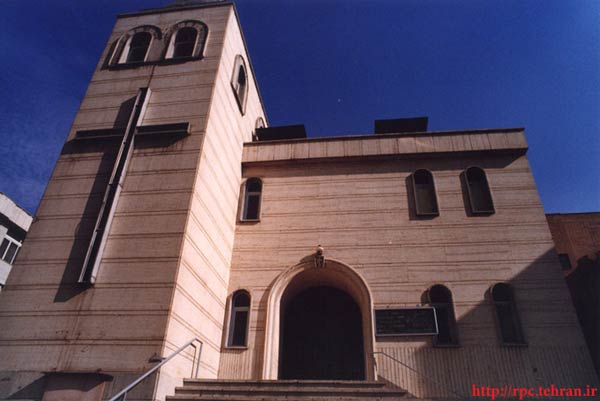
Assyrian-Brothers-Church-Tehran
The Assyrian Brothers Church, Patrice Lumumba Street, Tehran

Iranian security agents arrested an Assyrian pastor and two Christian converts who were his guests at his Tehran residence on 26 December 26 according to Mansour Borji, Spokesperson for the Alliance of Iranian Churches, reports the.International Campaign for Human Rights in Iran, published by Payvand Iran News.

Borji told the International Campaign for Human Rights in Iran that the full reasons for the arrest of Pastor Victor Beth Tarmez, a former leader of the Tehran Pentecostal Assyrian Church, and his guests remain unknown, but that at the time of the raid on his home, agents stated that they were arresting the individuals because they “participated in an illegal gathering.” The “illegal gathering” was a Christmas party Tarmez was holding at his home and his guests were Zoroastrian, Muslim, and Christian citizens.

“There was a Christmas party at Pastor Victor’s home. He and his wife and son and 14 guests were there. When agents entered the home, first they searched all the personal belongings of the guests, then they videotaped their faces, and then they searched the premises. Eventually, they arrested Pastor Tarmez along with two Christian converts and confiscated some property from the home,” Borji told the Campaign.

“During a short phone call to his family on December 29, Pastor Victor informed them that he is held at Evin Prison. We have no information about the status of the two Christian converts arrested on the same day. All we know is that they have not been released yet,” added Mansour Borji.

Asked whether Pastor Victor had been threatened or arrested before, Borji said “In 2009, Intelligence Ministry agents asked Pastor Victor to cancel his Farsi-language classes at the Church. He resisted and continued his classes. In the end, agents put pressure on the Church and the Church dismissed him from his position. But Pastor Beth Tarmez continued his religious activities.”

“Over the past five years, we have witnessed arrests of several Christians and Christian converts during Christmas holidays. The government is very sensitive about these days and even tells Farsi-language churches in advance that they can only have one gathering for Christmas, because they are worried that because of the Farsi language [used in the sermons], regular people would also come to church and listen to what is being said,” concluded Mansour Borji.

Despite official assertions that Christians enjoy full rights as citizens of Iran, the Christian community-particularly Evangelicals and Protestant communities that are seen as encouraging conversion to Christianity, suffers severe and widespread discrimination and persecution in Iran, as documented in the Campaign’s report, The Cost of Faith: Persecution of Christian Protestants and Converts in Iran, and noted in the reports of the UN Secretary-General and the UN Special Rapporteur for human rights in Iran.

Time for a global ambassador for religious freedom?

House of Commons 6 January 2015
Oral Answers to Topical Questions

Fiona Bruce (Congleton) (Con): Across the world hundreds of thousands of Christians are being perniciously persecuted for their faith, beaten with nail-studded wooden clubs in Sri Lanka, abducted and killed by Boko Haram in Nigeria and Cameroon, burned to death, forcibly married and on death row in Pakistan, and children are chopped in half or sold into slavery by IS in Iraq. We know of this in this House, and of much more. What are the Government doing about it? Is it not time for this country to appoint a global ambassador for religious freedom?

The Deputy Prime Minister: I am sure everybody is shocked not only by the news but by the litany of abuse, persecution and violence that is inflicted on Christians and all religious denominations that are persecuted minorities around the world. The Government, through bilateral engagement and working with partners in international organisations, funding projects, and providing religious literacy training for Foreign and Commonwealth Office staff, do a lot to counter this. There is also, as the hon. Lady will know, an active advisory group on international freedom of religion or belief, which we strongly support. The question whether we should go further—of course, we should always keep an open mind on this—and create an envoy or an ambassador on religious freedom is not quite as straightforward as she implies. Other countries that have taken that step have found that those ambassadors and envoys are excluded from visiting certain countries. That is why the best course of action at present is for each of the Foreign Office Ministers to retain the responsibility for promoting freedom of religion and belief in the areas of the world which they cover.


Plans to protect Egypt’s Coptic Christians on Christmas Day

Today is Christmas Day for Coptic Christians! A special plan to ensure security for the Christmas celebrations for Coptic Christians was developed in detail during a meeting of the heads of the police and security apparatus, convened on Sunday, December 28 by Egyptian Interior Minister Mohammed Ibrahim, reports Agenzia Fides.

The minister praised the efforts made by the police to ensure tranquility to the Christian communities who already celebrated Christmas on December 25 and took note of the measures that will be put in place to monitor the territory and thwart terrorist actions, aggressions or intimidation against Coptic Christians who celebrate Christmas on January 7. The plan provides for the distribution of patrols in the vicinity of places of worship and in some cases blocking traffic in the areas around the churches. Minister Ibrahim recalled that the collaboration of the citizens with the police is a decisive factor in ensuring success in any security plan.

People still remember the attack in Egypt on New Year’s Eve in 2011, when the explosion of a car bomb in front of the church of Saints (Al-Qiddissine) caused dozens of deaths. Subsequent investigation attributed the attack to apparatus linked to the declining regime of Hosni Mubarak. Meanwhile, the League of the children of Wasti awarded merits to four Muslims who in late November had given a decisive contribution to neutralize an attack organized by Islamist cells against Sant’Abanoub church in the city of al-Wasti.

Libya: Bishop voices concern about attacks on Coptic Christians

“It is deeply concerning to witness the unprovoked, targeted and escalating attacks on Egyptian Coptic Christians in Libya, particularly but not exclusively in Sirte,” says His Grace Bishop Angaelos, General Bishop of the Coptic Orthodox Church in the United Kingdom.

He continues “In recent years Coptic Christians in Libya have endured horrific acts of brutality that include the bombing of churches, abductions, torture, and execution style murders. In recent weeks alone we have seen the murder of a Coptic Christian couple and their thirteen year old daughter in Sirte, and the kidnapping of thirteen Coptic men in the same area. Since December 2014 to date there have been reports of at least twenty abductions of Coptic Christians in Libya and these numbers continue to escalate.

“In personal conversation with His Holiness Pope Tawadros II, Pope of Alexandria and Patriarch of the See of St Mark, as well as representatives from the Diocese of Boheira and Pentapolis, we are aware that the Egyptian government is liaising with Libyan authorities and working to provide safe passage for Coptic Christians returning from Libya, an initiative welcomed at this time.

“Out of serious concern and in light of these circumstances a meeting is currently being sought with the Libyan Ambassador to Britain for further discussion of these constantly evolving events.

“At a time when Coptic and other Christian families are preparing to celebrate the Feast of the Nativity, we pray for those who are literally concerned for their lives in Libya as well as for countless other Christians and minority groups across the Middle East who are victims of war, violence, and unrest.”


Egypt: the trials of Bishoy Armia Boulous

Bishoy Armia Boulous

Seven years ago, Mohammed Hegazy was the first Egyptian citizen to attempt a legal change of his religious identity from Muslim to Christian. In Egypt, government-issued identity cards include a required notation of the person’s religion. Changing the notation to “Islam” is a simple administrative procedure; asking the government to approve a Muslim’s request to change to a different religion is unprecedented.

Although Egypt has signed the International Covenant on Civil and Political Rights, which defines changing one’s religion or convincing others to do likewise as a basic right, Muslim citizens are denied this legal option. Non-Muslims, by contrast, can easily convert to Islam with the full cooperation of police and judicial authorities.

In 2007 Hegazy took his request to court. He was targeted by furious Muslim clerics, lawyers and journalists, demanding his execution as an apostate from Islam. For months afterwards, his name hit the headlines repeatedly, and his court case filed with the Interior Ministry came under heated public debate on television.

Despite threats and attacks on his home, Hegazy has refused to leave Egypt for his own safety.

In December 2013 Hegazy, now known as Bishoy Armia Boulous, was arrested for filming sectarian demonstrations without permission in Minya. After he spent six months in detention, a local court convicted him of the misdemeanour charges and sentenced him to five years in prison. His appeal is due to be heard on Sunday, reports World Watch Monitor.

But according to his lawyer, prison and security police officials have not confirmed they will permit Mohammed Hegazy to travel from Cairo’s Tora Prison to the court hearing in Upper Egypt’s Minya governate. If he is not present in person, his conviction – and the accompanying five-year prison sentence — will be confirmed by default.

Update: Two of the three charges against him have been dropped – but he remains in prison. It is well worth reading the latest update from Morning Star News in full to gain understanding of how difficult life can be for converts from Islam in Egypt.

Read more

February 2015 update: It has taken a month for Hegazy’s lawyer to track down and meet his client. World Watch Monitor reports that from the day of the trial onward, Egyptian prison officials have blocked all his efforts to make contact. He remains in prison awaiting the judge’s ruling.