Nigeria: armed violence (rural communities) Westminster Hall debate

Jim Shannon (Strangford) (DUP)
I beg to move,

That this House has considered the matter of armed violence against farming communities in Nigeria.
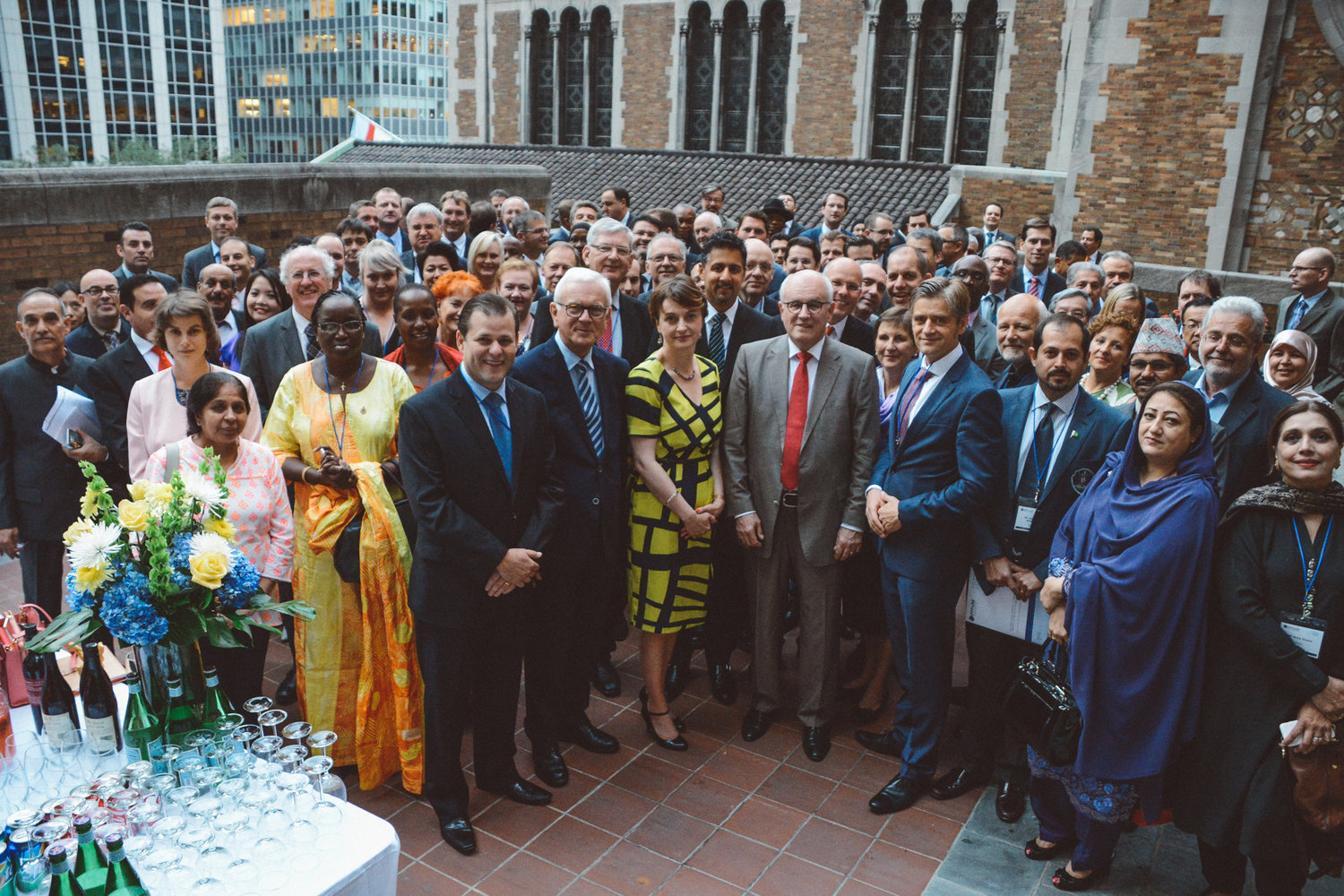
It is a pleasure to serve under your chairmanship, Mr Betts, and I thank the Backbench Business Committee for allocating time for this debate—it is of the upmost importance that the House, the Government and the whole international community do not ignore such immense and devastating suffering. I am grateful to all hon. Members for participating in the debate, and I particularly thank the Minister for her esteemed presence and for her informative remarks last Thursday, when she spoke at an event that examined some of these issues, which was organised by the all-party parliamentary group for international freedom of religion or belief.

I imagine that some hon. Members will discuss the Boko Haram crisis, so I will focus on the conflict between nomadic herders and farming communities. According to some estimates, it has claimed up to 60,000 lives since 2001. I would like to discuss the scale of the violence, how to resolve the crisis, and the long-term consequences of failure to address the violence.

For decades, nomadic cattle herders from north Nigeria, who belong predominantly to the Muslim Hausa Fulani ethnic group, have been in dispute over land with predominantly Christian farming communities further south. However, in recent years, the scale and violence of these disputes has escalated dramatically, and we will want to look at the reasons for that in the discussions we have today. As many as 1,300 people have been killed in violence between these groups since January, and at least 300,000 have been displaced. The conflict is estimated to cost the Nigerian economy $10.5 billion a year. It is good to see the hon. Member for Henley (John Howell) in his place; he is the Government envoy to Nigeria, so we look forward to his comments. We cannot ignore the impact on the Nigerian economy.

The International Crisis Group has said:

“What were once spontaneous attacks have become premeditated scorched-earth campaigns in which marauders often take villages by surprise at night.”

When we talk about these enormous crises, there is sometimes a danger that we forget about people and their families—we cannot do that. Real people have lost their entire families. Real people have seen their homes and villages destroyed. Real people have been devastated, disfigured and dismembered. In terms of sheer scale and horror, the violence we have witnessed in Nigeria is six times deadlier than the Boko Haram crisis of 2018—six times more horrible, more horrific, more evil and more brutal.

David Simpson (Upper Bann) (DUP)
I congratulate my hon. Friend on securing this debate. Does he agree that the scale of the difficulties, which he has articulated, has not made news? If it were happening in any part of the western world, it would make news.

Jim Shannon
My hon. Friend must have read the next sentence of my contribution, which says that we have barely heard about this—that is exactly right. That is why we are taking the opportunity today to highlight this matter. The scale of the violence is already extraordinary, and it has the potential to become much worse if it is not dealt with. This is a good place to discuss these matters.

To resolve the situation, one must first have a deep understanding of the drivers of the violence. The single conflict is actually a series of countless, smaller conflicts between many disaggregated, and often rapidly formed, militias. What drives these militias to violence in one area might not drive other militias in a different area, so we probably do not need a one-size-fits-all policy here. We need something a wee bit more delicate to address these complex issues. It is vital to remember the interconnected factors that have encouraged this extraordinary violence: increased pressure on resources, the collapse of traditional mediation mechanisms, and the failure of the Nigerian Government to respond effectively.

In last week’s APPG meeting, which the Minister attended, there was unanimous agreement among the speakers that religion is also a factor in the violence, and we cannot ignore that. They agreed that militias fighting over dwindling resources have been mobilised along religious lines. Some—not all—might be driven by religion, so I wholeheartedly agree with the Government’s previous statements on the issue: we must be very careful not to attribute religious motivations to actors unless we see substantial evidence. However, I would put it on record that there is a lot of evidence that many of the attacks are religiously based, which we cannot ignore.

Many issues need to be examined thoroughly, and the answers might not point to underlying religious motivations, but those have to be considered. The fact is that Christians and Muslims have been attacked, and we have to ask why that is happening. According to some reports, herder militias have claimed at least 6,000 lives since 2011, whereas the number of herders killed is much lower. It is important that such evidence is gathered; one must question why the violence in certain areas of conflict has been so brutal, so devastating and seemingly so one-sided. Why is it that members of religious groups are so often the victims of what is happening?

Some time ago, I was informed by some of the groups I have met and by some of people I have met from Nigeria and elsewhere that weaponry seems to be available in Nigeria. They said that Nigeria is probably the arms base for a great many conflicts across Africa and maybe further afield. Some of the militias are using sophisticated weaponry, and we have to ask how they can afford to do that. There are reports of some herder militias using rocket launchers, machine guns and large explosives. Both sides might be using such weaponry, but we hear reports only of the herders using it. Are these weapons extremely cheap on the black market, and which groups are financing the acquisitions? Are domestic extremist groups providing funding to militias? These questions warrant answers.

Reports also point to the difficulty in obtaining specific information about such a widespread and varied conflict. The mainstream and traditional media have been heavily criticised for a lack of thorough investigation of violent incidents. To resolve the situation, there is a great need to combat the spread of misinformation and to get to the truth of opposing claims. I therefore wonder whether the Minister might consider supporting a group of impartial international journalists to investigate many of the stories, as well as media content and contradictory claims, about the many conflicts in Nigeria. I and others in the House believe that it is crucial that such a group is international and independent of the Nigerian Government, so that its findings could not be easily dismissed or biased. It is important that we put that right.

On the motivation of certain militias, there seems to be unanimous agreement that the actions of the federal Government and state-level governments have been woefully inadequate, which is a key factor in the violence. The withdrawal of Government from rural areas has led to a collapse of the rule of law in many parts of the country. Security forces have hardly been mobilised—that is a fact—and perpetrators of violence operate with impunity. We need an active police and army presence in areas where these militia groups seem to roam at will. It is unacceptable that so many people should suffer simply because of a lack of political will to help them. It is imperative that much more pressure is applied by the UK and the international community to get the Nigerian Government to formulate a comprehensive and holistic security strategy that adequately resources and mobilises the security forces.

It is important to acknowledge that once people believe that religion is a motivating factor for violence, policy responses must adapt. My noble Friend, Baroness Cox of Queensbury, recently travelled to Nigeria and spoke to many people affected by these conflicts. They were convinced that they had been targeted exclusively because of their religion. That belief must surely lead to hostility and mistrust between religious groups. There must be reconciliation between them if there is to be peace between communities in the future. Stopping the perpetrators of violence must be the first step, but I encourage the Minister to consider the need for religious reconciliation and tolerance programmes in any long-term response plan. Had we not had peace talks in Northern Ireland, we could not have stopped the fighting.

It is important that we have that verbal interaction, as it will enable us to move forward constructively and stop those who wish to carry out violent acts. There are potential long-term consequences if the violence is not addressed in the short term. More and more Nigerian Muslims and Christians may begin to believe that they are being targeted because of their religion. In turn, that could lead more and more Christians and Muslims to believe that they are engaged in an existential battle. There are already reports that many leaders in Nigeria are calling for groups to arm themselves if they want to survive, so, worryingly, the whole thing may escalate.

We must do all we can to ensure that the violence, which is already at extraordinary levels, does not explode into an even wider religious conflict that spreads across the nation or even the region as a whole. It is sometimes difficult to express how devastating the conflict could be to Nigeria and beyond. What chance do we have of reducing poverty if there is long-term violence and instability? How will people feed themselves if farmers are too scared to go outside or have been driven from their lands? What happens when the hundreds of thousands of people in internally displaced persons camps decide that anything is better than their horrid conditions and turn to Europe in search of a better life?

I am conscious that several hon. Members want to speak, and I want to ensure that all those who made the effort to be here have the time to make a contribution. I repeat that the scale of the devastation is extraordinary, so we must do more to address it. I thank the Minister for the work that she and the Government have already done. We look forward to her response on how we can help the Nigerian Government to move forward and ensure that my Christian brothers and sisters in Nigeria are not persecuted or victimised because of their belief. I want to ensure that those with Muslim beliefs who are victimised, persecuted and targeted are free from that. I trust that the Minister will do all she can, both bilaterally and multilaterally, to wake the Nigerian Government up to this crisis and the plight of their own people. It is infuriating and perplexing that they have turned a blind eye to the violence, which is having a profoundly negative impact on their country and its future. They must realise how the world sees Nigeria.

I thank the Minister for the nuanced and inquisitive approach the Government have taken thus far. I encourage her to continue to strive to find the causes of the violence in the different areas, and not to apply a one-size-fits-all approach. That would not be a good way to do it—the Minister said that last week, but we need a commitment to a strategy that works. I wholeheartedly agree with her commitment to remain impartial and to assess events objectively. In that spirit, I hope she will ask tough questions about the asymmetry of violence and the funding of weapons, even if the answers are inconvenient to the Nigerian Government.

Similarly, I hope the Minister will consider what can be done to help independent journalists enter the hard-to-reach places in Nigeria to find out the truth and build an evidence base. On that point, I remind right hon. and hon. Members that, on 12 December at 10 am in Committee Room 7, the all-party parliamentary group for international freedom of religion or belief, which I chair, will be having a roundtable meeting with experts to discuss the impact that the media have had on the violence.

The fact that people are convinced that they are being targeted because of their religion means that religious reconciliation and tolerance programmes are vital for long-term peace. The long-term consequences of failing to take those steps and address the violence are unthinkable. Instability, displacement, death, famine, civil war and mass migration are all possible outcomes. They are all happening now, and will continue to happen unless action is taken. Now is the time to stop this. We in this House can contribute to an action plan and strategy through our contributions to this debate. I look to the Minister and our Government for answers on what we can do in the future. We must do everything in our power. We must act quickly so hon. Members do not find themselves back in this Chamber 10 years from now talking about all those who have lost their lives and about what we should have done to prevent the situation in Nigeria.

This House has an opportunity to come together constructively to beseech our Minister and our Government to act in Nigeria to help the Nigerian Government to grasp the nettle. In parts of northern Nigeria, Christian and Muslim groups have absolutely no protection. This House is duty-bound to speak up for those across the world who do not have the opportunity that we have. We must not be found wanting. I have often said that we are a voice for the voiceless. Let us be a voice for all these people.

Fiona Bruce (Congleton) (Con)
I commend the hon. Member for Strangford (Jim Shannon) for his excellent speech and his devotion to promoting freedom of religion or belief right across the world. Those of us who are people of faith are concerned about ensuring that we do that. We must seek the truth when we speak. The main theme of my speech is that we must find the truth about what is happening in Nigeria, and urge our Government to do all they can in that respect.

I fully accept that the escalating violence in central and northern Nigeria has many complex sources. We have heard that the failure of governance in the area has resulted in a sense of injustice and vigilantism. Population growth, urbanisation and desertification have put pressure on the grazing areas and water sources that the traditional nomadic herders—the Fulani—use.

In our meeting with the Minister last week, which the hon. Gentleman mentioned, I was pleased that she acknowledged that religion and religious identity form a part of the violence and are a cause of it. My concern is that the role they play is increasing, and we need to do more to recognise that; our Government must do the same and press the Nigerian Government to do so, too. There is a real risk of genocide, if indeed it is not already happening.

I use as my sources of support two reports that have been published in the past week. The first was produced by Aid to the Church in Need and was published last Thursday; I was privileged to attend its launch. Every two years, Aid to the Church in Need produces a report about religious freedom in the world. It is very well resourced, with on-the-ground references throughout. It is a detailed publication, and I hope the Minister will read it. About Nigeria, it says:

“Assessments of the violence have highlighted ethnic differences between Christians and the Fulanis and disputes concerning the grazing of the herdsmen’s cattle but”—

this is an important “but”—

“religion seems to have become an increasingly important factor…violence by Fulani militants in Central Belt has terrorized Christians.”

It says:

“Father Alexander Yeyock, parish priest of St. John’s Church, Asso, gave an interview after a Fulani attack in Easter Week 2018 left two of his faithful dead: ‘The attack has two dimensions. The first is to Islamize the Christian community…The second dimension is that Fulani herdsmen want to confiscate our arable land for grazing purposes.’”

Bishop Wilfred Chikpa Anagbe of Makurdi told the African Christian Network:

“There is a clear agenda: a plan to Islamise all the areas that are…predominantly Christian in the…Middle Belt”.

That is really concerning, and I wonder whether our Government representatives on the ground really have an understanding of radicalisation and the spread of Islamist ideology that is taking hold, not only in Nigeria, but in other parts of the world.

The report goes on:

“A core finding of this report is the failure of the international community to recognise the scale of the problem, which is compounded by the inaction of the authorities in the countries concerned… One bishop warned the international community: ‘Please don’t make the same mistake as was made with the genocide in Rwanda.’… Nigeria’s violent hotspot—the Middle Belt—is predominantly Christian, and human rights observers suggested that the militant action there is intended to achieve the imposition of Wahhabi-style Islam. Church leaders suggested that the attackers were ‘jihadists imported hiding under the guise of herdsmen and sponsored by people from certain quarters to achieve an Islamist agenda.’ As evidence, commentators pointed to the swift upgrade in weaponry from bows and arrows to AK-47s and other high-tech arsenal.”

There is more in the report that I cannot go into today, but I hope that Ministers will read it and provide a response to it. One of its important findings—we have heard of this in the actions of Daesh elsewhere—was the way that militant Islam uses women, subjecting them to violence as part of a process of forced conversion.

In that respect, I refer to a report from the charity Humanitarian Aid Relief Trust, which was also released in the last two weeks. The charity’s inspirational leader is Baroness Cox, who has had a 20-year involvement in Nigeria and went there specifically to produce the report, “Hidden Atrocities: The escalating persecution and displacement of Christians in northern and central Nigeria”. In the report, she talks about the atrocities that have been perpetrated. This is one example she gives:

“My sister was raped and her wrists cut off before she was shot through the heart. They took my brother, his wife and all their six children, tied and slaughtered them like animals.”

I concur with the hon. Member for Strangford. During a recent discussion, someone from Nigeria said to me:

“The Fulani herdsmen are far more violent than Boko Haram. Boko Haram don’t mess with them.”

In the report, there are many other descriptions of similar atrocities, which are deeply concerning. Yes, there are many reasons for this violence, but, as Baroness Cox said,

“Less well known, however, is the escalation of attacks by Fulani herders against predominantly Christian communities in the middle belt region.”

The Bishop of Bauchi, an Anglican bishop representing many of the worst affected areas said that

“The conflict between herdsmen and farmers has existed for a long time. But the menace in recent times has jumped from a worrisome itch in the north to a cancerous disease, spreading throughout the country, claiming lives and threatening to spiral into a monster.”

The human rights group Christian Solidarity Worldwide reports that in the first quarter of 2018, the Fulani perpetrated at least 106 attacks in central Nigeria. The death toll, purely from Fulani militia violence, stands at 1,061. The Christian Association of Nigeria estimates that between January and June this year, around 6,000 people have been killed by the Fulani. In Nasarawa State alone, in the first six months of 2018, 539 churches were destroyed, and on July 4, the Nigerian House of Representatives declared killings in Plateau State to be a genocide. That is deeply concerning, and there are a number of recommendations in Baroness Cox’s report, of which I hope the Government will take note.

Mr Gregory Campbell (East Londonderry) (DUP)
In the light of Baroness Cox’s report, does the hon. Lady agree that the people of Nigeria—indeed, many people of faith on the African continent—will be looking to countries such as the United Kingdom for a unified response that is emphatic and robust, and which not only expresses solidarity, but takes action internationally to try to bring pressure to bear on the Nigerian authorities?

Fiona Bruce
I could not have expressed that better myself. Indeed, to warn of the risks of this escalating into a serious genocide, there is a responsibility on the part of the international community to respond to the reports that we are receiving. I am particularly anxious that the Department for International Development does so responsibly.

I was in Nigeria in 2016 with the International Development Committee, and with my hon. Friend the Member for Stafford (Jeremy Lefroy), who cannot be here but asked me to put on record that he shares the concerns that I, and others, are expressing. DFID representatives and fieldworkers on the ground arranged a roundtable meeting with civil society for us. I was extremely concerned, because I knew even then about the region’s escalating violence and the religious element developing within that, that there was no representative from the Christian Association of Nigeria at the meeting, and it took considerable effort on my part to persuade DFID officials to involve one. Even then, I was deeply concerned that that representative did not have an opportunity to express his concerns about the religious element of those attacks, the nature of which we are now seeing developing in the area.

I thank the Foreign and Commonwealth Office, because in recent years it has responded to many debates in this very Chamber, developed an understanding and demonstrated its commitment to freedom of religion and belief all around the world, but I do not have the same confidence in many of the DFID staff posted around the world. I urge the Minister to ask her colleagues at DFID what their staff on the ground in Nigeria are doing to address the situation and to engage with faith leaders and others to ensure that they can find the truth, which, as I have said, is what we seek to establish in our consideration of the issue. We need to know the truth about what is happening in Nigeria—such as the information brought to bear in the reports that I have referred to—so that our Government has the information and can respond.

Dr David Drew (Stroud) (Lab/Co-op)
Thank you, Mr Betts; I am delighted to serve under your chairmanship. I acknowledge your guidance and will try to be brief.

I thank the hon. Member for Strangford (Jim Shannon)—my hon. Friend in this respect—not only for securing the debate but for his assiduous questioning. The situation in Nigeria is something that we should be concerned about and we quite rightly highlight it today.

I visited Nigeria a long time ago, in 2006, with Christian Solidarity Worldwide—it is good to see Mervyn Thomas, the CEO, in the Public Gallery—and to my knowledge, this issue is historic. We saw the antecedent of what is happening today. As part of that visit, we went to Jos and to Kano, and we saw, even then, burnt out churches and loss of life because of religious conflict. The situation is complex and is partly about the conflict between pastoralists and farmers; it just so happens that the pastoralists tend to be Islamic while the farmers are Christian. The issue dates back a long time.

During that visit, I met the then Archbishop of Jos. During a debate in the other place on 17 July, which was initiated by the noble Baroness Cox, who has taken a strong interest what has been happening in Nigeria, no less a person than the Archbishop of Canterbury spoke to alert the House of Lords to yet another attack on the Archbishop of Jos, who is a very brave man. He and his predecessor have been through all manner of conflict and lived with it. We must recognise that it is not just people out in rural areas who are affected; in the cities too there are regular attacks, and prominent Christians are subject to all aspects of that conflict.

I have one simple point to make. Even in the days when I visited, clearly the federal structure of Nigeria meant that much of the power lay in the hands of the state governors. As much as I would say that President Goodluck Jonathan and now President Buhari could do much more—I hope that the Minister will tell us what the UK Government are doing to lobby directly—we must also recognise that the different state governors have enormous influence, even to the extent that when I was there, a long time ago, it was common to hear of some Christian governors helping Islamist extremists because it was politically advantageous to do so. My visit clearly predates much of the terror of Boko Haram, but even then some extremist groups on the ground were well organised. State governors could have done much more to deal with them using the police and, dare I say it, the army, but they refused to do so.

I hope that the Government will say what they are doing to engage with not only the federal President but the state governors, because they are the key to dealing with some of the violence on the ground. Unless we ensure that our lobbying of those people is effective, that violence will continue and get worse, and the Christians—a minority now, sadly—will be driven further and further from where they have always lived and had their livelihoods. I hope that our Government will do that and ensure that this issue is dealt with appropriately. We must stop the violence to allow people to live in peace and harmony, as they have done for generations, and to get on with their lives.

Kevin Foster (Torbay) (Con)
It is a pleasure to serve under your chairmanship, Mr Betts. It is also a pleasure to be in Westminster Hall again for a debate on protecting people’s ability to express their religious faith freely, which was initiated by my good friend, the hon. Member for Strangford (Jim Shannon). I know it is rare that we get the chance to hear the hon. Gentleman—[Laughter]—at 9.30 on a Tuesday morning, but it was a particular pleasure today. I make that comment in jest, but the laughter is probably a sign of how often he has managed to secure a debate on oppressed communities around the world. Such communities are often oppressed purely because they have made a choice about their faith, or to have no faith—I am always clear that this issue is not just about the faith that we share.

The problem is, sadly, not a new one. We only have to look at the Open Doors website to see articles from the past few years about Fulani attacks on those from a Christian background. The hon. Gentleman was right to highlight the huge impact not only on people’s freedom to express their religious faith but on the economy in an area to which poverty is sadly not a stranger for many people. Conflict is continuing and feeds into wider concern about the stability of Nigeria.

Some colleagues and Members in the Chamber are old enough to remember the appalling Biafran war, when Nigeria suffered horrendous loss of life. We have seen the impact of Boko Haram and how it has used its extremist ideology to cow people and try to make them bend their knee, rather than make free choices. Boko Haram has also, famously, sought to deter girls from seeking an education. We reflect regularly on the fact that this debate is about groups seeking both to take away religious rights, to force people to agree with their particular faith or belief, and to remove every other right—not only to religious faith but to supporting oneself, freedom of expression, choice of person to lead one’s country and, generally, to living life as one chooses.

People might wonder why this is an issue for us here in the United Kingdom, but some of us believe that it is important to protect the right to express faith and political views anywhere. Most of us rightly take the view that if people cannot do that somewhere else, the threat is always that such an ideology might spread to this country. For me, it is also about the migrant flows towards the Mediterranean. The fundamental reason for much of that is conflict and war in sub-Saharan Africa, which makes people feel that they have absolutely no hope of making a better life for themselves if they remain in their own country, that they might not be able to progress economically, or that their life will be in genuine danger. It is therefore right to focus on this subject.

It will be interesting to hear from the Minister about the Government’s work with the Nigerian authorities to tackle the problem. The obvious question is about what support our military in particular might supply, which is not so much boots on the ground as capacity building. Support to Nigerian forces could include provision of capabilities to do with surveillance and reconnaissance that might not be available to them but are to us. Furthermore, how are we working with the Nigerian authorities to build their capability to strengthen enforcement of law and order? Ultimately, without the ability to enforce the law in parts of Nigeria, problems will remain. How can confidence in the state authorities, which the information we have read shows is clearly damaged, be built up? How can we as the UK work with the authorities to do that?

We can help not only to achieve short-term security but to support long-term development, particularly through our international development programme. It is all very well stopping the conflict today—perhaps with a better security operation, dealing with specific armed individuals, or tracking down where weapons come from and blocking a particular supply—but if the underlying economic issues that drive people towards conflict remain, that conflict will re-emerge in the future. As the UK looks towards a future as more of a global trader, how can we use aid to stimulate trade and, in turn, economic development, which can be as vital to ending conflict as merely carrying out an operation to prevent attacks in the short term?

It has been a pleasure to make a contribution to this debate and, as always, to be in the Chamber with some familiar faces to talk about defending the rights of others to express their religious beliefs freely. This debate shows that the issue extends beyond states such as North Korea, where people face formal persecution by the state they live under; in so many other cases, in particular in parts of Nigeria and the middle east, non-state actors are the source of persecution. How can we work with the Government of Nigeria to ensure that we are not still debating this subject in 10 years’ time?

John Howell (Henley) (Con)
It is a pleasure to serve under your chairmanship, Mr Betts. I, too, congratulate my hon. Friend the Member for Strangford (Jim Shannon) on securing this important debate. It is a great pleasure to participate in it.

I will leap in straightaway, since we do not have much time. I, too, believe that President Buhari has not done enough to focus on the problem. He came to power with a radical agenda to get rid of Boko Haram, and he has been partially successful. As hon. Members have pointed out, however, some Boko Haram insurgents have transformed into terrorists in the country, and they might well be fuelling this particular crisis.

Since we last spoke in this Chamber about the issue, one of the major things to have emerged is the intensity of the problem and of the killings that are taking place. It is always possible to blame the President for what happens in a country, but let us remember that President Buhari faces action in the International Criminal Court for what he has done against Boko Haram. That is quite remarkable, but it is not surprising that his focus has been elsewhere. As the hon. Member for Stroud (Dr Drew) pointed out, the real focus in Nigeria is not the national Administration but the state governorships. I particularly condemn the governor of Ekiti state, Mr Fayose, who encouraged farmers to take up arms against the Fulani herdsmen. That was not helpful—it just increased tensions and killings in the country. We should ensure that we condemn that.

I have said several times in this Chamber that President Buhari was summoned to Parliament and condemned following the recent killings, and that a no-confidence motion was passed in respect of his advisers because they had done nothing to solve the problem. President Buhari was the first African leader to go to the White House, in April. I am afraid that President Trump’s involvement with the situation in Nigeria was less than helpful—he made a rather simplistic judgment and did not put pressure on President Buhari to take action. We need to put pressure on the state governors and the national Government to do something.

One good solution to the situation would be for the national Government not to look at it solely in military terms. I do not think it will be solved by a military operation. It will be solved by political activism. There is a Bill before the Nigerian Parliament, which is known in shorthand as the land grazing Bill, that would allow national grazing reserves to be set aside for Fulani herdsmen to use without coming into contact or conflict with Christian farmers. We should support that and other actions the Nigerian Parliament is taking to solve this problem.

The situation is complex. It is wrong to characterise the conflict just as a religious one. It certainly has strong religious elements and overtones, but it has been going on for many years—it was going on before Open Doors became involved and long before we became aware of it. We can see that it is more than just a religious conflict by looking at the timing of the killings, which increase around national elections. That is instructive.

I always have poverty in my mind when I carry out my work in Nigeria. I am absolutely committed to trying to help the Nigerian Government improve the impoverished situation of many of people. I have explained on a number of occasions that that is in our best interests, because it enables us to prevent mass migration from Nigeria and sub-Saharan Africa to Europe, but it is also in Nigeria’s best interests. We need to put pressure on the Nigerian Government and the state governors to solve this problem in order to deal firmly and finally with poverty.

Jim Shannon
Given his knowledge of Nigeria, can the hon. Gentleman see any reason why the Nigerian Government have been reluctant, unable or unwilling to respond to the high levels of violence?

John Howell
That is an interesting question. There is an ethnicity element to it. President Buhari comes from the area that identifies with the Fulani. I am not going to make that point more strongly. I do not know the extent to which that ethnic belonging influences him and his actions. All I will say is that I agree that less action has been taken in this area than anyone would have liked.

Since I am running out of time, let me conclude by saying that this issue is enormously important. I know the high commission raises it very frequently with the Nigerian Government. It is technically outside my remit as trade envoy, but in a country such as Nigeria, one cannot focus on one issue—they all interlock and play a part. I will continue to put pressure on the Nigerian Government to ensure that something occurs to resolve the situation.

Stephen Kerr (Stirling) (Con)
It is a pleasure to serve under your chairmanship, Mr Betts. I thank and commend the hon. Member for Strangford (Jim Shannon) for bringing this debate to Westminster Hall. It was a pleasure—indeed, it was rather humbling—to listen to my hon. Friend the Member for Henley (John Howell), who is a true expert on matters pertaining to Nigeria. I certainly do not want to detract from anything that has already been said.

Much was said about the situation in Nigeria, especially in the so-called middle belt, which straddles the divide between the largely Muslim north and the majority-Christian south, and which is the scene of an escalating cycle of violence between settled farmers, who are mostly Christian, and the mainly Muslim Fulani herdsmen. The Fulani are an ethnic group of about 20 million people across 20 west and central African countries. Exacerbating factors include the environmental impact of climate change and the proliferation of armaments—especially those that were looted from the arsenals of the former Libyan dictator, Muammar Gaddafi, which are smuggled across the region and used to dreadful effect.

We have already heard that the 2017 global terrorism index estimates that more than 60,000 people have been killed across west Africa in clashes between Fulani herdsmen and settled communities since 2001. The number of violent deaths in Nigeria is again spiralling. The Armed Conflict Location and Event Data Project estimated in a report in the summer that armed Fulani gunmen had killed nearly 1,000 people so far this year—more than Boko Haram. Those killings, which take place in villages and small farming communities, include the cold-blooded murder of women and children, of which we have heard accounts.

The Nigerian Government blame the violence on armed banditry and organised crime, but there are clear ethnic and religious issues at play. The violence seems to be based on economic insecurity, but its root causes run deeper. The conflict is rooted in the complex religious history of the region, going back to the Sokoto caliphate in the 19th century and the missionaries who brought Christianity to the region at that time. The long-standing conflict has been brutal and most inhumane.

Who can forget the atrocities of Boko Haram, which are funded by the most horrific crimes of kidnapping, slavery, human trafficking and rape? In June this year, 86 people were killed and 56 homes destroyed by herders. However, the situation is not without hope. I read an interesting and inspiring story about Christians who fled the scene of an attack. Brutal raiders descended on their homes in the middle of the night, but many of them got away by running for their lives. Shelter came in the form of an imam from the local mosque, who took them in and gave them sanctuary, and protected them within the walls of the mosque. In that instance, the family survived.

That is the paramount value of faith—that in the sight of such adversity and violence we can still see humanity in each other. When we acknowledge our common humanity, we can truly achieve peace. Peace with each other is one thing, but we also need peace within ourselves, which is another transcendent value. Despite claims to the contrary, the central truth of Islam, as with the message of the Christian gospel, is about love for one another and our common humanity.

Jim Shannon
One thing to come out of our recent trip to Pakistan were three words that were used by those of the Islamic and the Christian faiths: love, tolerance and respect. If we get those three things together, and we believe in them and act them out through our faiths, people in society can move forward with respect for each other.

Stephen Kerr
I am grateful to the hon. Gentleman for that intervention.

The situation in Nigeria is riven with mixed signals. The Government make claims about reduced violence and say that the situation in the north is improving, and a significant amount of UK aid has been spent trying to help the Nigerian authorities fight the insurgents. However, the late Catholic bishop, Joseph Bagobiri, accused President Buhari’s Government of actually siding with the herdsmen, saying Buhari

“unabashedly takes sides with the armed herdsmen, his kinsmen, thereby failing in his responsibility as a true statesman.”

That is quite an accusation, and such allegations of complicity between the Nigerian President and those who perpetrate these acts of violence must be shown to be unfounded, as there is no room for such complicity, if it exists at all. As long as there is endemic corruption in Nigeria, there will be conflict, and if the Government have no moral authority, there is a vacuum into which extremism will step.

The attacks take place on an ethno-religious basis, but there are no doubt also economic and political aspects to them. In a country such as Nigeria, in which 90 million Muslims and 76 million Christians live together, understanding and tolerance are essential. The attacks will dissipate only when there is a sense of fairness, a Government who have moral authority, and a world community that stands alongside the decent people of Nigeria.

I have some questions for the Minister, which are concurrent with other points that have been raised today. What is the UK Government’s assessment of situation on the ground in northern Nigeria and the middle belt? What is the Minister’s assessment of the effectiveness of the part played by the UK to strengthen internal security and encourage cross-border co-operation to control the movements of marauding terrorists and the illicit trade in armaments? What are the Government doing to strengthen existing local machinery to support conflict resolution? My hon. Friend the Member for Torbay (Kevin Foster) raised a point about DFID. What are we doing to build sustainable solutions to the issues impacted by climate change? That point was also raised by my hon. Friend the Member for Henley (John Howell) in relation to the establishment of grazing reserves. Such things would be significant steps.

I will conclude with the haunting words of Lord Alton. Speaking in the other place earlier this year, he quoted the Archbishop of Abuja, who described the escalating violence as “territorial conquest” and “ethnic cleansing”, and said that

“the very survival of our nation is…at stake”.

Lord Alton went on to ask:

“Are we to watch one of Africa’s greatest countries go the way of Sudan? Will we be indifferent as radical forces…seeking to replace diversity and difference with a monochrome ideology that will be imposed with violence on those who refuse to comply? We must not wait for a genocide to happen, as it did in Rwanda. Ominously, history could very easily be repeated.”—[Official Report, House of Lords, 28 June 2016; Vol. 792, c. 286.]

I repeat his warning today.

Chris Law (Dundee West) (SNP)
It is a pleasure to serve under your chairmanship, Mr Betts, and I thank the hon. Member for Strangford (Jim Shannon) for securing a debate on this important and grave issue. I also thank other hon. Members for their invaluable contributions today.

Without doubt, the farmer-herder conflict has become Nigeria’s gravest security challenge. The tensions and violence between nomadic Fulani herdsmen, who are mostly Muslim, and farmers, who are predominantly Christian, over land and natural resources have a long history throughout sub-Saharan Africa. As we heard from the hon. Member for Stirling (Stephen Kerr), and at the start of the speech by the hon. Member for Strangford, there have been 60,000 deaths since 2001, and attacks have escalated dramatically this year.

According to a report released by the International Crisis Group in July, violence between Nigerian farmers and herders killed at least 1,300 people in the first half of 2018 and claimed

“about six times more civilian lives than the Boko Haram insurgency”.

Outside this Chamber, very few people are aware of the current conflict in Nigeria, yet we are all very much aware of Boko Haram. Indeed, when researching for this debate, I found only a small number of articles in the press, so the first question to ask is: why is this conflict largely unreported?

In June, 86 people died in just one incident in Plateau state after violent clashes broke out between farmers and cattle herders, and the violence has continued unrelentingly during the second half of the year. It is clear that this violence has evolved from spontaneous reactions to deadlier planned attacks, particularly in Benue, Plateau, Adamawa, Nasarawa and Taraba states. The conflict’s roots lie in the degradation of land due to climate change, and increasing violence in the country’s far north, which has forced herders south. As farms and settlements expand, they swallow up grazing reserves and block traditional migration routes, and farmers’ crops are damaged by the herders’ indiscriminate grazing.

Three immediate factors explain the escalation of violence this year. First, there is the rapid growth of ethnic militias bearing illegally acquired weapons—that point has already been made. Second, there is the failure of the Nigerian Government to prosecute past perpetrators or notice early warnings of impending attacks. Third, there is the introduction in November last year of anti-grazing laws, which were strongly opposed by herders, sparking further clashes with farmers.

Nigeria’s Administration, led by President Buhari, have been accused of not doing enough to stop the violence. The report in September 2017 by the International Crisis Group analysed the roots of the conflict and laid out detailed recommendations for resolving it. Those recommendations remain largely valid, and I suggest that the Minister reads the report if she has not already done so. It focuses on immediate priorities—tasks that both the federal and state authorities, as well as community leaders and Nigeria’s international partners, must urgently undertake to stop the violence spinning out of control. It recommends that the Nigerian Government deploy more police in affected areas, improve local ties to gather better intelligence, and respond speedily to early warnings and distress calls. In addition, they should begin to disarm armed groups, and closely watch land borders to stop the inflow of firearms. The Nigerian Government should also order an investigation into all recent major incidents of farmer-herder violence, and may need to expedite the trials of anyone found to have participated in violence. They should expand in detail the new national livestock transformation plan and implement it immediately. It is also important that they encourage herder-farmer dialogue and support local peace initiatives.

Where do the UK Government fit in? They can play a leading role in tackling this conflict, and it goes without saying that they must do all they can to put a stop to this violence. Can the Minister tell us today what co-ordinated and practical actions DFID is taking to alleviate the tensions around resources and whether it is providing enough aid to ensure that people are not at risk of starvation or of losing their cattle or harvests? It is important that more resources should be committed to internally displaced persons in Benue, Nasarawa and Plateau states, with special attention to women and children, who constitute the majority of the displaced.

Jim Shannon
I am reminded of the abduction of schoolgirls and young women, probably into forced marriages and forced conversions, which has not been mentioned so far. One young girl who is on our minds and who I pray for every morning—many others probably do too—is Leah Sharibu, who was kidnapped and has still not been freed. I think that the Government need to look at that. Does the hon. Gentleman agree? In her response, can the Minister indicate what help has been given in terms of her discussions with the Nigerian Government to provide protection for schools in northern Nigeria, where people are very vulnerable to abduction and kidnapping?

Chris Law
I thank the hon. Gentleman for his comments. I share his concerns and look forward to what the Minister has to say. Over the last couple of years in particular, we have often heard about Boko Haram and the kidnapping of schoolchildren and women, who are forced into marriage and are often never seen again. I particularly want to hear what the Minister has to say on this point.

Can the Minister tell us what action DFID is taking to explore the link between water shortages and climate change and to review UK climate justice policies accordingly? In particular, I recommend that she considers the success of Scottish Government innovations in this area. Can she explain how the UK Government are encouraging and supporting the development of effective Government mechanisms and policies that are able to arbitrate fairly and earn the confidence of all the people of Nigeria in finding a resolution? Finally, what actions are being taken to grow and strengthen the UK’s capacity or the capacity of international agencies as observers, to ensure that such escalations can be reasonably identified in advance? We have heard today about the question of genocide, and it is potentially imminent. The SNP would support the introduction of a 12-point system for gauging genocide risks instead of the traffic light system currently used by the UK.

In conclusion, despite escalating at an alarming pace, the farmer-herder conflict has been completely under-reported, which is why we must speak out more loudly against these atrocities. We simply cannot turn a blind eye to what has become Nigeria’s gravest security challenge. I look forward to hearing from the Minister what actions the Government are taking to make sure that the UK is playing its part to help put an end to this deadly conflict and to explore further what is behind the underlying tensions.

Liz McInnes (Heywood and Middleton) (Lab)
It is a pleasure to serve under your Chairmanship, Mr Betts and to follow the hon. Member for Dundee West (Chris Law). I am grateful for the opportunity to speak for the Opposition in this important debate and I thank the hon. Member for Strangford (Jim Shannon) for his eloquent and passionate introduction to the debate. It is clearly an issue about which he is knowledgeable and passionately concerned.

I pay tribute to my constituent, Mr John Wilkins, who shares the hon. Member for Strangford’s passion for and interest in the situation. Although many hon. Members in the Chamber have remarked that this issue has not made the news, Mr Wilkins ensures that I am kept well informed of the terrible situation, and he is very grateful to the hon. Member for Strangford for calling the debate.

I am grateful to the hon. Members and hon. Friends who have spoken in the debate. I particularly mention the contributions made by the hon. Member for Congleton (Fiona Bruce), who is no longer in her place, who voiced legitimate concerns about the situation developing into genocide and about the role of religion in the violent attacks, which has been acknowledged by many in the Chamber. My hon. Friend the Member for Stroud (Dr Drew) gave us an insight into the development of the situation, drawing on his visit to Nigeria in 2006. The hon. Member for Torbay (Kevin Foster) spoke about historical instability in Nigeria. The hon. Member for Henley (John Howell) spoke about the intensity of the problem and the actions of President Buhari, who is facing the International Criminal Court for actions against Boko Haram. The hon. Gentleman, like my hon. Friend the Member for Stroud, raised the important issue of the role of state governors in facilitating the violence. Finally, the hon. Member for Stirling (Stephen Kerr) spoke about the role of climate change in the conflict and about the illegal supply of weapons to Fulani herdsmen.

It is immensely important that we discuss the intercommunal violence of Nigeria’s volatile middle belt, which divides the largely Muslim north from the Christian south. The area between Kaduna and Plateau states has witnessed internecine violence over the past two decades which has claimed too many lives. As has been noted, violence between Nigerian farmers and herders killed at least 1,300 people in the first half of this year. It has been said that this is

“about six times more civilian lives than the Boko Haram insurgency”.

The fact that this intercommunal violence has claimed more lives than one of the most dangerous terror groups in the world means that this issue deserves our most urgent attention.

As we have heard in the debate, disputes between pastoralists and farmers have historical roots and comprise many issues, such as land and natural resources, as well as the struggle for cultural and religious control. More recently, the effects of global warming have driven much of the intercommunal conflict. Longstanding and complex issues like these will not be solved by quick fixes, but instead will need a collaborative approach to implement initiatives with a long-term focus. This is likely to be a major election issue when Nigerians go to the polls early next year.

I welcome President Buhari’s condemnation of the violence and his commitment to justice. However, it is important that we now aim to achieve solutions to the decades-old conflict that are durable and settle disputes for all those involved.

Jim Shannon
The hon. Lady reminds me that some 300,000 men, women and children have been displaced. I do not think we can ignore the problems, which are having an impact on other parts of Nigeria as well. People hope to return to their homeland, but just how will that happen? Does the hon. Lady think that the Government should be addressing the issues of the displaced in the discussions with Nigeria?

Liz McInnes
I thank the hon. Gentleman for that important point, which I think has also been made by several hon. Members during the debate, with reference to the genocide in Rwanda and the situation in Sudan. I would be grateful if the Minister could give us some idea about what action the UK Government are able to take to help those who have been displaced. It would be helpful if the Minister explained specifically what assistance the UK Government and DFID are giving to the Nigerian Government in general, to help deal with these violent episodes.

The Minister will know that the Most Reverend Primate set out three recommendations for addressing the violence during a recent debate in the other place. He recommended that the Nigerian Government strengthen their role of enforcing security and local mediation; ensure reconciliation between farmers and herders; and actively and tangibly support regional efforts to combat the effects of climate change, which is exacerbating ancient rivalries. Would the Minister explain what steps the UK Government are taking to support Nigeria in the three points raised by the Most Reverend Primate?

The Minister for Africa (Harriett Baldwin)
It is a pleasure to serve under your chairmanship this morning, Mr Betts. I congratulate the hon. Member for Strangford (Jim Shannon) on securing this important debate, on a matter that he has pursued tirelessly not only in the Chamber but through his role as chairman of the all-party parliamentary group on religion or belief. He has demonstrated a long-standing commitment to Nigeria and to the issue that we are debating today. I pay tribute to the wisdom and experience of the hon. Members taking part in the debate, as they have shared a range of perspectives, and made excellent points based on their own engagement with the issue—the hon. Member for Stroud (Dr Drew), my hon. Friends the Members for Congleton (Fiona Bruce), for Torbay (Kevin Foster), for Henley (John Howell) and for Stirling (Stephen Kerr), and of course the hon. Members for Dundee West (Chris Law) and for Heywood and Middleton (Liz McInnes). I also thank Mr Wilkins for his continuing engagement with what is an important, complex and complicated issue.

We have heard the concern of all the hon. Members who spoke about the current situation. That concern is well founded because intercommunal violence is the biggest internal security challenge facing Nigeria today. In fact, as we heard repeatedly, in 2018, more lives were lost as a result of that conflict than in the separate conflict with Boko Haram. As the UK is a long-standing partner of Nigeria, it is right that we seek to understand the reasons for the violence, and I appreciate and welcome the inquiry undertaken by the all-party parliamentary group.

The key point that I want to make clear, as I did last week when I met the all-party group, is that the situation is not a straightforward, binary religious dispute between farmers and herders or Christians and Muslims, although it is sometimes portrayed in that way, particularly in the local Nigerian media. We heard from colleagues that there are a range of causes. We also heard—and it is true—that farming communities are not the only victims, as the rather unequal media reporting tends to suggest. Sadly, there have indeed been a number of reports this year of attacks by Fulani herders on farming communities in Benue state, Berom and Jos that have led to serious loss of life and deserve clear condemnation.

The causes of the conflict are complex. Herder communities have also been victims of the violence, and both communities are believed to have suffered hundreds of casualties. Colleagues have cited assessments, and Amnesty International assesses that last year intercommunal clashes resulted in about 550 deaths. This year, the number of incidents and the level of violence are rising. Reports suggest that the number of deaths has already exceeded 1,850. The source for that figure is the Armed Conflict Location and Event Data Project. Incidents have been reported in all regions of the country.

Why is the conflict escalating, and what are the underlying reasons? As we heard in the debate, one reason is that herders, who for centuries have followed ancient migration routes across west Africa, have been forced to divert south, owing to a range of factors including population growth, urbanisation, desertification and failures of governance. That has brought them into direct competition with farming communities for scarce land and water, and their cattle have encroached on farms, causing costly damage to crops. That has understandably led to tensions, then to a cycle of violent reprisals, criminal banditry and cattle rustling. The religious identity of the groups involved is certainly a factor, but again it is not as clear-cut or as dominant as it might seem. Not all herders are Muslim Fulani, and not all farmers are Christian. If religion were taken out of the equation completely, the violence would not go away.

That is because other issues are also involved, including ethnic prejudices, the growing availability, mentioned by several colleagues, of weapons—many of them smuggled through criminal networks from neighbouring conflict zones—and discontent with the way in which the violence is dealt with by the authorities. Both farming and herding communities complain that their demands for justice have not been met. That is feeding a sense of victimhood and encouraging vigilantism on both sides. All those factors and grievances, some old and some new, are fuelled by partial media reporting and a narrative that portrays what is happening as a religious conflict. There is a real risk that the violence could escalate further if it is not addressed effectively.

Colleagues have asked about the role of the UK Government, who are of course extremely concerned about the violence. It is destroying communities and poses a grave threat to Nigeria’s stability, unity and prosperity. It poses significant risks to the peaceful conduct of next year’s important presidential elections; so we take every opportunity to raise our concerns with the Nigerian Government at every level. When the Prime Minister and I were in Nigeria in August, she discussed the issue with President Buhari, and I was able to raise it with the Vice-President and Foreign Minister. My hon. Friend the Member for Torbay asked about the defence and security partnership. Of course we have a strong defence and security partnership with Nigeria—specifically focusing on joint work to defeat Boko Haram and Islamic State in West Africa, in the north-east of the country. In addition, we have offered UK assistance and repeatedly called on the Government to demonstrate a clear strategy for ending the bloodshed, resolving the conflict and ensuring that the needs of all affected communities are met.

Jim Shannon
May I ask the Minister, as I asked the hon. Member for Dundee West (Chris Law) when I intervened on him, about the abduction and kidnapping of schoolchildren? What is happening—kidnappings and abuse—is abhorrent. I am ever mindful of Leah Sharibu, a young Christian schoolgirl, who was abducted and is still in that situation. Did the Minister or Prime Minister have an opportunity on their visit to Nigeria to raise her case, and the issue of protection for schools in northern Nigeria? I am a father and grandfather and I ask the Minister, who is a mother, what could be worse for anyone than knowing their child or grandchild had been abducted and taken away, never to be seen again.

Harriett Baldwin
I thank the hon. Gentleman for raising that case, which, in relation to the conflict in the north-east and Boko Haram and Islamic State in West Africa, would merit a debate of its own. Our hearts go out to Leah Sharibu and the 113 kidnapped girls, some four years after the original kidnapping. Of course the hon. Gentleman will know that the UK is passionate about promoting the value of education for girls around the world, in particular.

Our high commission in Abuja is engaging closely with religious and traditional leaders from a range of communities and faiths. We are working with international partners to support the Nigerian Government in their strategic response, and encouraging them to address all the complex causes of violence. Colleagues asked about the role of DFID programming. Of course that is focused very much on ending poverty and tackling the drivers of poverty. In that context, this year, our programming bilaterally in Nigeria is some £235 million, but that would be added to by the multilateral programming that we engage in through other organisations. The emphasis is on the kinds of approaches known to be best for addressing the causes of poverty in the long term, such as education, nutrition—particularly for under-fives—and healthcare programmes. There are programmes on adaptation to climate change; access to safe water and sanitation for many communities; governance at federal and state level and, for next year, ensuring that free and fair elections are held. Many programmes are about human trafficking. There is an extensive range of DFID programming in Nigeria, but it requires political will in Nigeria. Political will to deal with the situation at the federal level is vital.

We have heard clearly in the debate that there is not a one-size-fits-all solution. The causes of the violence vary across all the states, and so must the solutions. I welcome the call from the hon. Member for Strangford for objective journalism to play a role. He will be aware that the BBC World Service is expanding its footprint in Nigeria, based in Lagos but broadcasting on a wide range of Nigerian issues. I draw colleagues’ attention to an important report by the BBC’s “Africa Eye” that was put out recently on the role that Facebook and fake news are playing in spreading unreliable reporting and inflaming tensions in this area.

Jim Shannon
I asked the Minister in my contribution, as have others, whether it is possible to have an independent inquiry in Nigeria, bringing together the evidential base of what is happening and the reasons for it, and then to present that to the Nigerian Government, while ensuring that the inquiry takes place without the overbearing influence of the Nigerian Government—that it is independent, in other words. Is that something the Minister could help us to achieve?

Harriett Baldwin
I welcome the inquiry that the hon. Gentleman’s committee is undertaking, but in terms of an inquiry within Nigeria, which I think he is alluding to, we are exploring options for how the UK could support the dialogue and peacebuilding efforts, working closely with like-minded international partners. That offer is definitely on the table and we would welcome ways of providing constructive engagement on this issue.

Chris Law
I thank the UK Government for the support they give in Nigeria through DFID. The Minister has listed a number of key areas—education, nutrition, health and governance, but also adaptation and saving water, which I want to focus on specifically. A number of hon. Members in this House are concerned about the root causes of the security issues in the north and the bloody violence that has ensued, and I want to know specifically how much of that funding goes toward adaptation and mitigation in the north, and what lessons could be learned about what funding will be needed in future to support a peace process?

Harriett Baldwin
I would like to reassure the hon. Gentleman that, as he will know, the focus on this important area is one where the UK has been at the forefront of international commitments. He will know that we are committed to spending some £5.8 billion on the international climate commitments we have signed up to through the Paris accords. That means that there is a range of programming and we can increase the programming in parts of the world that are particularly vulnerable. I do not have time in this debate to go through the long list of ways in which we work in this area, but he should be reassured that it is an area where UK Government commitments and programming are only growing in the years to come.

Jim Shannon
It is always a pleasure to be in a conversation with the Minister. One of the things that I and others have mentioned is how different faiths can react better together. As chair of the all-party parliamentary group for international freedom of religion or belief, I, along with others in the audience and around the Chamber, see that we need to have that dialogue. Has the Minister been able to have any discussions with the Nigerian Government to encourage that dialogue between Christians and those of Islamic faith? Sometimes when we talk and have a dialogue about things, there is a respect, tolerance and love that come from that. Can I get her thoughts?

Harriett Baldwin
We are exploring options for how we could support that dialogue and those peacebuilding efforts. The hon. Gentleman will be aware that the next two to three months in Nigeria are part of an election campaign and that the UK is concerned that the politics around this issue sometimes exacerbates and drives the conflict. We welcome the commitment of both main candidates for the presidency to tackling this important issue.

What we have heard today is that the causes of this violence are many and complex, and have been fuelled by a wide range of factors. We have mentioned over-simplistic media reporting and inflammatory disinformation on social media, the political context and the frustration in communities with the official response so far. As we go into the Nigerian election campaign period, there is a real risk that intercommunal violence will only worsen and become increasingly politicised.

The UK believes that Nigeria needs to put in place long-term solutions and that those solutions need to be addressed urgently, in consultation with all groups. That must be done in a way that respects the rights and interests of all groups and lays the foundations for a sustainable and peaceful future for all Nigerians. I can assure colleagues who have raised this important issue in today’s debate that the United Kingdom Government will continue to support the Government of Nigeria as they work towards that long-term strategic solution to the underlying and complex causes of this violence.

Jim Shannon
I thank right hon. and hon. Members for their significant, heartfelt, sincere and conscientious contributions on an issue that touches all our hearts and our persons; that is why we are here. I thank the shadow Minister, the hon. Member for Heywood and Middleton (Liz McInnes), as always, for her contribution. I know it is her job to be here, but she is also here because she has an interest in the subject matter, as I know from my discussions with her. I thank the Minister for her response to what has been said on the issues of poverty, education, the environment, land grabs and human trafficking, the escalating violence and the brutality. The hon. Member for Henley (John Howell) and others referred to that escalation of violence; it is something that we cannot comprehend, but it is even worse than what Boko Haram has done to the Fulani tribesmen. That issue, and the genocide that has taken place, affects us all.

I thank the representatives from the audience, from Christian Solidarity Worldwide, and their contributions. I met the hon. Gentleman many years ago on a trip we had to Egypt, looking into a similar issue in that country, and I know he has an interest in Nigeria. We thank him for his contribution and his help with this debate, and we thank the staff of the APPG, particularly Amro Hussain, for putting the evidence and information together to make this debate happen.

As I always say, because it is so important, this House always shines when we come together, from both sides of the Chamber, and collectively show what we are here for. Our job is to speak on behalf of others, and as an MP, like other MPs in this House, I do so regularly, every day that we are here in this House. Our job is to speak up for those who have no voice, to ensure that those people, our Christian brothers and sisters and those of other religions, facing conflict in Nigeria will know that this House has come together to speak on their behalf and hear a significant response from the Minister to help us to move forward. We hope that over the next period of time, the dialogue we have initiated through this debate will bear fruit and the people of Nigeria will be free from the violence that plagues that country and will be able to have that love, tolerance and respect that we think are so important and that this House often proposes as a way forward.

Question put and agreed to.

Resolved,

That this House has considered the matter of armed violence against farming communities in Nigeria.

ACN 2018 report highlights nationalism as root of persecution

A surge in aggressive nationalism in key parts of the world is to blame for a rise in violence and other intimidation against religious minorities – and the West is failing to convert words of concern into action, according to a report just out.

Assessing all 196 countries around the globe, the Religious Freedom in the World 2018 Report concludes that “ultra-nationalism” by both government and non-state actors has caused a spike in hatred against faith minorities in countries including leading regional powers such as India, China, Pakistan and Burma.

The report, produced every two years by the charity and APPG stakeholder Aid to the Church in Need, finds that religious illiteracy, including within the media, and the lack of political action in the West, has exacerbated the problem, concluding that many faith minority groups suffer behind a “curtain of indifference”.

Religious Freedom in the World 2018 criticises governments stating: “Most Western governments have failed to provide urgently needed assistance to minority faith groups, especially displaced communities wanting to return home.”

The report says most governments failed to offer displaced minority faith groups the help they themselves have requested to enable their return to northern Iraq and elsewhere following the ousting of Daesh (ISIS) and other militant groups.

The investigation by the Catholic charity finds that media coverage about militant Islam has focused almost exclusively on the fight-back against Daesh and affiliate groups during the period under review – 2016-18 – and has largely ignored the relentless spread of militant Islamist movements in parts of Africa, the Middle East and Asia.

According to the report, a main driver behind the growth in extremism is the growing clash between Sunni and Shi’a, the main rival branches of Islam.

The report states that in the 25-month review period the situation for minority faith groups deteriorated in almost half of the countries classed as having significant violations of religious freedom – 18 out of a total of 38 countries.

Worsening intolerance towards religious minorities meant that for the first time in the report’s 19-year history two new countries: Russia and Kyrgyzstan – were placed in the “discrimination” category.

The report adds that in a number of cases, such as Saudi Arabia and North Korea, the situation was already so bad that in the period under review it was virtually impossible for it to get any worse.

Turning to the West, the report highlights a surge in extremist attacks by militants against targets in the West.

Such terrorism striking at the heart of liberal democracies means that the threat can be called “neighbourhood terrorism”.

The report says the danger from such terrorists is “universal, imminent and ever-present”.

Religious Freedom in the World 2018 also underlines the growth of Islamophobia and anti-Semitism in the West.

Summarising the report’s main findings, Editor-in-Chief John Pontifex said: “Aggressive ultra-nationalism – be it by hard-line governments or violent extremist groups – means many minority faith groups feel like aliens in their own country. They are easy targets in a new era of ignorance and intolerance.

“True, there are some like the Rohingya Muslims, whose plight has received due attention in the West, but so many others – such as Christians in Nigeria, Ahmadis in Pakistan and Baha’is in Iran – feel abandoned by the West where religious freedom has slipped down the human rights priority rankings.”

Read the report

Parliamentarians call for asylum for Asia Bibi

Ruth Gledhill writes in The Tablet:

Members of parliament from different countries have written an open letter pleading help for Asia Bibi after her blasphemy acquittal

More than 230 parliamentarians from countries including the UK have signed an open letter to the Pakistani Prime Minister. They urge the government to secure safe passage from the country for Asia Bibi and those under threat because of her acquittal.

Sources indicate that she has not yet been allowed to leave the country and that western nations are reluctant to grant asylum.

“After all that Asia Bibi has endured, we are alarmed to learn that European governments seem reluctant to grant asylum at this critical hour. Bibi’s life is clearly in extreme danger and no-one could be more deserving of refuge. We are grateful for the more than 230 parliamentarians from different countries and across the political spectrum who have raised their voices in support of, and in solidarity with, Asia Bibi. We urge the Government of Pakistan to secure Bibi’s and her family’s safe exit from the country,” said Paul Coleman, executive director of ADF International, the human rights organisation that advocates for religious freedom and that has organised the letter.

“We are grateful for the more than 230 parliamentarians from different countries and across the political spectrum who have raised their voices in support of, and in solidarity with, Asia Bibi.”

There have been protests in Pakistan from hardline Islamists calling for her execution after Asia Bibi, a Catholic mother, had her conviction for blasphemy overturned by the Supreme Court of Pakistan after spending eight years on death row.

The parliamentarians write: “We urge in the strongest possible terms the Government of Pakistan to guarantee safe passage for Asia, her family, and any of those under threat due to their part in the decision to acquit her, to any country that accepts them.” In their letter they emphasise the importance of “the rule of law and the fundamental human rights to freedom of religion and expression”.

The UK signatories include the Anglican Bishop of St Albans, Alan Smith, Bishop of Durham Paul Butler, Bishop of Coventry Christopher Cocksworth and peers such as Lord Alton of Liverpool, Lord Steel of Aikwood and Baroness Berridge who chairs the All Party Parliamentary Group on Freedom of Religion and Belief.

MPs who have signed include Oliver Letwin, Siobhain McDonagh, Jim Fitzpatrick and Preet Gill.

In the letter, addressed to Prime Minister Khan, they say: “We, the undersigned parliamentarians, write to you from many nations including states that provide financial assistance to Pakistan. We are committed to the rule of law and the fundamental human rights to freedom of religion and expression. We have great respect for the Pakistani people and hope for a continuing and mutually enriching partnership between our nations.”
Asia Bibi was convicted of blasphemy eight years ago and sentenced to death by hanging. It was alleged that she made derogatory remarks about Islam after others objected to her drinking water from their glass because she was not a Muslim.

“We celebrated the decision of the Supreme Court to acquit Asia Bibi and were pleased to see the government defend the judiciary in the days that followed. However, it has since been reported that because of the political deal struck with Tehreek-e-Labbaik Pakistan, Asia Bibi is, once again, effectively on death row.

“We are aware that a review of the Supreme Court verdict could take years, leaving Asia incarcerated for that time or vulnerable to mob violence if released. We understand that the decision to review the ruling was made for political, rather than legal, reasons.

“What happens next in this sad story will show the world whether Pakistan is a nation that respects the rule of law, or whether political interests will prevail.”

They urge “in the strongest possible terms” hat the Government of Pakistan to guarantee safe passage for Asia, her family, and any of those under threat due to their part in the decision to acquit her, to any country that accepts them.

“We would like to reiterate that, for the benefit of your people, we desire to partner ever more closely with your government. We hope for the safe passage of Asia, alongside the deepening of the relationship between our nations.”

IPPFORB: four years fighting for the 83% facing religious repression

22876556786_a338fa0290_o.jpg

With religious repression and violence by abusive governments and extremist groups becoming a daily reality across the globe, the International Panel for Parliamentarians for Freedom of Religion or Belief (IPPFoRB), a transnational network of parliamentarians, has been building collective political capital to shape legislation and public debate on religious freedom and belief for the last four years.

This month we are celebrating four significant years. To this point, over 250 enlightened parliamentarians from across the globe have committed to this fight against religious persecution and repression”, said Baroness Elizabeth Berridge, UK House of Lords and one of the five members of the IPPFoRB Steering Committee.


“Every day, for the past four years, the IPPFoRB is building global capacity of parliamentarians to promote and defend religious freedom for everyone, everywhere.”
David Anderson, MP Canada and Chair of IPPFoRB Steering Committee

Officially established in 2014, the IPPFoRB came into effect after 30 parliamentarians from across the world signed the Oslo Charter, a document declaring commitment to achieving global religious freedom or belief, at the Nobel Peace Centre in Oslo, Norway. These 30 parliamentarians were the first members of IPPFoRB who pledged to make the world a safer place for religious minorities and vulnerable groups.

Abid Raja, MP Norway and member of the IPPFoRB Steering Committee added, “the IPPFoRB is a living testimony of committed agents of change coming together in support of freedom of religion or belief at home and abroad.

Within a short span of four years, the network has grown across different geographical, political and religious boundaries. “Our success lies in IPPFoRB being a catalyst and convenor for collective political action, and an example of this are the ten national and three regional groups being formed in the last few years in countries as varied as Pakistan, Indonesia, and Honduras”, said Eva Sundari, MP Indonesia and a member of the IPPFoRB Steering Committee.

To mark its four-year anniversary, the IPPFoRB recently launched its new website that is also a valuable knowledge hub for parliamentarians and practitioners. Leonardo Quintão, member of the IPPFoRB Steering Committee noted, “from country profiles to informational toolkits, one can access all the resources they need on the topic of freedom of religion or belief!

APPG statement on acquittal of Asia Bibi

The APPG welcomes the acquittal of Asia Bibi.

Mrs Bibi was accused of blasphemy in 2010 which automatically carries the death penalty. The Supreme Court determined that no solid evidence of wrongdoing was presented before the Court in the eight years that Mrs Bibi remained in prison.

The APPG urges the Pakistani Government to protect Asia Bibi, all those associated with her and her acquittal, and any other individual at risk of reprisal on the basis of their religion or belief.

IHEU launches 2018 Freedom of Thought Report

The International Humanist and Ethical Union (IHEU) has poblished, in a world first, a list of the best and worst countries to be an atheist.

This year the IHEU launches its 7th annual Freedom of Thought Report at the United Nations General Assembly in New York City. For the first time the report contains a ranking of every country in the world, according to its level of discrimination against atheists, humanists and the non-religious.

Commenting on the launch of the 2018 report, Andrew Copson, President of the IHEU, said:

“This is a world’s first. For the first time our report will show, with authority and accuracy, the discrimination faced by people around the world because of their non-religious beliefs. This report paints a dark picture, with significant discrimination faced by our non-religious friends and colleagues around the world.

“At a time of growing nationalism, we continue to see those who are brave enough to criticise and critique conservative religious leaders demonized as ‘unpatriotic’ and ‘subversive’.

“At IHEU, we are leading the world in campaigning to promote and protect the rights of atheists and humanists – but frankly we cannot keep up with the large and powerful lobbies of the Christian-right in America and conservative Islam in the middle-east. This is why we issue a frank request; if you are lucky enough to live in one of the ‘top 10’ countries identified in this report, please consider making a donation today, so that we can continue our important work to protect those in the ‘worst 10’.”

The top 10 countries assessed by various forms of discrimination against the non-religious were Belgium, Netherlands, Taiwan, France, Japan, Nauru, São Tomé and Príncipe, Norway, United States of America, Saint Kitts and Nevis.

The bottom 10, worst-performing countries: Brunei Darussalam, Sudan, Malaysia, Mauritania, United Arab Emirates, Pakistan, Maldives, Afghanistan, Iran, Saudi Arabia.

Speaking at the launch of the report at the United Nations General Assembly in New York, Ahmed Shaheed, UN Special Rapporteur on Freedom of Religion or Belief, said:

“The Freedom of Thought Report has become an invaluable source of well-researched and important information for policymakers. The report highlights the range of discrimination that people can face around the world because of their non-religious beliefs, something that many would like to ignore.”

In their commentary on the 2018 edition and rankings, IHEU say:

“Sharing the number 1 spot, Belgium, Netherlands and Taiwan are congratulated for their “pluralistic” approach to religion in public life.

“In the worst spot, Saudi Arabia comes into particular criticism for a 2014 law defining the “promotion of atheist thought in any form” as terrorism, and for the prosecution of liberal activists and campaigners generally, including a death sentence handed down in 2017 for an alleged ‘apostate’, Ahmad Al-Shamri, on the accusation of atheism.

“In Pakistan, last year’s “anti-blasphemy crackdown” features prominently, several alleged atheist bloggers and activists having been arrested and tortured on charges of making posts online that were “insulting” to religion. Pre-trial detention and the slow progress of ‘blasphemy’ cases is a well-known issue in the Pakistani justice system, and some of those arrested as “atheists” early last year remain in prison.”

The report notes that the appearance of Malaysia and Maldives in the bottom-10 rankings might surprise some. However, both countries have seen incidents of anti-atheist rhetoric in the past few years. In the Maldives, alleged atheists have been kidnapped, and secular activists have been disappeared or murdered; citizenship is restricted to Muslims and the previous government had been running an autocratic programme of Islamization, though this may change following an unexpected defeat in last month’s elections.

For further discussion of the ratings and rankings see the Editorial Introduction 2018.

To view or download the report see freethoughtreport.com.

APPG statement: Synagogue Attack in Pittsburgh, USA

The APPG for International Freedom of Religion or Belief has issued the following statement on the Tree of Life Synagogue Attack in Pittsburgh on Saturday:

The APPG sends its deep condolences to the families and friends of the 11 victims killed in the anti-Semitic attack on the Tree of Life Synagogue in Pittsburgh, Pennsylvania on Saturday morning. Every person’s right to Freedom of Religion or Belief is a fundamental and any incident in which individuals are targeted because of their beliefs is an affront to human dignity. The APPG stands in solidarity with all those mourning this great loss. The APPG calls on all governments, including in the UK, to ensure sufficient resource is allocated to protect its citizens against anti-Semitic and other hate-crime attacks.

In the UK alone, between April 2017 – March 2018 there was a 40% increase in reported religious hate crime in the UK, the number of offences recorded hitting a record high of nearly 95,000. The Home Office’s statistics showed that more than half of religiously-motivated attacks in 2017-18 were directed at Muslims and the next most commonly targeted group was Jewish people. The APPG welcomes the UK Government’s Hate Crime Action Plan and urges that its implementation is swift and enables the Government to effectively prevent hate-crime incidents in the UK.


Those killed were Daniel Stein, 71; Joyce Feinberg, 75; Richard Gottfried, 65; Rose Mallinger, 97; Jerry Rabinowitz, 66; brothers Cecil Rosenthal, 59, and David Rosenthal 54; husband and wife Bernice Simon, 84 and Sylvan Simon, 86; Melvin Wax, 88; and Irving Younger, 69.

The victims
Read more

Debate: International Freedom of Religion or Belief Day

Westminster Hall, Thursday 25 October

Jim Shannon (Strangford) (DUP) I beg to move that this House has considered international freedom of religion or belief day 2018.

It is a pleasure to introduce this debate. Thank you, Mr Walker, for chairing it—it is a pleasure to speak under your chairmanship. International Freedom of Religion or Belief Day will take place on Saturday 27 October. I thank right hon. and hon. Members—particularly those who will make contributions—for coming along. The fact that we debate this issue annually does not take away from its importance. It is good to consider again where there are problems.

I thank the Minister and the Government for their actions to advance the right of freedom of religion or belief. The appointment of Lord Ahmad as the Prime Minister’s special envoy for freedom of religious belief is very welcome. The Foreign and Commonwealth Office has appointed more staff to its FORB team and, crucially, committed to developing a statistical database to track FORB violations around the world. Those are significant and commendable steps to advance FORB. I truly appreciate the efforts of the Government and in particular of the Minister, who I know will always speak out for those who have no voice. That is the reason we are here.

We are privileged to have Ministers who are so compassionate and committed to the cause of human rights. As I have said many times, I am thrilled that we have the right Ministers in the right place at the right time. I very much look forward to hearing the Government’s plans for commemorating International Freedom of Religion or Belief Day and for defending and promoting that vital human right.

Unfortunately, despite the amazing work that has been done, there is much still to do. FORB violations are rampant and truly global. Earlier today, at a panel on Afghanistan, I spoke about freedom of religious belief and how religious minorities of all kinds are persecuted in that country. Other Members will speak about Pakistan, which I recently visited with the hon. Member for St Helens South and Whiston (Ms Rimmer) and Lord Alton. We had an opportunity to express concerns on behalf of religious minorities there, which we did with some fervour. I know she will speak about that.

Dr Rupa Huq (Ealing Central and Acton) (Lab)
The hon. Gentleman mentioned Pakistan. Bangladesh was of course formerly East Pakistan. Is he aware of the abuses of freedom of belief—I imagine there are abuses of freedom of religion, too—that take place there? The photojournalist Shahidul Alam was imprisoned for taking pictures of student protests. I know the Minister is looking at that case, and I hope he can give us good news soon, but it is an affront to democracy. We cherish freedom of belief in this country, and such abuses should be cracked down on.

Jim Shannon
I absolutely agree. Wherever there are human rights abuses—abuses of journalists or whatever else—we should certainly speak out. I thank the hon. Lady for reminding us of that case.

Just today I tabled a question to the FCO asking whether it will make a public statement in support of a full, independent investigation into allegations of forced organ harvesting from prisoners of conscience in China. Others will speak about killings along religious lines in Nigeria.

Andrew Selous (South West Bedfordshire) (Con)
Before the hon. Gentleman moves on from China, I am sure that, like many of us, he is alarmed by the recent BBC news reports that millions of Muslims in China are being interned, seemingly because of their faith and not much more. Although we rightly want to do lots of trade with China, does he agree that we should take that issue up at the highest levels with the Chinese Government?

Jim Shannon
I thank the hon. Gentleman for reminding us of that case. He is absolutely right. The stories in the press in the past few days have been horrendous. We have seen the establishment of what cannot be called anything other than stalags—concentration camps—where people are subjected in every way, emotionally and physically, to efforts to change their views. Those Uyghur Muslims are among the people we speak up for today. I chair the all-party group on international freedom of religion or belief, which speaks out for people of Christian faith, of other faiths and of no faith. I also chair the APPG on Pakistani minorities. I am particularly interested in the issue the hon. Gentleman mentions, and I thank him for doing so.

Closer to home—we should not take away from what is happening here—there has been a 40% increase in hate crime on the basis of religious belief in England and Wales, and it is reported that churches in occupied territories in Ukraine have been denied registration and declared illegal. I am sure hon. Members will discuss those issues in much more detail—I intend to give just a general introduction—but I raise them to highlight the grave importance of International Freedom of Religion or Belief Day. Now more than ever, we must come together to stand up for those who suffer intolerance and persecution.

Kate Green (Stretford and Urmston) (Lab)
I congratulate the hon. Gentleman on securing this important debate. I fully agree with him about the importance of speaking out for people of all faiths, in all countries, who suffer persecution for their faith. Does he agree, though, that we should celebrate the strength of multi-faith communities that live together harmoniously and the contribution that different communities working collectively can make to improving all our lives?

Jim Shannon
The hon. Lady is absolutely right. It is good to remind ourselves that, around the world, many groups of different faiths celebrate together. On our visit to Pakistan, to which the hon. Member for St Helens South and Whiston will refer, we had an opportunity to encourage faiths to come together. It is important that we recognise, as I am sure everyone who will contribute to the debate does, that there is a need to understand that although we may have different religious faiths, there is nothing wrong with us coming together and appreciating each other’s faiths, thereby strengthening each other. It is important to do that.

Theresa Villiers (Chipping Barnet) (Con)
Is it not also worth the House noting with concern that attacks on freedom of religion and Christian minorities are often a sign of worse to come? Regimes that oppress freedom of religion are likely to violate other human rights.

Jim Shannon
I thank the right hon. Lady for making that point. We highlighted the persecution of religious minorities when we visited Pakistan. To illustrate her point, 13,600 people have been abducted in Punjab province, and there have been 2,900 rapes and 190 gang rapes of women. The level of sexual violence against women is despicable and bothers me greatly, as I am sure it bothers everyone else in the House. That is an indication—it starts with that and then goes on to everything else. The right hon. Lady is absolutely right, and the horrendous statistics back up her point.

Of course, protecting FORB not only is vital for individual welfare but plays a key role in preventing social instability. Although stability is a complex phenomenon, the case of Myanmar shows how unaddressed Government and social persecution of religious groups can explode into violence, undermining stability and creating humanitarian crises. Indeed, the UN specifies that discriminatory practices, or targeting communities based on their identity, is a key risk factor for atrocity crimes.

In September, the House of Lords International Relations Committee published evidence from the UN and the World Bank highlighting that

“the tipping point for joining a violent”

terrorist

“group was usually some sort of violation of law, or a sense of violation of law”.

That goes back to what the right hon. Lady said. That shows that making sure that human rights are protected can play an important role in ensuring stability and preventing violent conflict, which in turn is vital to long-term economic development.

The Select Committee on Foreign Affairs recently stated:

“Promoting the rule of law and democracy globally is key to developing the UK’s prosperity.”

In the short term, the Committee stated, the Government

“will face conflicting priorities between human rights and other Government policies, especially trade deals.”

We need to be careful about those. The Committee continued:

“This may create short term conflicts, but the prioritisation of human rights is in the UK’s long-term commercial, as well as moral, interest.”

I hope the Minister can tell us something positive about that in his response.

Given the importance of protecting FORB and marking International Freedom of Religion or Belief Day, I want to make five recommendations that might help in the significant efforts being made to advance FORB. I will then briefly discuss FORB issues in several countries in south Asia and the middle east, namely Pakistan, India, Nepal, Turkey, Egypt and Iran.

My first recommendation is for Departments that are significantly affected by FORB issues, such as the Ministry of Defence and the Department for International Development, to produce strategic plans for how they can advance this fundamental right and for them to work regularly with Lord Ahmad to co-ordinate their work. That is important. Would the Minister be willing to encourage those Departments to develop such plans? Will he also push for FORB literacy training for staff, so that they can understand the religious dynamics and tensions that clearly exist in the countries in which they work?

Secondly, DFID operates in many countries that have severe levels of discrimination and violence towards certain religious or belief groups. In these countries, DFID could encourage more non-governmental organisations to develop programmes that promote the welfare of marginalised communities and help to reduce tensions between religious or belief groups in conflict. Would the Minister be willing to encourage and support DFID to take such action? I know he would—I know I am pushing at an open door, to be honest—but I want to put the point on record. Will he ensure within DFID that modules that teach respect for people of all faiths and none are included in more education programmes, as well as capacity building programmes for police, civil servants, NGOs and other groups? I will not steal anyone else’s thunder, but it was important to see the police and other departments in Pakistan working to ensure that these things happen as well.

Finally in this section, I commend the Minister for the Government’s role in developing country-specific strategies for advancing FORB. Will he continue to work with FCO heads of mission and DFID country heads to produce more of these plans for promoting FORB?

The hon. Member for St Helens South and Whiston, the noble Lord Alton of Liverpool and I made a trip to Pakistan; the hon. Lady will speak about that and I will let her refer to it, because it is important to do so. Religious minorities including Christians, Hindus, Ahmadis and other groups face very significant persecution in Pakistan and are severely marginalised.

When we were there, we visited some of the slums where the Christians, for example, were living. It is very hard, and none of us was not touched by what we saw. Any slum where any group lives is horrific, but we went to the Christian slum in particular, where there were 48,000 people living in 8,000 houses. It was quite unbelievable. I call them houses, but they were rudimentary. They were never more than a single block or a wooden frame with a carpet thrown over it. There was a single hose that ran through the slum, and open sewers. One thing about it, which the hon. Lady will speak about, is that the children were happy, smiling and clean. There was certainly a willingness to try to do something.

I do not do the pools, but if I did, or if I won the lottery, I would certainly give whatever money I won to do a project there. I have spoken to the Minister of State, Department for International Development, the right hon. Member for North East Bedfordshire (Alistair Burt), and I intend to put forward some programmes that he might be sympathetic to assisting out there for all those who live in slums—all those minority groups, whatever they may be. It is important to do that.

I want to comment quickly on the 5% employment quota for non-Muslim Pakistanis. It is all very well for the Government to set a 5% quota for religious minorities to achieve jobs, but if people do not have the education to get those jobs and achieve the goal, it does not matter very much. The Minister has kindly said that he will look at that as well.

I also want to speak about possible reforms to the criminal law to prevent the persecution of religious or belief minorities in Pakistan. I will not go into too much detail, because some of it has been highly confidential, as the Minister knows, but I will say that we had the opportunity to meet two of the three judges who will decide the fate of Asia Bibi, who has been in prison under a death sentence for eight years, separated from her husband and family. We need a law that does not penalise people or treat them adversely, because someone with malicious intent can make an allegation, which is clearly what we have seen in this case. We made those comments clear, although I will say no more about that, other than to say that the hon. Member for St Helens South and Whiston will comment on it.

Next, I will speak about the FORB situation in India. Despite Prime Minister Modi’s pledged commitment to “complete freedom of faith”, since his election in 2014 there has been a significant increase in anti-minority rhetoric and mob violence against Muslims and other minorities. Let us be quite clear: I am here to speak for every religious minority, as the hon. Member for Ealing Central and Acton (Dr Huq), who intervened earlier, knows. I am here to speak for all religious minorities, wherever they may be. We have spoken about the Uyghur Muslims in China; we will speak about the clear persecution of Muslims in India. I want to speak up for those people as well and ensure that the Indian Government are aware of their commitment to international religious freedom through the UN. There have also been hundreds of attacks on Christians.

Worryingly, at the end of July 2018, in Assam State, the Indian Government effectively stripped 4 million people, mostly Muslims, of their citizenship, branding them illegal immigrants from neighbouring Bangladesh. How annoying and frustrating is it to watch a democratic country specifically targeting those of other religious beliefs? The situation bears worrying similarities to the plight of the Rohingya Muslims in Myanmar, who in 1982 also had their citizenship removed and were labelled Bangladeshi before being attacked by the Burmese military.

It is hard not to get emotional, strongly agitated and full of angst about what is taking place across the world, because there is so much happening. This debate is a chance to reiterate those points, and others will do so. All this is very concerning, not only for obvious reasons, but because violence and discrimination could cause significant grievance among the 250 million-strong non-Hindu population of India, leading to instability. Mob violence has already increased significantly across India, and in the past few months both ISIS and al-Qaeda have called on India’s Muslim population—predicted to be the second largest, if not the largest, in the world—to “take revenge”. We have a difficult situation developing in that country, and if the Indian Government do not start to do something about it, we are in great trouble.

Andrew Selous
The hon. Gentleman used the phrase “across the world”. While there are excellent organisations such as Christian Solidarity Worldwide that operate in this space, I have always been particularly struck by Open Doors’ “World Watch List 2018”. Going back to that phrase “across the world”, is it not shocking that we can draw a line from the west coast of Africa all the way through the middle east to the Pacific ocean and in every single country along that route there is persecution of Christians? Does he think it might be a good idea if every Christian place of worship in this country had the Open Doors “World Watch List 2018” up in its hall or reception as a visual reminder of what some of our brothers and sisters in the faith have to put up with?

Jim Shannon
That is a salient reminder for us all. We have one in the Freedom of Religious Belief office here. I am regularly in contact with Open Doors and many of the other organisations—Christian Solidarity Worldwide, Release International and the Barnabas Fund—and our churches all have them as well. The hon. Gentleman will know this, but every morning in my and other people’s prayer times, when we go around the countries of the world, there are 50 or 60 countries where persecution is rife. That is always a reminder to me at the beginning of the day of the freedom that I we have here, and that others do not. He is right and I thank him for his intervention.

We had the ISIS-inspired attack in Madhya Pradesh in India, in which 10 people were killed. For the benefit of both India and its potential for a stable long-term relationship with the UK, we must take a stand against growing human rights violations there. I hope that the Minister can work with the Indian Government at least to make them aware that we are concerned.

I will speak quickly about Nepal. As the Minister knows, the Nepalese penal code 2017 contains problematic provisions that criminalise religious conversion and “hurting religious sentiment”. Those words give the Government power to do a lot of things to persecute religious minorities. We have had reports of 20 Christians being arrested and four churches being burnt down. Where does this stop? The Nepalese Government receives some DFID funding and gets support from our Government. The laws are insensitive to the feelings of religious minorities and their positions, and we believe that the legislation relating to criminal liability for doctors, and the issue of arrest warrants, is completely irrational and illegal. There is an excellent opportunity for the UK to suggest that Nepal reconsiders its problematic provisions in order to stay in line with its obligations as a member of the UN Human Rights Council. Members of the Human Rights Council must adhere to its principles.

Turkey has become a difficult country. The hon. Member for Ealing Central and Acton referred to journalists, and Turkey’s clampdown on journalists and the media has been atrocious. Pakistan has been asked to send 230 Turkish teachers back to Turkey to make them accountable and to have their rights taken away. I have written to the Minister suggesting that we do all we can to ensure that the Turkish Government cannot do that. An early-day motion in the House this week also refers to that.

Dr Huq
The hon. Gentleman is being generous with his time. Is he aware of another example of Christian persecution in the middle east: that of the American Quakers? Although they have an illustrious history of helping refugees of all faiths in the second world war and of hiding Jewish children, they are now on a banned list for travel to Israel. Does that not seem baffling?

Jim Shannon
I thank the hon. Lady for bringing that up. I was not aware of that one, but we will certainly pursue it through the APPG.

There has been a surge in ultra-nationalist rhetoric across Turkey, alongside hate speech and incitement to violence against non-Sunni Muslims. Religious minority groups face growing harassment, and foreign missionaries have been arrested and deported. Most notably, in 2016 the American pastor Andrew Brunson was arrested, along with his wife, and accused of being a threat to national security—the threat being that he was a Christian in Turkey, preaching the gospel to people who wanted to hear it. Where is the threat in that? The European Court of Human Rights has made many judgments on those and other long-standing issues, such as the right to raise one’s children in line with one’s religious or philosophical views, the right to establish places of worship and the right not to disclose one’s religious beliefs, but they have not been addressed by the Turkish Government.

Egypt may have fallen off the map a wee bit, but I could not be here without mentioning it. Egypt has many serious human rights issues, including restrictions on freedom of association, freedom of expression and freedom of religion or belief. In recent years, Egyptian authorities have used torture and enforced disappearance against hundreds of people, and dozens have been extra-judicially executed. In addition, last year more than 100 Christians were killed in terror attacks amid an atmosphere of continued impunity for sectarian violence. In November 2017 gunmen attacked a mosque in North Sinai, killing over 300 people—the deadliest attack seen in Egypt for many years.

In December 2017 the head of the Egyptian Parliament’s committee on religion said that a new law was being drawn up to criminalise atheism. Well, the APPG that I have the privilege of chairing speaks up for those of Christian faith, of other faiths and of no faith, and that is contrary to what we believe in. The freedom to have one’s own thoughts is very much part of a democratic society. That law seems not to have had much support, although that is probably because the Egyptian criminal code already has severe provisions that can be used to target both atheists and “apostates”, to use their language.

It is important to highlight the plight of the Baha’is in Iran, as we often do in this House. While many religious and belief groups are persecuted by the Iranian regime, Baha’is are a particular target for official persecution. Since 1979, Iranian authorities have killed or executed more than 200 leaders of the Baha’i faith and nearly 1,000 Baha’is have been arbitrarily arrested in the last decade. Baha’is have been murdered simply for their faith.

I have a small but vibrant and particularly vocal Baha’i group in my constituency. I have attended their events, and I know they will be encouraged that the plight of Baha’is being mentioned in this House. They are often denied the right to higher education or prevented from working, and often their lands or businesses are taken away from them. Despite the presidency of the supposedly centrist Rouhani, oppression of the Baha’is in Iran is getting worse.

Hon. Members will know how important FORB is to me, as it is to them. I was going to say that I should stop speaking so that others have something to talk about but, tragically, as the hon. Member for South West Bedfordshire (Andrew Selous) said, there is no shortage of topics to cover when we look at what is happening across the world.

FORB is a fundamental human right not only because of its importance to human dignity and flourishing, but because of the role it plays in preventing conflict and maintaining stability. I thank the Government for their commitment to this right and humbly suggest that, to advance FORB even further, the Minister should consider: producing plans to provide DFID and Ministry of Defence staff with FORB literacy training; encouraging the development of Government and civil society programmes that promote FORB; and working with FCO and DFID country heads to develop country-specific FORB strategies.

I am sure that those from Christian Solidarity Worldwide will not mind me saying that just this week an event took place in the House—many Members present attended it—on its toolkit for standing up for freedom of religion or belief. It has produced a really good publication—if the Minister did not get a copy, I will make sure that he does—which is a toolkit for all of us individually but also for civil servants and those in departments across the world.

Hopefully these recommendations can help make a difference for religious or minority groups in countries such as Pakistan, India, Nepal, Turkey, Egypt and Iran who are being denied their right to FORB. The sheer volume of FORB violations in those countries—and elsewhere, including the UK—points us to the importance of International Freedom of Religion or Belief Day, which necessarily gives us the opportunity to come together and stand up for all those who are suffering, all those who are attacked, and all those who have to struggle and fight for something we take for granted. I come back to Pakistan where, as the hon. Member for St Helens South and Whiston knows, we went to church under police protection. By comparison, here in the United Kingdom we at least have the freedom to go to church and worship our God.

As parliamentarians, it is our duty to stand up for people, wherever they may be. To help with that, I direct hon. Members to the toolkit produced by Christian Solidarity Worldwide. I thank all right hon. and hon. Members for coming to the debate. We may never meet some of the people across the world on whose behalf we are speaking, but today we have the opportunity to speak on their behalf.

Jeremy Lefroy (Stafford) (Con)
I congratulate the hon. Member for Strangford (Jim Shannon) on a wide-ranging speech that covered many areas. I know colleagues will mention many countries of concern across the world; I will focus on what we can do here. Today, we are standing up in Parliament to say how important freedom of religious faith and belief is to all of us, as it is to many colleagues who are not here. It is the responsibility of this country, faith leaders and indeed individual worshippers and people of no faith to stand up, regardless of their faith, for all those around the world who are being persecuted.

I was born an Anglican and worship in a Baptist church, so I call on the leaders of those Churches and of all faith groups in this country to get up every time there is a problem with persecution—there are such problems most of the time—and say, “As a Christian, I abhor the persecution by Christians of a minority,” or, “As a Muslim, I abhor the persecution of members of other faiths—Christians, Hindus or Buddhists—by a Muslim majority country.” I would like to see that, because sometimes, I fear, we are hot on looking at the persecution of people who share our faith—it is right and important that we are—but a little less vocal when it comes to the persecution of others. The hon. Gentleman and my hon. Friend the Member for South West Bedfordshire (Andrew Selous) mentioned the case in China that has been highlighted by the BBC. It is vital that, as Christians, we stand up for Muslims who, reports suggest, are being targeted there.

John Howell (Henley) (Con)
My hon. Friend makes an interesting point. Does he share my enthusiasm for the European Court of Human Rights? Many cases have been brought to it by many different faith groups, and it has stoutly defended their rights. After all, it was born out of the second world war, which had a significant religious element—or an anti-religious element in relation to the Jewish faith.

Jeremy Lefroy
My hon. Friend makes a vital point. We in this country have sometimes—especially at this time—been a bit confused about the difference between the European Court of Justice and the European Court of Human Rights, so let us make it quite clear. I and everybody in this room, I am sure, would never want the United Kingdom to pull out of the ECHR or to resile from our signature to the European convention on human rights.

John Howell
That is a very good point. Another is that, as a member of the Council of Europe, I help to elect the judges to the ECHR, which gives that court a democratic legitimacy that no other has.

Jeremy Lefroy
My hon. Friend is absolutely right. We should make the point that the United Kingdom’s participation in the ECHR right from the beginning—we signed the convention after the second world war—is absolutely fundamental to who we are as a country. We need to maintain that and to not mix it up with other discussions about Europe, as I fear has happened even in my own party in the past, although not in the future, I hope.

It is important that all faith groups stand up for one another. I want Christians, Jews, Muslims, Buddhists, Sikhs and atheists to stand together and fight for the rights of persecuted minorities, rather than raising concerns only if, for example, they are Muslims and Muslims are being persecuted, Christians when it happens to Christians, or Hindus when it happens to Hindus. It is vital that we all hang together in this, or, as somebody else said, we will surely hang separately.

The Minister for Asia and the Pacific (Mark Field)
It is important that our debate is framed by that view, so am grateful for my hon. Friend’s wise words. Many people who engage themselves in this issue, but by no means all, come at it from a strongly religious—strongly Christian, in this country—standpoint. It makes life a lot easier for all of us, especially in the areas I cover as a Minister—Asia and the Pacific—when our high commissions and embassies are able to make the case that we are not specially pleading for one particular or predominant religion, but raising a general, human rights-related issue. It is important that we able to do that. That was perhaps not quite the case in the past. I understand the strength of feeling, particularly in Christian communities, as my hon. Friend the Member for South West Bedfordshire (Andrew Selous) rightly pointed out, but this is a human rights issue that applies to all people of all religions and none, as my hon. Friend the Member for Stafford also rightly points out.

Jeremy Lefroy
I am most grateful to the Minister, who takes his role incredibly seriously. We are proud to have him in that position.

As Members of Parliament, we are honoured to be able to travel quite a lot. I encourage all Members, when traveling to another country—even if it is not part of their role, or they may be on a Committee visit—to meet people of faith or no faith who are being persecuted, or who are experiencing that sort of problem. I have done that on some occasions. I have also met people of minority faiths who are supported and do not have a problem. On a recent visit to Kosovo—a predominantly Muslim country, but one that has freedom of religion enshrined in its constitution—I was honoured to meet a Christian pastor to talk about that country’s serious problem with youth unemployment, which is running at 60%. He was very open about the way in which he was able to establish churches in that country and about the freedom of religion there. That gave me great comfort, but I have been in other countries where I have received less comfort from the reports of the minority groups that I met. Parliamentarians often have privileged access, and it is important that we use it to encourage those who are being persecuted or are under pressure, and to say, “We have not forgotten you. You are remembered in the United Kingdom and its Parliament.”

Some Governments that profess to offer freedom of religion and belief actually undermine it. The Foreign Office and the Department for International Development can advocate on behalf of minorities in relation to the methods used, which are often fairly technical. They include the development of the constitution and how it deals with what is often known as proselytising, or seeks to restrict the right to freedom of speech, which appears to be there but is actually not. Another such measure is refusal of planning permission for places of worship—it should be given, but reasons are found for it not to be, year after year. In the end, groups are forced to register to use temporary accommodation, or are not even able to meet together. Again, the Foreign Office, or DFID if it is working in the country, can say to Governments, “Hang on—you are not abiding by your own laws. You are discriminating against a group by not allowing them to establish a place of worship, even if it is permitted.”

Finally, although we know that Governments have little control over this, we need to look at the role of social media and how it enables the spread of fake news, such as the spreading of lies about people that results, in some countries, in their being lynched or murdered for something that they have not done. We should encourage Governments to take up those cases, to ensure that those who use social media for such terrible purposes are held to account judicially, and that the companies that enable those people are regulated in a way that we have begun to talk about here.

Thank you very much for the opportunity to speak, Mr Walker. I hope that this Freedom of Religious Belief Day will be the chance for people of all faiths—particularly their leaders—and no faith to stand up for all those who are persecuted across the world, and to not make exceptions for those with whom they do not share a faith.

Ms Marie Rimmer (St Helens South and Whiston) (Lab)
It is a pleasure to serve under your chairmanship, Mr Walker. I thank the hon. Member for Strangford (Jim Shannon), not only for his excellent speech but for the tireless commitment he has shown to raising this issue in Parliament over the years.

The hon. Gentleman’s knowledge and passion were extremely helpful during our recent trip to Pakistan, where we discussed many of the issues that will be raised by hon. Members today. I was very grateful to the Pakistani people for the warm welcome we were given and for the engagement and energy that we saw in every face in every meeting every day. They have hope and faith, and they are looking to us for help. We travelled from cities to slums, from the heart of the Supreme Court to the outskirts of Islamabad, and we consistently found people who recognised the significant scale of the problems faced and who are ready and willing to tackle these challenges.

Today, just two days before International Freedom of Religion or Belief Day, is the perfect time for me to discuss some of the challenges facing Pakistan and another important nation—China. I begin with something that the hon. Gentleman mentioned: the recent BBC investigation into China’s organ transplant industry. Last week, I attended a meeting about the persecution of a group I had never heard of before: Falun Gong practitioners. To say I was shocked and appalled by what I heard would be a significant understatement. Falun Gong is a spiritual practice that was outlawed by the Chinese Government in 1999. Since then, the United States Commission on International Religious Freedom reports that Falun Gong practitioners have been arbitrarily detained in their thousands, being regularly confined in labour camps or disappearing altogether. As if that were not bad enough, there are widespread, consistent and credible reports that China is forcibly removing organs from those prisoners to supply the vast, expanding and lucrative organ transplant industry.

Organ harvesting. I think we all need to take a moment to let the idea of that sink in. It is 2018 and we are talking about human beings—men, women and children—being treated like cattle, killed on demand for the benefit of others, and all because they practise the wrong faith. The Chinese Government of course deny that that is happening. They acknowledge that it used to happen, but say that it has stopped. I know that all hon. Members would very much like to believe that that is true, but the evidence suggests otherwise.

I refer the Minister to the 2016 report compiled by former Canadian Cabinet Minister David Kilgour, working alongside prominent international human rights lawyer David Matas and Ethan Gutmann, an award-winning investigative journalist. Their report is a meticulous examination of the transplant programmes of hundreds of hospitals in China. It draws on media reports, official statements, medical journals and hospital websites, and analyses information such as hospital revenue, bed counts, bed utilisation rates, surgical personnel, training programmes, state funding and more. Their research indicates that the Chinese regime is performing between 60,000 and 100,000 organ transplants a year—a vast discrepancy with the official estimates of roughly 10,000 a year. Where are the organs coming from?

The alarming discrepancy with the official statistics is not the only evidence—indeed, it is just the tip of the iceberg. For example, since 2000, Chinese transplant hospitals have quoted waiting times of between days and weeks for an organ transplant—sometimes even hours. To give hon. Members some context, the average waiting time for a kidney transplant in the UK or US is two to three years, and these countries have much longer established traditions of voluntary organ donation.

That evidence, combined with testimony from Chinese medical professionals, has led to reports by major news outlets across the world, including the BBC, CNN and The New York Times. Indeed, the evidence is so persuasive that it has led numerous countries across the world to condemn the practice and to introduce legislation to prevent organ transplant tourism to China. For example, in 2016 the United States House of Representatives passed resolution 343 on forced organ harvesting in China. That resolution

“condemns the practice of state-sanctioned forced organ harvesting in the People’s Republic of China”

and

“demands an immediate end to the…persecution of the Falun Gong spiritual practice”.

Earlier this month, it was announced that a people’s independent tribunal on forced organ harvesting from prisoners of conscience would begin in London during December 2018. The tribunal will be chaired by Sir Geoffrey Nice, who led the prosecution of Slobodan Milosevic, former President of Serbia, at the International Criminal Tribunal for the Former Yugoslavia. I hope that hon. Members, including the Minister, will follow closely the work of the tribunal on forced organ harvesting.

The accusations are grave and difficult to believe, but does not their very gravity mean that we should do all we can to assess their validity? Should we not make absolutely sure that the claims are not true? Can we really say that we care about protecting freedom of religion or belief if we do not fully investigate such horrible reports? This Government have made very important strides against horrible practices such as modern-day slavery. Will the Minister agree to tackle this equally revolting practice? It is especially important now, as the Chinese Government seem to be expanding their persecution to Uighur Muslims. The UN has reported that 1 million Uighurs—innocent Chinese citizens; peaceful practitioners of Islam—have been detained in “re-education” camps in Xinjiang. Although I am a great believer in the importance of studying, I do not think that even I would want that kind of education. Also, The Guardian reports that millions of Uighur Muslims have been arbitrarily detained for unwanted blood, tissue and DNA tests. Why? What could possibly be the motive for that? Given the evidence mentioned earlier, one could be forgiven for concluding that it is preparatory work for including Uighurs in the forced organ transplant system. Can we really stand by and not look into this?

I shall finish my discussion of freedom of religion or belief in relation to China by quoting a passage from a report produced in 2016 by the Conservative Party Human Rights Commission:

“This is an issue that emerged in 2006 and was initially met with official scepticism. Yet…the evidence has continued to accumulate, and the issue shows no sign of fading away. The United Kingdom should address it head on. Working with others within the international community, Britain could help commission an independent investigation to examine the size of China’s organ transplant industry…the United Kingdom could enact legislation making it a criminal offence to travel to China for organs. The UK Government should raise detailed questions about organ transplant processes and facilities with the Chinese Government, specifically around how waiting times for compatible organs are so short and where organs are sourced from.”

I hope that the Minister will take those recommendations to heart.

On my recent trip to Pakistan, I was shocked to learn about the ongoing persecution of another group that I was unfamiliar with until recently—the Ahmadis. The Pakistani penal code, which the Member for Strangford mentioned, is used to prevent Ahmadi Muslims from identifying as Muslims or even using Islamic greetings, although they are Islamic people. Ahmadis are routinely arrested arbitrarily on false charges of blasphemy and have been subjected to vicious attacks in public, including acid being thrown at them. Hundreds of Ahmadis have been murdered on grounds of faith. Ahmadis are also technically prohibited from voting, because to vote they are required by the state to register as non-Muslim, which many refuse to do.

John Howell
I have a lot of association with the group of Muslims the hon. Lady talks about. They came to my constituency and asked whether they could hold a meeting showing that the Koran was a book of peace, rather than a book of war, because they have a great attraction to the legitimate government system within a country. It was a fantastic event. I hope that the hon. Lady will, with me, endorse their great feeling for the British system, which they showed at that meeting.

Ms Rimmer
I will; I entirely agree with the hon. Gentleman. It is good that the Ahmadis felt that they could come. When people who have come from a country where they were persecuted have the faith and strength to go to someone who is completely alien or slightly alien to their religion, it gives some confidence that they believe in us and this country.

Stephen Kerr (Stirling) (Con)
It is not only in Pakistan where intolerance is being displayed towards these people. In Glasgow in 2016, there was a case in which a man travelled a considerable distance—I cannot remember how far; he might have come from the north-east of England. [Interruption.] It may have been Birmingham. He came to confront a newsagent in his shop and kill him—stab him to death—simply on the basis of his religious conviction. That is something that has been visited upon our own shores.

Ms Rimmer
I hope that the Minister will discuss with his Pakistani counterparts what can be done to support this beleaguered population, especially given that the Prime Minister’s special envoy for freedom of religious belief, Lord Ahmad, is an Ahmadi himself. If we fail to stand up for the freedom of religious belief of Ahmadis in Pakistan, we place ourselves in the rather ridiculous position of failing to stand up for the freedom of religious belief of our own special envoy for freedom of religious belief! It is urgent that we deal with that.

One thing that could really help, and which I urge the Minister to push for, is the implementation of the 2014 Pakistan Supreme Court judgment, which ordered the Government to, among other things, establish a national council for minority rights. This body has yet to be established, but if it were set up and the judgment implemented fully, it could have a significant impact on the welfare of Pakistani religious or belief minorities.

The hon. Member for Strangford mentioned that religious minorities in Pakistan do not having sufficient skills to obtain more valuable employment. The chairman of the Public Service Commission in Pakistan suggested an interesting idea to our delegation to address that problem. He mentioned the possibility of gathering all those who had just fallen short of the qualifications needed for a particular job, and training them to get them to the required standard, so that they would be ready when the next job came around that is put aside for these people. He specifically mentioned nursing as an area where such a program could be especially effective, and that he would appreciate support from the UK. Similarly, the Punjabi Ministry for human rights specifically asked our delegation to suggest that the UK earmark aid funding to help religious minority groups to overcome the significant barriers they face in Pakistan, which, believe me, are quite shocking. Will the Minister consider those ideas?

Before I finish I want to talk about refugees from Myanmar. The United Nations High Commissioner for Refugees recently declared that Chin State in Myanmar is stable and secure from a refugee perspective, and that it would begin to return Chin refugees from India and Malaysia. The Chin Human Rights Organisation has, however, produced a report detailing how systematic violations of freedom of religious belief, including killings, torture and other forms of cruel, inhumane and degrading treatment, are still prevalent. Is the Minister willing to ask the UNHCR to share the information on which it based the conclusion that Chin State is stable and secure?

I thank the Government for their work on freedom of religious belief and for graciously meeting and supporting our delegation in Pakistan. I hope the Minister will do all he can to investigate and evaluate claims of forced organ harvesting in China, including pushing for an independent international tribunal on the issue. I trust that he will also work with his Pakistani counterparts to push for implementation of the recommendations made by the hon. Member for Strangford, and to support religious minorities in Pakistan, such as the Ahmadis, by calling for the establishment of a national council for minority rights. Finally, I am sure that refugees from Chin State, Myanmar would be immensely grateful if the Minister asked the UNHCR for the evidence showing that the state is stable and secure.

Kevin Foster (Torbay) (Con)
It is a pleasure to serve under your chairmanship, Mr Walker. It is a pleasure to follow the hon. Member for St Helens South and Whiston (Ms Rimmer). I associate myself with her comments.

It is always a pleasure to speak in a debate secured by the hon. Member for Strangford (Jim Shannon), who is a doughty champion of the rights of people to express their religious belief and to find and approach God in their own way. As my hon. Friend the Member for Stafford (Jeremy Lefroy) noted, this debate is not about the freedom to express the belief that I share with someone, but the freedom to express the belief that one has. The hon. Member for Strangford always makes the point that it is also about the freedom to express the belief in no religious faith, to not believe in God, to be an atheist, and to not be compelled to believe in something. For me, that is the core of this debate.

I am pleased to say that my church is quite active in the work of Open Doors. We publish the world watch list there each year, which brings home to those coming through the doors of St Matthias in Torquay—a Victorian church that has stood for about 150 years—that there are still many countries around the world where a church cannot stand so openly and its worshipers cannot just walk in. For many people, that simple act of wanting to go to church on a Sunday and praise their Lord could lead to them being sacked from their job, imprisoned, persecuted and, in some cases, killed. The chance to reflect on that in this Chamber is always welcome.

It is appropriate for me to reflect on this issue, which was recently brought home to me when I met two missionaries in my constituency who work in a part of the world where there is significant state repression. I have been asked not to give any more details than that. They told me about their experience of working in those areas—taking the faith out in a place where the Government do not have a particular view about the Christian faith as such, but believe that one’s faith should be in the Government itself, and where they want to crack down on any sign that people have their own thought processes or think for themselves.

In all too many cases, cracking down on people’s freedom of religion goes hand in glove with cracking down on every other right that they have. The countries that are likely to abuse religious rights and freedom of belief are exactly the same countries that crack down on journalists who write unhelpful articles or people who just believe that they should have a different say—for example, by being able to vote freely.

Every year we reflect, sadly, on the fact that North Korea tops Open Doors’ world watch list for persecution of Christians—being candid, it would top the list for the persecution by the state of any religious faith, except that which says that the leader of that country is some sort of divine being. While the North Korean regime may wish to celebrate its 70th year, there is nothing for its people to celebrate about the existence of that state for the last 70 years. The country is clearly in a desperate state and many people are starving.

Even among all that, there are still an estimated 200,000 to 400,000 Christians in the country. Even with everything they see around them, they hold on to that shining faith, which many of us share. However, it is estimated that between 50,000 and 70,000 people—the margins have to be wide, because it is incredibly hard to get accurate statistics or conduct work to establish what is going on in that country—might be in labour camps, in appalling conditions reminiscent of many of the concentration camps we saw in Europe back in the 1940s, when another tyrannical regime sought to put itself in the place of God.

While that may sound depressing, it is also quite inspiring for Christians in the west when we hear the story, for example, on the Open Doors website of Hea Woo, who planted a church in a North Korean labour camp—literally planted a church there for fellow Christians to come together in the name of God. While they were meeting in a toilet in a North Korean labour camp, rather than one of the great abbeys, such as the one we have opposite this place, or the churches that many of us frequent at home, there is still a church, and God and the Holy Spirit would have been there with them when they came together in Christ’s name. It is an inspiring picture that shows how the power of faith breaks through. Even in the worst, most horrible and appalling conditions, people still see the Christian faith as their source of light and inspiration. The story talks about still thanking God for the grace that they receive. For me, that is what was so inspiring about what it means to those people.

When I have come to these debates in previous years, we have inevitably ended up looking towards the middle east and the appalling behaviour of Daesh, which saw Christian communities that had existed for thousands of years and are named in the Bible wiped out in a few weeks. Thankfully, that group is being pushed back and is in retreat, but that should not hide the fact that appalling repression continues. In some cases, the people who are seeking to liberate areas from Daesh still hold the view that only one faith can be tolerated in their communities.

The issues in Turkey have already been touched on. Many of us were hopeful when we started to see signs of a new regime in Saudi Arabia, which removed the ridiculous ban on women driving and started to make noises about letting them in cinemas. The last couple of weeks and what happened in that country’s Turkish consulate will perhaps have given people pause for thought, however, about where it is going. No matter what trade or other interests we have, we should not be afraid to challenge certain countries. All Christians want to do is to proclaim God and to proclaim their faith. They do not want to force someone else to share their faith; they just want to freely share theirs, as people can in this country.

We should look not just at the middle east, but at sub-Saharan Africa and at the situation in Nigeria in particular. Nigeria is a melting pot of many cultures and faiths. It has the opportunity and the resources to be a wonderful place that provides a high standard of living for its people, but all too often those resources are caught up in conflict or destroyed, particularly by Boko Haram’s actions in the north. That group has sought not only to suppress people’s religious freedoms, but to take away rights to education. It particularly does not want women and girls to be educated and it enforces those views and beliefs.

It will be interesting to hear the Minister’s thoughts, but the next place where we may need to think carefully about how we continue to promote peace, stability and security, and how we ensure that some of those basic rights are guaranteed, might be in areas where the problem is not the state, but corrupt local forces on the ground or a non-state actor looking to impose its own regime and beliefs. We will need to think about how we continue to respond to that growing threat, particularly in parts of sub-Saharan Africa, as the focus of certain extremist groups moves away from the middle east, from Syria and Iraq, to that troubled part of the world. We have seen the situation in Libya, where not only can faith not be freely practised, but where there has been a return of the type of scenes involving slavery that we hoped had disappeared in Wilberforce’s era, but which are sadly being revealed in our 21st-century world.

It is likely that we will be here again next year, and hopefully we will be able to reflect on some progress. It is easy to get quite depressed sometimes about where certain parts of the world are going, but it is worth remembering that religious repression was common 30 years ago across swathes of eastern Europe, including in parts of what is now the Federal Republic of Germany. Whole generations of people in Europe had to live under oppression.

I heard the points that my hon. Friends the Members for Henley (John Howell) and for Stafford made about the European convention on human rights, but there is a debate to be had about how it can become a more effective thing to be signed, because there can be very few people living in eastern Ukraine who feel that their rights are being well protected by having Russia as a signatory to that accord.

Mark Field
On one of my hon. Friend’s previous points, it is worth putting on the record that, although we would like to do more and achieve more, by raising the issue in this and other European Parliaments, we can shine a light on parts of the world where in the past that might not have happened. Although we can all become rather depressed about how much more work has to be done in this area, we can make a real impact through these sorts of debates, bringing parts of the world, and hence the rights of many millions that could otherwise be ignored, to the forefront of many people’s minds here and in other democracies. We should celebrate that, while recognising that there is much more to be done.

Kevin Foster
I thank the Minister for his intervention. He is absolutely right that such debates shine a light and give hope to people who may not be able to express their faith freely. They show that in parts of the world where people can do that, we care, we focus and we will speak up for their right to express their faith. As I said about the case in North Korea, some of the stories, and the fact that people do such things under those conditions, are an inspiration to any of who profess to have faith—in my case, the Christian faith.

It is welcome that we continue to stand up and speak and that we continue to comment and make noise about this issue. People can look at what we are saying and see our thoughts, our values and how we freely and happily associate as people with different religious beliefs. I bet that there are different views and different denominations among hon. Members in this Chamber, which makes us all stronger and more secure in our faith. It is not a threat to someone’s faith to be with someone of another faith. Those who are strongest in their faith have nothing to fear about anyone else’s belief. It is those who are weak in their faith who define themselves by what they are against, not what they are for.

Following the Minister’s welcome intervention, it would be interesting to hear more from him about what concrete steps the UK can take, diplomatically and economically, perhaps using our development budgets, to promote the freedom of religion or belief and to support countries that are moving away from oppressive regimes or where communities are trying to re-establish themselves, particularly those that may have been driven out by genocidal behaviour. Part of that process is about supporting them to go back to their areas.

What difference does the Minister think the UK will be able to make as a P5 nation in the next couple of years? As he mentioned previously in a statement in the House, it is likely that France, Britain and Germany will be on the Security Council, which are three countries that work closely together on many issues, including securing basic human freedoms.

It is welcome to have this debate again. It is always welcome to be able to stand up and shine a light, to proclaim our faith and to make it clear that we feel that it is important that we can approach God without feeling that that needs to take away anyone else’s right to have a faith or not. By standing up and having this debate again, we have given hope and inspiration. If it gives hope to one more person in a dark dank hole in a North Korean labour camp that one day things will change, because people are standing up and speaking about their condition, it is worth every minute we spend here.

Siobhain McDonagh (Mitcham and Morden) (Lab)
It is a pleasure to serve under your chairmanship, Mr Walker. It is also a pleasure to follow the hon. Member for Torbay (Kevin Foster). I thank the hon. Member for Strangford (Jim Shannon) for securing this incredibly important debate and for his tireless campaign for all those around the world who are persecuted because of their faith.

As the proud chair of the all-party parliamentary group for the Ahmadiyya Muslim community, my contribution will focus largely on the persecution of the Ahmadis. One of the largest mosques in western Europe is on the border of my constituency. As several hon. Members have said, the community identifies as Muslim but does not believe that Mohammed was the final prophet sent to guide mankind. That belief has led to widespread persecution across the world, and, I am afraid to say, even in the UK, as has been mentioned. I will take hon. Members on a global tour, from Indonesia to Islamabad, Bangkok to Burundi, and describe the day-to-day reality faced by the community.

In Algeria, 280 Ahmadi Muslims have been arrested on the grounds of their faith in the last two years alone. In Burundi, 13 young Ahmadis were arrested earlier this year while attending a religious education class. In Egypt, the Interior Minister started the year by issuing arrest warrants for at least 25 Ahmadis, including the publications secretary for the Ahmadiyya Muslim community. In Kazakhstan and Kyrgyzstan, Ahmadis are the only international religious group denied the right to register as a religious community. In Indonesia, Ahmadiyya Muslim is not even an authorised religion.

In Pakistan, as we have heard, it is a criminal offence for Ahmadis to call themselves Muslim, name their place of worship a mosque or even say the Islamic greeting. Hundreds of Ahmadis have been murdered in Pakistan. There is a separate electoral register that effectively denies them the right to vote. Even the grave of a Nobel laureate, Professor Abdus Salam, has been desecrated, to remove the word “Muslim”.

Finally, I turn to Thailand, where this month the Government have arrested 113 Ahmadiyya Muslim refugees amid a new crackdown on immigration, putting them at risk of deportation back to Pakistan, despite the fact that those arrested included Ahmadis who have been granted resettlement in Thailand.

Will the Minister take away from today’s debate the urgent need to raise the case of those Ahmadiyya Muslims with the Thai Government, and can he establish precisely what measures are being taken to ensure that such global hatred is prevented from reoccurring? I ask that final question because although I have taken Members on a global tour, the persecution of the Ahmadiyya community has now spread to the UK.

It was referred to earlier, but I also give the example of the murder of an Ahmadiyya shopkeeper, Asad Shah, in Glasgow. I could also cite the case of the Waltham Forest communities forum, which actively stopped an Ahmadiyya Muslim from being re-elected, stating that he could not be a representative of Islam. There is an undercurrent of hostility, in the form of posters calling for a boycott of Ahmadiyya businesses. The former national president of the Ahmadiyya Muslim Students Association has even described Ahmadiyya posters being torn down on campuses right across the country.

Such a scourge of extremism is a stain on the freedom of religion that we rightly and proudly celebrate here in the UK. In recent months our all-party parliamentary group has held a five-part inquiry that has heard evidence from around the world and from across the UK. It is the first ever parliamentary inquiry of its kind. The testimonies given were harrowing, conveying the scale of the hatred faced by Ahmadis far more starkly than any facts or figures could indicate. The APPG is compiling the evidence into a report and I will take this opportunity to invite the Minister and all Members here today to its launch, which we expect to take place at the beginning of the new year.

We cannot let such widespread persecution go unchallenged. As an MP, I have a duty to stand up to it on behalf of my constituents; as a Chamber, we have a duty to eradicate it from our country; and as a country, the Government have a duty to challenge it globally, wherever and whenever it is allowed to flourish.

Fiona Bruce (Congleton) (Con)
It is a privilege to speak in this debate to mark this year’s International Freedom of Religion or Belief Day. I thank the hon. Member for Strangford (Jim Shannon) for securing it, for his work on this issue and for the tour de force that was his speech. I will also say how much I respect every speech that has been made in the Chamber today; I agree with everything that has been said.

Let me start with some positive news. Earlier this week, Members may have heard news of a 13-year-old boy in Pakistan called Sharjeel, who was the only Christian in his class, all the other pupils being Muslim. Last week he turned off a water tap at school, for which he was beaten and expelled, on the grounds that he had polluted the water supply. Colleagues may recall the case of Asia Bibi, the wife and mother who is still in detention, some nine years on, for drinking water from a communal tap, for which she was accused of polluting the water supply.

Sharjeel’s mother went to the school to object to his treatment. She was told that he was an infidel who was only fit for cleaning latrines. How, therefore, can I say that I have some positive news? Following the concerns raised in the past few days by religious freedom activists, in Pakistan and abroad, with the authorities in Pakistan, there has been a swift response, which is very different from what happened in Asia Bibi’s case, which I hope will help that lady. In Sharjeel’s case, direct action has been taken by the Human Rights Minister in Pakistan, Dr Shireen Mazari—the head of the school has been suspended and an inquiry has been launched by the district education office.

That shows that when we raise individual cases of concern, we can make a difference. Of course, we need to do more. I therefore ask the Minister to keep a watchful eye on Sharjeel’s case and to raise it as soon as he can with his counterparts in Pakistan. At the same time, may I also draw his attention to the fact that around half a billion pounds of UK aid is spent every year in Pakistan? However, there is little evidence that the aid money is being used either to prioritise freedom of religion or belief in that country or to help persecuted minorities. In Pakistan, 5% of minorities should be given proper jobs but, due to a lack of education, many members of minority groups do not qualify.

I pay tribute to the hon. Members for Strangford and for St Helens South and Whiston (Ms Rimmer) for the work they have done, because they have not just been talking about the issue, as I am today; they actually went to Pakistan and brought back their concerns, as did Lord Alton, who has told me about the camps that many of these people are living in, because they could not support themselves. The camps lack even the most basic facilities—no running water, electricity or latrines. However, I understand from Lord Alton that no DFID staff member has ever visited the camps. May I ask the Minister to rectify that omission, in a country that receives so much UK aid?

Jeremy Lefroy
I am most grateful to my hon. Friend, who does a huge amount of work in this area, for mentioning development. Does she agree that development without freedom of religion or belief is development that will not achieve its ends?

Fiona Bruce
My hon. Friend puts it so well. He and I have seen that that is the case in many countries we have visited with the International Development Committee.

One of those countries is Nepal, where we met Christians who were greatly concerned—I am going back now three or four years—about restrictions on their freedom in that country. I thank the Minister, because I know that he has taken very seriously the concerns that we have expressed many times about such restrictions in Nepal. Actually, they are now far worse than they were even when we visited the country a few years ago. He knows much about the situation in Nepal, so I ask him once again to urge the Government of Nepal to repeal or amend sections 155 to 159 of the country’s new penal code. That code, which came into force just in August, severely restricts freedom of expression and freedom of religion or belief. I have met people from Nepal who are now seriously concerned about being imprisoned as a result of speaking about their own faith in their own homes. That cannot be right.

[Steve McCabe in the Chair]

I also ask the Minister to call on the Government of Nepal to amend its constitution. My hon. Friend the Member for Stafford (Jeremy Lefroy) mentioned constitutions being used to restrict freedom of belief. Again, the Government of Nepal have put in place elements of the constitution that are deeply concerning. Specifically, I ask the Minister to press the Government of Nepal to remove from the constitution any reference to restrictions on conversion, bringing it into line with the country’s obligations under article 18 of the international covenant on civil and political rights.

I will turn briefly to another matter: the persecution of Falun Gong in China. I commend the hon. Member for St Helens South and Whiston on her superb speech. She said so much to express the horror and incredulity that many of us felt when we heard about forced organ harvesting. It is almost beyond belief to hear reports that a Government are incarcerating people because of their beliefs, taking their blood and DNA samples, and then—this would appear to be the case, which is why the Minister must look into it—there is a request, almost to order, for an organ for transplant. If that is correct, it is horrendous. Of course, when the organs are removed, the victims die.

I thank the hon. Member for St Helens South and Whiston for mentioning the report on that issue that the Conservative Party Human Rights Commission produced over two years ago. I do not like to go away from these events without presenting the Minister with something, so I handily have a copy of the report, which I will pass to him if he has not seen it. I ask that he acts on all the requests made by the hon. Lady. I ask that he raises the issue with the Chinese delegation at the next human rights dialogue with China, and asks why the practice appears to be continuing, despite the Chinese authorities’ announcement of a full transition to voluntary donations as long ago as 2015. If that is the case, let the Chinese authorities say so, because at the moment they are not confirming that.

I will now turn to a country that so far has not been mentioned: Russia. I will take this opportunity to pass to the Minister the Conservative Party Human Rights Commission’s latest report, launched just this Tuesday—it is on our website, conservativehumanrights.com—on human rights in Russia today. Time prohibits me from going into detail, but I hope he will read the report, particularly the several sections that are pertinent to today’s debate. Those sections deal with restrictions on freedom of expression, the press, assembly, association, and religion or belief. It is concerning to note how many religious groups other than the Russian Orthodox Church now face increasing restrictions in Russia.

The commission received detailed submissions from the European Association of Jehovah’s Christian Witnesses regarding the recent treatment of its members in Russia. In April, the Russian Supreme Court banned the Jehovah’s Witnesses as an “extremist” organisation. Those who continue to practise their faith—of whom there are 170,000—risk being prosecuted and jailed for up to 10 years. That is not just theory; it is happening. Evidence of widespread, specific cases of arrest, search, and seizure for interrogation and detention of Jehovah’s Witnesses is detailed in the report. I would be grateful if the Minister could raise those concerns with his Russian counterparts, or ask his colleagues to do so, when the opportunity arises. I hope that will be soon, because the report contains the names of over 100 individual prisoners who are currently in detention, specifically in connection with their rights to freedom of religion or belief. We ask the Minister to ensure that those names are drawn to the attention of the Russian authorities. They have come to our commission from the Memorial human rights centre.

Jeremy Lefroy
It is great to see you in the Chair, Mr McCabe. Russia has given so much to faith—to the Christian faith through the Orthodox faith, but also other faiths in other parts of Russia—and has benefited so much from faith. We recall Dostoyevsky, who was converted to Christianity through his experience in a labour camp under the Tsars. Does my hon. Friend agree that it is sad to see a country that has gained so much from faith behaving in this way?

Fiona Bruce
I agree wholeheartedly. I was saddened and deeply concerned by the stories we heard at first hand of intimidation, harassment, imprisonment—often including cruel treatment in prison—and repression of people in Russia because of their beliefs.

Jim Shannon
In my introduction, I referred briefly to eastern Ukraine, which Russia has annexed and taken over. Some Baptist pastors went missing in that area and are entirely unaccounted for. Churches have been destroyed and people have been restricted from being able to worship their God. Russia has control there.

Fiona Bruce
Yes. There are many other aspects of the report that time precludes me from going into, but there are indeed many geographical areas where persecution is taking place.

I would be grateful if the Minister agreed to meet my co-commissioners and me to discuss our report. We received some evidence in person from some important witnesses, including Marina Litvinenko—her husband, as Members will remember, was assassinated in London over a decade ago—and Bill Browder, whose lawyer, Sergei Magnitsky, died in prison in Russia, as a result of which Mr Browder has campaigned internationally for justice and human rights in Russia. We also received evidence via Skype from Garry Kasparov, the world chess champion, who was driven into exile because he could not freely live his life according to his beliefs in Russia.

I will now turn to Nigeria—I know that my hon. Friend the Member for Henley (John Howell) wants to speak about that country, so I will shorten my comments a little. A serious issue is occurring in Nigeria. I will refer first to my letter of 9 October to the Minister for Africa, my hon. Friend the Member for West Worcestershire (Harriett Baldwin), regarding the case of Leah Sharibu, one of 110 girls abducted by Boko Haram from their school in Dapchi. The other girls were all released some six months ago following negotiations, but Leah—the only Christian among them—remains in captivity because she refuses to convert in exchange for her freedom. She has now spent more than 200 days in captivity. Will the Minister speak with his ministerial counterpart, and perhaps respond to my question in that letter about what steps the UK Government can take to assist the Nigerian authorities in ensuring Leah’s swift and safe return?

I draw the Minister’s attention to concerns that nothing less than genocide is unfolding in Nigeria, with inadequate international attention paid to it. In recent years there has been an escalation in attacks on communities in several states by well-armed Fulani herdsmen. Local observers describe those attacks as a campaign of ethno-religious cleansing. Reports from Christian Solidarity Worldwide—an organisation whose work globally, and in this case in Nigeria, I also pay tribute to—say that

“the local chapter of the Christian Association of Nigeria (CAN) recently revealed that herders have destroyed over 500 churches in Benue state alone since 2011.”

When I visited Nigeria over two years ago with the International Development Committee, my colleagues and I attended a roundtable of civil society representatives. One of those representatives was a senior member of the Christian Association of Nigeria, who highlighted concerns about the issue, saying that ethno-religious cleansing was happening. Sadly, insufficient notice of his concerns was taken by DFID representatives in Nigeria at the time. Two years later, the matter has significantly worsened. I implore the Minister to look into the situation. It has been exacerbated by inadequate Nigerian Government action, which CSW says has “entrenched impunity”.

The people being persecuted by those herdsmen need Government support, as the herdsmen are so brutal that individual communities are defenceless against them. Only yesterday evening, at a meeting of Nigerians, I spoke with someone who had lived in Nigeria until very recently. He told me that those herder militias are so brutal that even Boko Haram leaves them alone. They are armed with sophisticated weaponry, including AK47s, in some cases chemicals, and even rocket launchers. Those militias are believed to have murdered more people in 2015, 2016 and 2017 than Boko Haram, destroying, overrunning and seizing property and land, and displacing tens of thousands. It is not sufficient to say that they are simply traveller communities involved in farmer-herder clashes, attacking indiscriminately. That is what I heard when I was there.

Attacks on Christian communities by these herdsmen are becoming far too common. CSW reports that in the first quarter of 2018 they have perpetrated more than 100 attacks on communities in central Nigeria, claiming more than 1,000 lives. To give one example, in August a Nigerian pastor, Adamu Wurim Gyang, his three children and his wife were burnt alive when their house was set on fire in Abonong village. A clergyman, Ezekiel Dachomo, appealed in a video in September for assistance from the US, UK parliamentarians and the UN, saying:

“Please stand for us. We are dying…please allow us to survive. We have nobody. Only God in heaven can stand for us. Please, I am begging you. United Nations, your silence is getting worse…Please, please, I’m begging you stand for the helpless.”

The international community must hear these cries. Those of us who remember the barbaric genocide in Rwanda are reflecting now that history could be repeating itself. Will the Minister work with the UN to urge the Nigerian Government to develop effective solutions to bring an end to this atrocious violence?

Before I turn to my final country, I urge colleagues, in addition to commemorating International Freedom of Religion or Belief Day today, to support Red Wednesday on 28 November. I ask them to join calls for the Speaker to permit the buildings of Parliament—the Commons and the Lords—to be lit up red to highlight the concerns we have about these freedoms. I also ask them to urge local public buildings in their communities to do the same. A third day that I would like to draw colleagues’ attention to is specifically about victims of genocide. I tabled an early-day motion in July asking for support for an international day commemorating victims and survivors of religious persecution. If colleagues would be good enough to sign that EDM, we can perhaps bring the need to have a particular focus on victims and survivors much more into the international arena than we have to date.

I will move on to my final country, which is, as it was when we were last in this Chamber debating this issue, the UK. I rejoice that here in the UK we enjoy a significant heritage of prizing and protecting freedom of expression, freedom of thought, freedom of religion and freedom of conscience. We do not suffer persecution of the type we have heard about in many countries. However, I have become increasingly concerned in recent years about whether these freedoms are being adequately protected in practice in our country.

I welcome the recent Supreme Court judgment regarding Ashers Baking Company, where the Court ruled that the owners should not be compelled to promote a message that clashes with their own sincerely held biblical beliefs. The ruling has implications not simply for Christians or for religious people; it is an important safeguard for us all, because it upholds an important principle of freedom of expression—namely, that no one should be compelled to express a belief that they do not hold, still less a message with which they strongly disagree.

None the less, I want to sound two notes of caution in closing. First, although I am pleased by the Supreme Court judgment, I am concerned that the case progressed to anything like the extent it did through our courts. I am all the more concerned because its progress was reportedly funded at enormous public expense—to the tune of around a quarter of a million pounds—by the Equality Commission for Northern Ireland, and that is not to mention the fees of the McArthur family. Should the issue not have been sensibly resolved more quickly, and certainly without the trauma that the brave McArthur family must have endured to make the public stand they did? I pay tribute to them, as I do to the Christian Institute, which supported them. Why did a public body support the action? Why did the courts not uphold this important freedom much earlier in the process? As one part of the solution, I suggest that we need to see a redoubling of efforts to promote religious literacy in the judicial system.

Secondly, while underlining my welcome of the recent judgment and the vindication of the McArthur family, it is important to recognise that that does not negate the challenges faced by many other Christians in the UK on account of their Christian faith. I hope that the judgment is a turning point in securing a better, practical settlement in the protection in everyday life of religious freedom generally, not only for Christians, but for those with other beliefs. I hope that the judgment will encourage those who have sincere beliefs to speak out about them and not to feel that they are subject to what has been called “the chilling effect”, inhibiting them from doing so. I hope that we will see further evidence in coming months that judicially, politically and culturally our commitment to freedom of thought, conscience and religion, as well as to freedom of expression, is deep and real here in the UK, even where that freedom may be politically or culturally inconvenient. In terms of religious freedom, we should stand as an exemplar beacon of hope to others who suffer far more gravely around the world.

Stephen Kerr (Stirling) (Con)
It is a great pleasure to participate in this debate and to serve under your chairmanship, Mr McCabe. Equally, it is an enormous honour for me to follow my hon. Friend the Member for Congleton (Fiona Bruce), who in so many ways stands as a beacon for all of us, particularly those of us who recently became Members, who share her deep convictions and principles. I also congratulate my hon. Friend the Member for Strangford (Jim Shannon)—he is my friend—on securing this debate. He is another shining beacon, an example and a city set on a hill in this regard and many others.

With this debate, we are talking about something that is fundamental to civilisation: freedom of religion or belief. It is a fundamental freedom. It is in so many ways the foundation freedom. I feel passionately about the subject because I am a member of a religious minority—the Church of Jesus Christ of Latter-day Saints—that has a long history of persecution and misrepresentation. Happily, those dark days are largely behind us, but the lessons learned are deeply ingrained and any suggestion of intolerance or persecution of any minority religious group or minority group of any kind is anathema to me, as I am sure it is to other hon. and right hon. Members.

The first President of the Church of Jesus Christ of Latter-day Saints, Joseph Smith, declared the human right to exercise

“that free independence of mind which heaven has so graciously bestowed upon the human family is one of its choicest gifts”.

On another occasion, he said:

“Meddle not with any man for his religion: all governments ought to permit every man to enjoy his religion unmolested. No man is authorised to take away life in consequence of difference of religion, which all laws and governments ought to tolerate and protect, right or wrong.”

Freedom of religion or belief is a foundation human right as described in the universal declaration on human rights, which this coming December will be 70 years old. Article 18 reads:

“Everyone has the right to freedom of thought, conscience and religion; this right includes freedom to change his religion or belief, and freedom, either alone or in community with others and in public or private, to manifest his religion or belief in teaching, practice, worship and observance.”

It is my sincere belief that it is a fundamental responsibility of Government to frame such laws as are necessary to secure for each individual citizen the free exercise of conscience and to hold these laws inviolate. To violate that right is to suppress the freedom of the human soul, and no Government can long exist in peace, nor can any society prosper, while citizens are denied such fundamental freedoms.

Earlier this year, the Pew Research Centre published its ninth annual study of global restrictions on religion. It is a comprehensive examination of freedom of religion or belief in 198 countries, and it showed that for the second year in a row there has been an increase in the overall level of restrictions imposed on freedom of religion or belief by Governments. The report states that the share of countries with high or very high levels of Government restrictions—that is, laws, policies and actions by officials that restrict religious beliefs and practices—rose from 25% to 28%. That is the highest percentage of high or very high levels of Government restrictions since 2013, and falls just below the 10-year peak of 29% in 2012.

Open Doors summarises the global trends of people being persecuted for their Christian faith. More than 200 million believers in 50 countries have experienced high levels of persecution because of their faith, and more than 3,000 Christians have been killed for their faith in the reporting period for 2018—more than twice as many in any previous reporting period. Each of Open Doors’ top 11 world watch list countries are now classified as places of extreme persecution—more countries than ever before in the 26 years of the world watch list.

Open Doors’ report highlights the deteriorating situations in Libya, Eritrea, India and Egypt. Countries where there is extreme persecution are North Korea, Afghanistan, Somalia, Sudan, Pakistan, Eritrea, Libya, Iraq and Yemen, many of which have been mentioned. For the 17th consecutive year, North Korea has been named the most dangerous place in the world to be a Christian, and sadly the situation in Afghanistan and Somalia is in many ways just as critical.

Sam Brownback, the recently appointed US ambassador-at-large for international religious freedom, has singled out the situation in China, which he describes as worsening for people of faith. The situation in China has been well documented, especially in the last few days, as reports of large-scale camps—euphemistically described as re-education centres or schools—have reached the west. As many as 1 million Muslims have been locked up in such camps without trial. In western China, the Uyghurs number some 12 million souls. They are Muslim people who live with the constant threat of arrest and censure by the Communist authorities. BBC journalist John Sudworth, whom I commend for his recent reports, states:

“Harsh new legal penalties have been introduced to curtail Islamic identity and practice—banning, among other things, long beards and headscarves, the religious instruction of children, and even Islamic-sounding names.”

Christian churches have long been the object of official Chinese attention. To register as a state-sanctioned Christian organisation, religious leaders must receive training to adapt doctrine to Government and Communist party thinking. Recent repression efforts target both house and state-sanctioned churches through the harassment and detention of Christian believers, blocking entry to sites of worship, interrupting gatherings, dismantling crosses, demolishing churches and disbanding congregations. Recently, the Chinese authorities have begun to insist on the installation of monitoring equipment in churches in Beijing.

Last month’s provisional deal between the Vatican and the Chinese Government is regarded as a key moment in decades of struggle over the Catholic Church’s right to appoint bishops in China. Pope Francis recently recognised the legitimacy of seven bishops approved and appointed by the Chinese Government. Yet a fundamental characteristic of freedom of religion is the right to Church autonomy to determine its own theology and doctrine, to establish membership standards and to own and manage sacred properties, and the right of its members to associate freely without unwarranted governmental or other official interference.

The position of Falun Gong practitioners, which has been mentioned, and Tibetan Muslims is also well documented, with both subjected to some of the worst extremes of Chinese oppression. Our view of China must be tempered by what we know about those fundamental abuses of human rights, and when we embrace China or seem to celebrate its contribution to the world, we must never forget or leave behind the many millions of people of faith who are persecuted and prosecuted by the Chinese authorities. What representations have been made recently by Her Majesty’s Government to China about the treatment of religious minorities?

Jeremy Lefroy
My hon. Friend is making a powerful case. Does he agree that one of the questions to ask the Chinese Government is, “Why are you afraid of people of faith? They contribute so much to society. They’re not trying to undermine you. They may have a slightly different view on certain things. As Communists, you may proclaim atheism, although I suspect that quite a number of members of the Communist party do have a faith. What are you afraid of? You will benefit greatly from allowing people to fulfil their potential as sons and daughters of God.”

Stephen Kerr
I am grateful to my hon. Friend, and associate myself entirely with the sentiment that he and my hon. Friend the Member for Torbay (Kevin Foster) expressed. There is nothing to fear when one has faith, well founded, and any system that fears people of faith is a system that is in deep trouble. Such is the nature of tyranny and oppressive regimes everywhere.

The Christian and Yazidi minorities of northern Iraq were decimated by Daesh in 2014. Iraq’s Christian community once numbered 1.5 million, but today probably fewer than 200,000 Christians remain. Mark Green, the administrator of the United States Agency for International Development, recently described the region in The Washington Post as

“a land of pain…It’s very clear what the Yazidi have gone through is as disturbing as I can describe, and is ongoing. They have families that have been broken up and disappeared, as well as murder, rape and torture.”

I pay tribute to the recently announced Nobel peace prize winners, the Congolese doctor Denis Mukwege and Nadia Murad, a Yazidi woman, for their efforts to end the use of sexual violence in conflict. Ms Murad is 25 years old. I have a son of a similar age. The Wall Street Journal, when reporting the award of the Nobel peace prize, wrote:

“Ms. Murad was among some 6,000 Yazidis who were rounded up by Islamic State militants when they overran northern Iraq in the summer of 2014.

Hundreds of adult men, including six of Ms. Murad’s brothers and stepbrothers, were murdered, while women and girls—as young as nine, the U.N. reported—were awarded to fighters who raped and sold them in slave markets. Ms. Murad escaped after three months and became one of the first Yazidi women to speak out about the horrors”.

Ms Murad wrote in August:

“We, and the Yazidi community generally, need more than sympathy.”

What is being done by Her Majesty’s Government to offer aid, protection and security to the Christian and Yazidi communities in northern Iraq?

Jeremy Lefroy
Will my hon. Friend join me in paying tribute to the work of the co-recipient of the Nobel peace prize, Denis Mukwege, who has also stood up bravely on behalf of particularly the women of the Democratic Republic of the Congo in the face of the terrible civil strife that they have endured. Both those people exhibited enormous bravery and stood up for their beliefs.

Stephen Kerr
I, once again, thank my hon. Friend. I think I might have mispronounced the gentleman’s name when I mentioned him, for which I apologise, but I absolutely associate myself with what my hon. Friend has said.

To return to the case that has to be made and remade for the primacy of freedom of religion or belief, earlier this year the all-party group for freedom of religion or belief, under the chairmanship of the hon. Member for Strangford, welcomed Elder D. Todd Christofferson of the Quorum of the Twelve Apostles of the Church of Jesus Christ of Latter-day Saints and Dr Daniel Mark, chair of the US Commission on International Religious Freedom, to Parliament. I want to reflect on some of the remarks that Elder Christofferson made on that occasion because they are highly pertinent. He said that freedom of religion benefits not only believers but all of society, whether they know it or not. He tied religious freedom to the freedoms of worship, association, expression and opinion, and assembly, and from arbitrary arrest and detention, and interference in home and family, saying that all rights and liberties are mutually supportive, with freedom of religion as what he called,

“the root freedom in giving life to all others… Religious freedom protects the freedom of individual belief and expression in all areas of human activity. This enables people to develop and express their own opinions in matters of philosophy, politics, business, literature, art, science, and other areas, which naturally leads to social and political diversity.”

Elder Christofferson went on to say that freedom of religion connects to the rights of free speech, free expression, freedom of the press, and freedom peaceably to assemble, and that those basic freedoms tend to rise and fall together.

As I conclude, may I ask the Minister to consider the following questions? How will the Government respond to the commitments made at the Commonwealth Heads of Government meeting in relation to freedom of religion or belief? How will such matters be followed up? In Washington in July, an event was sponsored by the US Administration at which there was something called the Potomac declaration and the Potomac plan of action, part of the first ever US-sponsored Ministerial to Advance Religious Freedom. How can we ensure that such gatherings are not just more talk? How can we ensure that they are more than talk? Are we prepared to do more to stress the link between international development and adherence to article 18 of the universal declaration of human rights and perhaps even the Potomac declaration? Is Lord Ahmad of Wimbledon’s July appointment as the Prime Minister’s special envoy on freedom of religion or belief intended to be seen as an answer to what the United States calls an ambassador-at-large for freedom of religion or belief? What exactly is the extent of the remit that the noble Lord Ahmad now has?

Fiona Bruce
My hon. Friend makes an excellent point. Another pertinent question would be: what resources has Lord Ahmad been given to carry out that specific function?

Stephen Kerr
I am grateful for that additional question on the role that the noble Lord has been given, which we all welcome and had long sought.

May I thank you, Mr McCabe, for the opportunity to participate in this important debate? I pay tribute to all my colleagues who have spoken or will speak in this debate, which I consider to be one of the most important debates that we hold annually. It allows us the opportunity to restate our collective, individual and national commitment to the principle of freedom of religion or belief—a freedom that I believe this place represents to the whole world.

John Howell (Henley) (Con)
It is a pleasure to serve under your chairmanship, Mr McCabe. I know that the hon. Member for Strangford (Jim Shannon), whom I warmly congratulate on securing this debate, has a debate coming up on 27 November on the subject of armed violence against farming communities in Nigeria, most of whom are Christian. I will use the situation in Nigeria as an example of how we might approach the issue of religious freedom. Although this does not fall under my remit as the Prime Minister’s trade envoy to Nigeria, I do know the country and feel that I can comment in that context.

The federal and state Governments in Nigeria are prevented from adopting a state religion or discriminating in any way on religious grounds. The split between Christians and Muslims is almost exactly 50/50—there is about a 1% difference between the two. Although some 12 states follow sharia law, they do so for Muslim-to-Muslim relations, and it would be wrong to characterise an area in Nigeria as either Christian or Muslim. For example, although significant numbers of Christians live in the north, which is traditionally thought of as a Muslim area, there is no evidence of sharia courts being used for Christian activities unless they particularly want to raise a concern about a Muslim activity. Sharia law is simply for Muslim-to-Muslim activities.

Both Muslim and Christian groups in Nigeria have complained about the Government’s handling of disputes, particularly in the central band across the middle of the country where there are long-standing disputes between Christian farmers and Muslim herders involving rival claims and complaints that security forces did not intervene when farming villages were attacked by herdsmen. It is interesting to note that when farming villages were attacked by herdsmen, there was uproar in Abuja. The President was summoned to Parliament, as were service chiefs and security advisers, and they were subjected to intense pressure from parliamentarians. Equally, however, the media regularly report claims by Christians that northern leaders, backed by the Government, are trying to Islamise the whole of the country. Of course, the presence of Boko Haram is crucial to that.

Boko Haram is a terrorist organisation. It is not one that the Government can control. Although, with the help of British service personnel who are there as advisers, the Nigerian Government are trying to attack Boko Haram, Boko Haram will not be defeated by military means alone. It will be defeated by the country sharing in the wealth creation that is going on in Nigeria and by making sure it is shared at an individual level, so that people are offered something that Boko Haram cannot offer. There are already signs of success in that.

There have also been reports that Christian groups in northern states are not given building permits—I think that was raised earlier. So we have a situation where Christian communities decide they are simply going to build the churches that they want to and will wait until the Government come and bulldoze them, which they do from time to time. It has happened in various states. However, I also came across an example of a mosque in a similar situation. It was threatened with demolition because it did not have the right planning permit. This issue goes across religions, but we rarely hear about it. Unfortunately, it appears the demolition of the mosque was stopped before it went ahead, and no one quite knows why.

It is worth noting that Muslims, too, complain of a lack of freedom of religion more generally. In one case, a Muslim was denied the chance to be called to the Nigerian Bar simply because she wore a hijab. Christians also complain that it is difficult for them to be admitted into schools, especially to study medicine and engineering, and in many states it is also difficult for them to take courses in Christianity.

There are optimistic signs, however. Some good work is being done by religious leaders on both sides of the argument, including efforts to bring peace to the areas in question. Those were started as a result of the attacks between farmers and herdsmen, particularly after 300 farmers were killed by raiding herdsmen. The violence is related to religious differences, but we should not pretend that all the violence in Nigeria is the result simply of religious differences. Economic and social factors are involved as well.

Fiona Bruce
I absolutely acknowledge what my hon. Friend says. For example, many of the herdsmen, who used to have grazing grounds and could roam fairly freely, now find that the grazing grounds are restricted; but we cannot deny the element of ethnic or religious discrimination in the attacks—in large part, although not in all cases.

John Howell
I was not suggesting that religious differences played no part in the attacks, just that they are not the sole cause. We can legitimately blame a number of other factors, including the fact that the media misreport situations widely across Nigeria. We can also blame rapid population growth: the population of Nigeria is about 190 million at the moment, but the World Bank predicts that by 2050—not long hence—it will be 400 million, making it the third most populous country in the world, after India and China. In that situation it is not surprising that tensions arise.

The tensions do have religious aspects. On 15 April 2017, 12 worshippers died and many more were injured in Aso village in Kaduna state, when herdsmen opened fire on an Easter vigil service. Media reports said the attackers boasted about disrupting the Easter celebration, but it not known whether that is true. There are efforts to promote interfaith dialogue, to ensure that feelings on all sides are listened to and that reconciliation is reached.

I intervened on my hon. Friend the Member for Stafford (Jeremy Lefroy) with a point about the importance of the European Court of Human Rights and what I might term its parent body, the Council of Europe. The right to hold religious beliefs is protected under article 9 of the European convention on human rights. A wide range of faiths have brought cases to protect their freedom to practise religion. I accept the point made by my hon. Friend the Member for Torbay (Kevin Foster) about needing to tighten that up, but it depends on countries being willing to accept the judgments of the Court. Russia has suspended itself from the Council of Europe and can no longer appoint judges, although the population of Russia still has access to the European Court of Human Rights. The Court is hearing a vast number of cases brought by Russian individuals against the Russian state.

That is important for the reason that I raised earlier. The European Court of Human Rights was born out of the conflict of world war two, which had a great deal to do with religion—the Jewish faith and the imprisonment of those of that faith in concentration camps. However, the Council has gone beyond that. We have produced a tremendous number of reports about the need to ensure respect for the religious backgrounds of refugee families coming to Europe—that must of course be mutual, and respect should also come from them. We must not forget the vital role that the Council plays. It may be ignored by many UK Ministers and the UK may be the only country never to send a journalist to monitor its actions, but it still carries out its role and the treaties are signed, by us and others, on a consensual basis. That is an important point to bear in mind.

I again congratulate the hon. Member for Strangford on bringing the debate, and hope my remarks have been helpful in elucidating some of the details.

Stewart Malcolm McDonald (Glasgow South) (SNP)
Thank you for calling me to speak, Mr McCabe. We know that God is shining on us when there is a Scotsman in the Chair in Westminster Hall. I say that as an atheist. I sincerely congratulate the hon. Member for Strangford (Jim Shannon) on securing the debate on an issue that he has championed consistently and with depth. It feels almost rude of me to say these things with my back to him, but I hope that he will take the words in the spirit in which they are meant. He has always stood up for the right of those of faith, and those of none, to go about their lives in the way they want.

Many Members have given examples illustrating the deeply horrifying and sinister persecution that takes place in countries around the world against different religious minorities. I have no desire to repeat those, but I want to single out one Member who spoke, the hon. Member for Mitcham and Morden (Siobhain McDonagh), who chairs the all-party parliamentary group on the Ahmadiyya Muslim community. She has a long-standing interest in their plight and does a good job chairing the group. I am only sorry that I cannot get to more of the meetings.

Many hon. Members will remember the case of Asad Shah, mentioned by the hon. Member for Stirling (Stephen Kerr). He was the Ahmadi shopkeeper from my constituency, on the south side of Glasgow, who was brutally killed. He was loved by everybody; there was not a person with a bad thing to say about him. He was a traditional shopkeeper: the self-service machines in Tesco were not for him; it was for him to fill the basket. People went in as customers and left as friends. He was brutally taken from us because of religious persecution.

I shall never forget that night. The shop where he was killed is about a four-minute walk from my front door. I remember seeing on social media that something had happened. No one quite knew what. I thought, “I am not going to sit up and worry about this. I am going to go to bed.” In the morning, I woke up to the worst possible news: the friendly shopkeeper had been slaughtered on the streets of my constituency. Afterwards, I saw something that I hope never to have to see again. People were rallying outside his shop, which sadly has since had to close because his family have had to leave Glasgow altogether. Hundreds of people had come together to stand in silence and remember a much loved and gentle man. Every time I saw him, he was always friendly. I do not think he ever remembered my name; I was just “Mr SNP” every time I went into his shop. I can assure the House that I have been called worse.

All of us on the south side of Glasgow remember Asad Shah with great affection. We will always be horrified at how he was taken from us and at the motivation behind it. The scenes of solidarity on that Friday night were quite something to see, but I hope I never have to see them again.

I wish the hon. Member for Mitcham and Morden the very best in her work to address the plight of the Ahmadi people. As you will know, Mr McCabe, the south side of Glasgow has a substantial Muslim community. There are many Muslim people whom I count as friends and who are fairly progressive even on issues such as gay rights, but I am always amazed that the minute I mention Ahmadi Muslims, something happens—a shutter seems to come down. People keep telling me, “Stewart, it’s best that you don’t bring up the subject in other mosques or with other Muslims. It won’t help you at the next election.” However, it is vital that the hon. Lady and I, along with other hon. Members present, continue to shine a light on it.

Siobhain McDonagh
One of the most shocking things to come out of the inquiry that our all-party group has just undertaken is that there seems to be gloom about any progress against the persecution of the Ahmadis. The younger generation in Pakistan appears to be more wedded to harassment of Ahmadis than the older generation, so we are in for decades of this. Nor should we assume that all Members of this House share the view that the hon. Gentleman espouses. Discrimination exists among our own ranks.

Stewart Malcolm McDonald
The hon. Lady makes a very good point. I think it was the hon. Member for Stirling who said that we have to continually make the case for religious freedom, just as we do for women’s rights, gay rights, ethnic minority rights or any other kind of social progress, because history tells us that someone somewhere will always be waiting to take those rights away.

Let me turn to a subject that has not yet been mentioned. The first debate that I secured as an MP was a debate in this Chamber on human rights in Saudi Arabia. My primary reason for securing it was the case of the jailed Saudi writer Raif Badawi, whom the Saudi Government considered to have committed the crime of apostasy. Here is a man who needs freedom from religion, not freedom of religion. His wife and their three beautiful children now have to live in Canada. He was sentenced to 1,000 lashes and is still in prison, as well as facing a massively unaffordable fine that he will never be able to pay.

I understand that Saudi Arabia is a very tough country and that there are many reformers who have to walk an incredibly fine line—it is never black and white. However, I want to hear more about what the Government are doing about Raif Badawi’s case. We hear constantly that it is being held up at the Supreme Court, yet the human rights organisations that I have talked to cannot see any evidence of that.

Saudi Arabia has been brought into sharp focus recently because of events in its consulate in Turkey. I echo what my party’s Westminster leader, my right hon. Friend the Member for Ross, Skye and Lochaber (Ian Blackford), told the Prime Minister yesterday: the time has come for a fundamental shift in the relationship between this kingdom and that kingdom on the issue of arms sales. This dance with the devil has gone on for too long, and it has to change.

I will bring my remarks to a close soon, because the Minister is the man we are all here to hear from. First, however, I must mention one religious group who have been persecuted more than any other in history: the Jewish people. They have been hunted from every single corner of the world for hundreds of years. It still happens today, even in this country. For the sake of hon. Members who were not present at our debate on antisemitism earlier this year, let me repeat what I said then.

In every city I go to, whether on holiday or on an official visit, I always try to visit the Jewish museum. I love visiting museums in many different cities, but the only museums in which I have to check in my backpack, take off my coat and go through airport-style security are the Jewish museums. It is the same in Paris, Berlin, New York or any other city. Why is that? Why do Jewish schools, even in this country, need security outside them? Why do synagogues around Europe need armed security? Many people think that the persecution of the Jewish people is over, but only a fool would think that.

It is a source of great pride that Scotland is, I think, the only country that has never had an antisemitic law on the statute book. Indeed, the declaration of Arbroath, the oldest medieval text in the world, refers to Jews and Gentiles as equals. That is not to say that everything in Scotland was a picnic; of course it was not. There are positive things in our history, but we should never take them for granted.

I welcome this debate, and I welcome the fact that there is an international day to celebrate freedom of religion or belief. Although I do not have a religion or a religious belief, I will stand with hon. Members who do. We will constantly make the case for people’s freedom to worship or not worship, as they see fit. I look forward to the Minister’s reply.

Fabian Hamilton (Leeds North East) (Lab)
It is a pleasure to serve under your chairmanship, Mr McCabe. I would like to start by thanking the hon. Member for Glasgow South (Stewart Malcolm McDonald), because I was going to begin my speech by mentioning the case of the Jews, as he and many others have done. I know that hon. Members wish to hear from the Minister, but I ask them to bear with me as I sum up for the Opposition.

I am reminded of a particular case that is close to my heart; I hope hon. Members will forgive me if they have heard it before. It is the case of Raina Sevilla, a Jewish woman who moved from Switzerland to Paris in 1934 in the belief that France was a safe place for Jews to live. Just six years later, after the fall of Paris to the Nazis, she was asked, along with so many other Jews in Paris, to register and wear the yellow star. Some months later, she was picked up in the middle of the night and taken to the Vel’ d’Hiv, the velodrome in the middle of Paris. In June or July 1942, along with so many others, she was taken from there to Drancy, the makeshift concentration camp on the north-east outskirts of Paris, near the railhead at Bobigny. The next day she was taken to Auschwitz-Birkenau, where she was sent, along with many thousands of other older women and children, to the gas chambers. She was my great-grandmother. That is why this debate matters, and why it means so very much to all of us.

I am grateful to the hon. Member for Glasgow South for taking up the case of the Jewish people. I am not a religious man either, but I am Jewish. Every single one of us knows where religious intolerance can end, because we have seen it. History teaches it to us. Every single Member this afternoon has given a brilliant speech telling us why this debate, timed to coincide with the International Freedom of Religion or Belief Day, is so appropriate, so important and so essential to the very essence of our existence as a Parliament in this free country of ours.

I pay tribute to my good friend the hon. Member for Strangford (Jim Shannon)—I hope that he does not mind me calling him my good friend. We have worked closely together over many years. He gave his thanks to the Government for their support and for the good work done, and for what is still to be done. I know that we will hear from the Minister shortly about how that will be developed. All Governments in this country, of every party, have supported the right that we value so greatly.

The hon. Gentleman talked about forced organ harvesting in China, as others have done this afternoon, and the Falun Gong, a religious minority in China who are being persecuted in astonishingly horrific ways. There are many parallels with what the Jews have suffered, especially during the second world war. He mentioned Chinese Muslims, who have been in the news recently. I have had emails, as I am sure have many other Members, from constituents who are angry and upset at what they hear in the media. It is good that our free media is able to report that, but it is tragic what they have to report and that this is still going on.

The hon. Gentleman also mentioned the abductions in Punjab and the Rohingya people in Myanmar, as did other Members. He made some positive suggestions, which I know the Minister will examine in his summing up. He talked about an area that is a concern to me as shadow Minister for the middle east and north Africa—Egypt and the torture, disappearances and executions of Christians. He mentioned his comprehensive five-point plan to help stop religious persecution abroad. I will be interested to hear the Minister’s response.

The hon. Member for Stafford (Jeremy Lefroy) is one of my very favourite colleagues; we worked together on the International Development Committee for three years. In his excellent speech, he talked about the importance of freedom of religious belief, but he also said it was vital to stand up for all those abroad who suffer from persecution—that faith communities themselves must stand up against persecution not of their own faith but of other faiths in other countries. That is an essential point for all of us to remember. He talked about the role of the Court of Human Rights, which is fundamental to who we are as a country. I totally agree with that sentiment, and so does my party. Social media is a great invention, but the abuse and misuse of it has to be stopped in some way. I hope that we, not as legislators but as individuals, might have the power to do that.

My colleague and hon. Friend the Member for St Helens South and Whiston (Ms Rimmer) spoke about her recent trip to Pakistan and the warm reception she received. I have experienced that myself on visits to Pakistan. She mentioned the persecution of the Falun Gong in China, many of whom I have met over the years. Sadly she is now also familiar with the plight they endure day in, day out. She mentioned the 2016 report on transplant programmes in China, and we thank her for the detail she gave—the 60,000 to 100,000 organ transplants per year. Where are those organs coming from? I am afraid the conclusion that we have to draw is the organ harvesting that is so widely documented and evidenced now. It is the tip of an iceberg, as she said. She told us more about Pakistan and the ongoing persecution of Ahmadiyya Muslims, and I will come to that in a minute.

The hon. Member for Torbay (Kevin Foster) made an excellent speech. He said that the right to believe in “your own faith, which is not necessarily my faith” is a fundamental one, and that he welcomed this debate each year. He spoke of how cracking down on religious belief always leads to cracking down on every other freedom. He referred also to North Korea and the shocking abuses there. It is the most repressive country in the world and is completely opposed to any freedom of religion, except the one religion that matters—the ability to worship the leader. There are still, in spite of all that, so many Christians still alive and active, and it is a tribute to human nature and the extraordinary conviction of people of faith and of no faith that those Christians, alone and abused and banned from practising their faith, can practice it in the holes in the grounds or the toilets, or wherever it may be in those forced labour camps. Let us hope that we see an end to those, sooner rather than later.

We heard from my hon. Friend the Member for Mitcham and Morden (Siobhain McDonagh). I pay tribute to the work she has done, year in year out, to draw attention to the plight of the Ahmadiyya Muslim community in this and other countries around the world. She detailed the worldwide persecution of that community in her tour d’horizon of all the countries in the world where they are persecuted for their faith. She mentioned the tragic murder of the shopkeeper Asad Shah in Glasgow, as did the hon. Member for Glasgow South, who knew that gentleman. It was absolutely shocking. Listening to my hon. Friend, I was reminded of what the Nazis did to the Jews in Germany. The way they are being treated is so very similar. We have to stand up for them and that is up to all of us. My hon. Friend mentioned the scourge of extremism being a stain on our reputation in our country, a country renowned throughout the world for its religious tolerance. It is our duty as Members of Parliament to stand up against it.

I give huge praise to my friend, the hon. Member for Congleton (Fiona Bruce). We also served together on the International Development Committee for three years. As well as enjoying our time together, I learned a lot from her. We travelled across many countries where we saw the excellent work of the Department for International Development. She took us around the world in great detail. I will not reiterate that detail, because we want to hear from the Minister. She mentioned shocking cases in Pakistan, including that of Sharjeel and the positive response to the international condemnation, which means that this House can do something to draw attention to such horrors and persecution.

The hon. Lady also talked—this is very relevant—of the £500 million of taxpayers’ money that this country spends on aid in Pakistan, none of which is spent on promoting religious tolerance and education. She also mentioned Nepal—I have visited that country many times—and its new penal code. Let us hope that it sees sense and responds to international pressure to rescind that article of the penal code and to change its constitution. I will be interested to hear the Minister’s comments on that.

The hon. Lady mentioned the Falun Gong. She also talked about Russia, which we have not debated very much so far this afternoon, and the report of the Conservative Party Human Rights Commission. It is an excellent organisation—here is a Labour shadow spokesperson talking about a Conservative body, but any organisation or political body that draws attention to this kind of persecution should be praised by all of us, and I praise the hon. Lady for that work. She talked about what Boko Haram is doing in Nigeria, and the kidnapped girls. I thank her for reminding us that there is one child left—the one Christian girl. We need to campaign for her release too.

The hon. Member for Stirling (Stephen Kerr) spoke of freedom of religion as a fundamental human right and noted that, for the seventh year in a row, we have seen an increase in governmental restrictions on religious freedom. He talked about Afghanistan and Somalia, which we have not heard very much about.

The hon. Member for Henley (John Howell) has always contributed to these debates and has always had much to say in his area of expertise, which is Nigeria. We all benefit from that and I am grateful to learn more about Nigeria, especially as we know about the 50:50 split between Muslims and Christians. Generally, in spite of all the turmoil, including the vastly increasing population and the problems they face, there is actually a lot of good work going on in Nigeria. It is important that we remember that many nations that face problems of religious tolerance and freedom are doing their very best against such a backdrop.

The hon. Member for Henley used one word that is important throughout this whole debate: respect. It is a word that we do not hear too often these days. We need to show more respect, not just for one another in this place, but for those who have a different way of life and a different approach to life—a completely different faith from that which we may or may not have—and emphasise their right to live by that faith, underpinned by the relevant articles.

Let me say just a few words about human rights. The hon. Member for Stirling mentioned article 18 of the universal declaration of human rights, which I will not go through again. There is also article 18 of the international covenant on civil and political rights, which is very similar, and article 9 of the European convention on human rights, which clearly says much the same as well. We have many of these articles worldwide that confirm the right to religious freedom, yet we see it being abused so much all over the world.

I will not repeat what hon. Members have already said about different countries around the world. We should look to ourselves as well. According to data released by the Community Security Trust, a Jewish organisation in the United Kingdom, the number of antisemitic incidents in the UK rose by more than a third to record levels in 2016, and it has risen again since then. I know that the Government will be doing all they can to stop that, but according to the Metropolitan police here in London, the number of hate crimes against Muslims has increased from 343 incidents in 2013 to 1,260 in 2016. The Casey review highlighted just three years ago that at least 55% of the general public believe there is a fundamental clash between Islam and British society values. We all need to work to change that. The Minister of State for Foreign and Commonwealth Affairs, Lord Ahmad, said in 2017:

“The persecution of individuals based on their religion or belief remains of profound concern to the United Kingdom. The freedom to practise, change or share one’s faith or belief without discrimination or violent opposition is a fundamental human right, and the UK Government are committed to defending this human right and promoting respect and tolerance between religious communities.”—[Official Report, 17 July 2017; Vol. 627, c. 5P.]

The Minister for Asia and the Pacific (Mark Field)
I thank the hon. Member for Leeds North East (Fabian Hamilton) for summing up for his party. One of the most important things about this issue is that it should be considered on a cross-party basis. That is not to say that there will not at times be disagreements about how we go about trying to promote freedom of religious belief, but I am pleased that he made such a strong case on behalf of the Opposition. We need to work together, and I make an open offer to him and to the SNP spokesman: if they want to come to the Foreign and Commonwealth Office to learn more about the precise nature of the deep work that is done in this area, I would be only too happy for them to do so. That might be useful, given that we will have many more such debates.

I disagreed with one thing that the hon. Member for Glasgow South (Stewart Malcolm McDonald) said. This really is not about the Minister; it is about everyone else. These are Back-Bench debates, and while I shall try to answer the matters raised—please forgive me if I fail to do so; I will take some things up in writing—I have spent long enough on the Back Benches, rather than in a ministerial office, to recognise that it is very important to ensure that everyone has their say, instead of spending too much ministerial time on these issues. The hon. Gentleman also touched on Saudi Arabia, which is slightly outside the main scope of today’s debate, and I do not want to put a foot wrong by giving him incorrect information, so if he will forgive me, I will write to him in detail afterwards.

I congratulate the hon. Member for Strangford (Jim Shannon) on marking International Freedom of Religion or Belief Day once again. I am glad for my own good that it is a once-a-year occasion, but I know that, like many Members here, he takes this very seriously, 365 days a year. As ever, I pay great tribute to him and to all members of the all-party parliamentary group for international freedom of religion or belief for their tireless and persistent advocacy on this issue around the world. This Saturday, the Foreign and Commonwealth Office in London and our posts across the globe will be marking the day in a variety of ways, all of which are designed to demonstrate the UK’s steadfast commitment to this fundamental human right.

That commitment is part of our broader policy of defending and promoting universal human rights and freedoms, which are a vital component of the rules-based international system. Freedom and equality must remain the bedrock of democracy, the form of government that we all recognise as delivering security, wellbeing and, hopefully, high levels of prosperity for all citizens. Promoting human rights also goes hand in hand with open markets and free trade, which nurture economic prosperity alongside genuine security and stability. Those are the conditions that ensure that all citizens can enjoy their political rights and freedoms. That is why we remain at the forefront of states that promote universally a culture of respect for human rights. I am very excited at the prospect of having both France and Germany on the Security Council over the next two years, as my hon. Friend the Member for Torbay (Kevin Foster) pointed out, which will mean having three large, western European nations with great reach across the globe, hopefully being able to make a real impact in this area.

We embrace the work that engages foreign Governments, both bilaterally and in multilateral forums such as the UN Human Rights Council. I reiterate all sentiments about the European Court of Human Rights as an important pillar for ensuring that we move forward correctly. It also invites work on ambitious campaigns on totemic issues: we work on eradicating modern slavery, preventing sexual violence in conflict, and promoting gender equality in all aspects of life, but notably in girls’ education—something that the Foreign and Commonwealth Office is very committed to. On the back of our own Commonwealth Heads of Government meeting here in London, we are working with 52 other nations across the Commonwealth to ensure 12 years of education for all girls around the world.

Let me say a little bit about Lord Ahmad’s role—it was brought up, and I feel it is worth touching on. The UK Government remain active at the highest levels, not least within the Foreign and Commonwealth Office, in standing up for the rights of people of all faiths and of none. The Prime Minister’s appointment in July of my noble Friend the Minister for Human Rights as her special envoy on freedom of religion or belief signalled the UK’s determination to step up our action to address religious discrimination and to promote mutual understanding and respect. It is important to recognise that the title of Prime Minister’s special envoy makes a real difference. It opens a lot of doors for anyone in that role, and it is a respected title across the world.

Lord Ahmad will lead renewed and targeted international efforts on this issue, including by raising awareness of the benefits to society of religious diversity and respect for all faiths and for none, which many Members have mentioned. His first objective is to up the tempo of the UK’s response to violations of the right to freedom of religion or belief and to focus on certain countries in particular. As colleagues know, promoting human rights, and specifically advocating for freedom of religion or belief, has long been a focus of the work of our embassies, high commissions and consulates general overseas.

Fiona Bruce
I hope the Minister can tell us whether Lord Ahmad is being provided with any additional resources and staff support to fulfil this additional role, as we have seen in countries such as Canada and, I think, the US. He already has a ministerial role, so what are the Government doing to enhance his support in this additional role?

Mark Field
I was going to come to that, because it was raised by our hon. Friend the Member for Henley (John Howell). Let me set out Lord Ahmad’s objectives. He will have two additional full-time staff working alongside our diplomatic network and international partners to work across Departments for a step change on freedom of religion or belief within diplomacy, to promote FORB in key countries of concern—obviously those will change from time to time, with their particular circumstances—and to respond effectively to any instances of the suppression of FORB that we are made aware of. I appreciate that there are only two members of staff, but there will be a greater emphasis on that issue in our embassies and high commissions overseas, not least among those who are employed locally.

I have raised the issue of freedom of religious belief on my travels over the past few months—for example, with the Nepalese Prime Minister. I have raised our concerns about the deteriorating human rights situation in Xinjiang with the Chinese Vice Premier. The Foreign Secretary reiterated our concerns about Xinjiang with Chinese state councillor and Foreign Minister Wang Yi when he visited in July. As hon. Members have said, we have increasingly grave concerns about the human rights situation in China and the Chinese Government’s deepening crackdown. Credible reports have been published recently about re-education camps and widespread surveillance and restrictions targeted at ethnic minorities. That issue has been covered in The Economist and elsewhere for some months.

Lord Ahmad has been extremely active in promoting human rights, including the freedom of religion or belief, in Sudan. For example, he expressed our serious concern about the persecution of Christians and the wanton destruction of places of worship. At the recent UN General Assembly in New York, in a meeting we hosted, to which many other countries were invited, he drew attention to the scourge of antisemitism and to the UN report on the crisis in Burma, which concluded that the Burmese military may have inflicted genocide. It has certainly carried out ethnic cleansing and has committed crimes against humanity against the Rohingya.

For the avoidance of any doubt, genocide is a legal term, so my hon. Friend the Member for Congleton (Fiona Bruce) will understand that we therefore tend not to use it. We do not wish to downplay the issue, but the term is legal rather than political, and it makes more sense for us to focus on political issues on which we can hold people to account directly.

Fiona Bruce
I thank the Minister for pointing that out. I used the term advisedly in this respect today.

Mark Field
I appreciate that.

Earlier in the year, Lord Ahmad met a range of religious leaders in Israel to discuss their concerns. He also met Yazidi and Christian leaders in Iraq to hear about their experiences and to reiterate the UK’s commitment to freedom of religion or belief across Iraq.

A number of hon. Member raised the especially distressing case of Asia Bibi. I assure hon. Members that we have been following the case very closely. I have made plain our views, and will continue to do so as a matter of principle, about the death penalty, let alone for that particular charge, and about the injustices that minorities in Pakistan face. I have made a number of representations to Pakistani authorities at all levels. We are at a highly sensitive moment in that very distressing case, so I am not able explain publicly what we and international partners are saying privately to the Pakistani authorities.

There are lots of issues to cover, so hon. Members will have to forgive me if there are things that I am unable to cover. If time runs away from me, I will catch up with hon. Members subsequently in writing. The hon. Member for Strangford raised a number of issues that I hope I have already covered. On DFID, we want to work with Lord Ahmad on a cross-governmental basis. I will say a bit more about that later.

I think I have covered the points that my hon. Friend the Member for Stafford (Jeremy Lefroy) raised. I confess that I could not agree more with what he said; it was very refreshing. It makes life easier for us if we can say, “This is not special pleading because there are Christian groups here. The Christian groups want to see the rights of all religious groups upheld. This is a human rights issue first and foremost.” That makes our argument so much more powerful. I echo my hon. Friend’s very valuable point.

The hon. Member for St Helens South and Whiston (Ms Rimmer) touched on a number of very important issues. The issue of organ harvesting is almost unbelievable. She will understand that, although I am not questioning the reports in any way, we need to get to the bottom of exactly what has happened. She will be aware that, in the past, organs have been harvested from people who have been executed. It is a grisly situation. We remain deeply concerned about the persecution of Christians, Muslims, Buddhists, Falun Gong practitioners and others in China simply because of their religious belief. We believe that societies that aim to guarantee freedom of religion are more stable, prosperous and resilient to violent extremism. The very wise words of my hon. Friend the Member for Stafford on this matter were right. What have they got to fear? China is moving ahead in the world, including in terms of prosperity. The hon. Member for St Helens South and Whiston will appreciate why arguments about culture in particular have to be made privately, but please be assured that we do make our concerns felt.

Read the research brief prepared for this debate

Watch this debate on Parliament TV


House of Lords questions on Freedom of Religion or Belief

24 October – Baroness Anelay of St Johns
To ask Her Majesty’s Government what plans they have to (1) promote freedom of religion or belief, and (2) mark International Freedom of Religion or Belief Day on 27 October.

The Minister of State, Foreign and Commonwealth Office (Lord Ahmad of Wimbledon) (Con)
My Lords, as the Prime Minister’s special envoy on freedom of religion or belief, I am leading the work with our diplomatic network to achieve an increased focus in ​our efforts on this agenda across government. We are seeking to effect change in key countries and to promote respect in education, supported by £1 million of funding. In this respect, I am also working across Whitehall to bring together ministerial colleagues from DfID, the Ministry of Housing, Communities and Local Government, the Department for Education, and defence. We are marking the international day with an event, which I am delighted to be co-hosting with my noble friend Lord Bates, on 7 November.

Baroness Anelay of St Johns (Con)
I thank the Minister for his Answer. He holds an important position as the Prime Minister’s special envoy. Can he explain what progress has been made in, for example, providing religious literacy training to departments such as the Department for International Development, so that it can cope better with some of the challenges it faces in countries such as China, Pakistan and Nigeria, where there are repeated assaults on the idea of freedom of religion or belief?

Lord Ahmad of Wimbledon
My noble friend raises a significant point about literacy in the important area of freedom of religion or belief. You need only cast your eye around the world to see how freedom of religion or belief is being usurped in many countries, including some of those named by my noble friend. With regard to increasing our focus on this, the noble Baroness will be aware of the work done through the diplomatic network, and I am already speaking to colleagues across DfID, and in the Ministry of Defence, to ensure that those deployed to our international posts are well versed in the local challenges on this important priority.

Baroness Northover (LD)
My Lords, has the Minister noted the 40% increase in religious hate crimes in the United Kingdom between 2017 and 2018? In that context, does he feel it appropriate that Tommy Robinson was entertained in the Lords by a Member of this House?

Lord Ahmad of Wimbledon
On the second point, I do not think that it is right. We need to take a long hard look at ourselves as a House, and I am sure that the House authorities have been alerted to the presence of the said individual. The views he expresses are not just appalling for the community he targets—we are all, rightly, appalled. It is important that we review our procedures to ensure that individuals such as Tommy Robinson do not enter the heart of democracy. I am minded, however, to defer that to the House authorities.

On the important issue of rising religious hatred and hate crime, I think we all stand united against it. We have seen an increase in anti-Semitism. I have spoken out very strongly on that, and I think that I represent many in this House in speaking out, whether it is against anti-Semitism, Islamophobia, anti-Muslim hatred or any form of religious hate crime. Regrettably and tragically, there are people in our society who target us—those who have spoken out—for that very reason. It is important that we unite against this and ​that a clear and unequivocal statement comes from this House, from the Houses of Parliament and from the country as a whole, to those who seek to divide us: “We are united against you, and we will defeat you”.

Baroness Bryan of Partick (Lab)
Does the Minister agree that each and every one of us in this House shares the responsibility to ensure good racial and interfaith relationships, and that this House has a specific responsibility to ensure that its own estates are not used in that way?

Lord Ahmad of Wimbledon
I am sure, as I said earlier to the noble Baroness, Lady Northover, that the House authorities have taken note. I also agree, however, with the premise of the noble Baroness that each of us has a responsibility. We need to raise the bar: no longer should it be about tolerance; it is about respect and understanding, and that is what we should be promoting.

Lord Singh of Wimbledon (CB)
My Lords, does the Minister agree that freedom of religion and belief is an absolute right, and that it would become more of a reality if we, and other leading countries, put aside considerations of trade and so-called strategic interests in its pursuit?

Lord Ahmad of Wimbledon
The strategic relationships that we have around the world are important—indeed, the Statement I made yesterday reflected that—but I assure the noble Lord, and your Lordships’ House, that human rights in the broad sense are an important consideration and priority in the relationships we build across the world.

Baroness Eaton (Con)
Will my noble friend the Minister work with FCO and DfID country heads to produce a country-specific strategy for promoting freedom of religion and belief?

Lord Ahmad of Wimbledon
My noble friend makes a very practical and useful suggestion, and I am looking at my new role to see whether we can provide that kind of country detail.

Lord Collins of Highbury (Lab)
My Lords, I strongly associate myself and the rest of these Benches with the remarks of the Minister in respect of the person who attended this place last night. We strongly support his attempts to stop that kind of behaviour. We do all have a responsibility. One of the things that happened at CHOGM was a conference at Lambeth Palace, involving religious leaders and politicians. Can the Minister tell us a bit more about what progress has been made since CHOGM? It is not simply a matter of Governments; it is about all community leaders and faith leaders taking the initiative.

Lord Ahmad of Wimbledon
The noble Lord raises an important point, and we of course welcomed the progress at CHOGM. I have continued to work closely with Lambeth Palace and other faith leaders as well. ​I am working closely with the Vatican, through Archbishop Gallagher, and I recently met His Highness the Aga Khan. We are looking across the piece with leaders from different faith communities, and from humanist societies as well, to ensure that we can work together as one on this important priority.

Conservative Party Human Rights Commission: Russia and FoRB

The report POISON, TORTURE, LIES AND REPRESSION: HUMAN RIGHTS IN RUSSIA TODAY has been launched by the Conservative Party Human Rights Commission.

The following extracts relate specifically to issues around Freedom of Religion or Belief (FoRB):

Freedom of religion or belief is also under pressure. In particular, Jehovah’s Witnesses are facing a serious crackdown, but so too are small, mainly Protestant, churches. People suspected of supporting the radical Islamist group Hizb ut-Tahrir have also been jailed and while the Conservative Party Human Rights Commission would have grave concerns about the ideology espoused by Hizb ut-Tahrir, we would have serious questions about the justification for jailing people simply for their ideological beliefs, with no evidence of involvement in violence or terrorist activity. Furthermore, the Commission received evidence that the counter-terrorism legislation known as the ‘Yarovaya laws’ signed by President Putin in 2016 are so draconian that even pro-government legislators hesitated to approve them. These laws are used as a pretext for a severe onslaught on human rights, including freedom of thought, conscience, religion or belief, freedom of expression and the right to privacy. (p11)

Freedom of religion or belief
Religious minority groups continue to face harassment in Russia, according to Amnesty International, with the authorities banning organisations, blocking religious websites and prohibiting publications on the Federal List of Extremist Materials. Religious groups other than the Russian Orthodox Church face increasing restrictions. According to Vladimir Ashurkov, the Russian government has adopted a very clear policy favouring the Russian Orthodox Church, and in turn the Russian Orthodox Church has expressed support for the government. The Russian Patriarch has spoken regularly in support of Vladimir Putin’s actions and against “Western values”.

The Commission received a detailed submission from the European Association of Jehovah’s Witnesses regarding the treatment of Jehovah’s Witnesses in Russia recently, as detailed below, and the Commission also received reports from Human Rights Without Frontiers. On 20 April 2017, the Supreme Court banned the Jehovah’s Witnesses’ central organisation and all its affiliates in Russia, ruling that Jehovah’s Witnesses, who have 395 local organisations and over 170,000 followers, constitute an “extremist” organisation. Jehovah’s Witnesses who continue to practice their faith risk being prosecuted and jailed for up to ten years, under Article 282 of the Criminal Code. A report submitted to the Conservative Party Human Rights Commission by the European Association of Jehovah’s Witnesses, produced by the Office of General Counsel at the World Headquarters of Jehovah’s Witnesses and titled Russia’s Attack on Jehovah’s Witnesses: Persecution of the Religious Community of 175,000 in Russia, details Russia’s violations of freedom of religion or belief against their community, accusing Russia of “extreme religious intolerance”.

On 25 May 2017 a Danish citizen, Dennis Christensen, was arrested at a Jehovah’s Witness religious service, and jailed in pre-trial detention in Oryol. On 31 January 2018, the Deputy Prosecutor of the Oryol Region filed a 76-page indictment against Mr Christensen.

On 16 and 17 May 2018 homes of people suspected of being Jehovah’s Witnesses were raided and searched in Orenburg, Buzuluk and Birobidzhan, and photographs, bank cards, money and all electronic equipment were seized, according to the European Association of Jehovah’s Witnesses. Human Rights Without Frontiers reported that “one of the operatives participating in the searches said that a total of 150 law enforcement officers are participating in this operation, which has the code name ‘Judgment Day’”.

In July 2018, heavily armed police raided the homes of Jehovah’s Witnesses in several cities throughout the country. After detaining numerous Jehovah’s Witnesses for interrogation, the police arrested six individuals who are currently in pretrial detention. After a home raid on 22 July 2018, police and Federal Security Services (FSB) officers in the city of Berezovskiy arrested Vadim Levchuk and Sergey Britvin, who is disabled. Two days later the court ordered to keep both men in pretrial detention until 19 September.

On 3 July FSB officers arrested Andrey Stupnikov while he was checking in for a flight at an airport in Krasnoyarsk. The following day, the Zheleznodorozhniy District Court in Krasnoyarsk ruled to keep Mr Stupnikov in pretrial detention for two months, until 2 September. He has been criminally charged under Article 282.2(1) of the Criminal Code for “organizing the activity of an extremist organization”.

On 4 July masked and heavily armed police in Omsk broke down the door and burst into the home of Sergey and Anastasia Polyakov. According to the Jehovah’s Witnesses, “they hit Mr Polyakov in the face several times and threw him to the floor. While he was down, one of the officers kneed him in the head even though Mr Polyakov never resisted”. After hours of searching the Polyakov’s home and car, the officers arrested them, placed both in detention, and charged them under Article 282.2(2) of the Criminal Code for “participating in extremist activity”. At an appeal hearing on 16 July, the court ruled to reduce the time of pre-trial detention by two weeks, until 20 August.

On 15 July, police in Penza searched the homes of several Jehovah’s Witnesses, confiscating all electronic devices and photographs. The police detained about 20 adults at the police station and subjected the women to strip searches.

On 17 July a local court ruled to keep Vladimir Alushkin in pre-trial detention until September 14, 2018.

As of August 2018, at least 29 Jehovah’s Witnesses are in pre-trial detention, according to Human Rights Without Frontiers. An open letter written by ten of the wives of 16 jailed Jehovah’s Witnesses to the Russian Federation Presidential Council for Civil Society and Human Rights was published on 7 June 2018, in which the women expressed “a cry of desperation” that “our husbands, those who feed us, the fathers of our children, honest people who are always ready to help others, are being thrown behind bars for being suspected of reading Bible commandments and praying together with us and our children”. They argue that “under the guise of fighting extremism, many of us, and even our children, have been threatened with weapons by agents of the special forces and ordered to lie face down. Our homes have been raided and searched, our telephones and computers have been seized, so we can’t work or live a normal life.. They are trying to force us to live in fear and shake every time there’s a knock at the door or the sound of a siren on the street, as we await arrest merely for our faith”. They conclude that “fundamental rights are being trampled on: the right to freedom of worship and personal inviolability, the right to personal dignity, the right to privacy, the right to the inviolability of the home, to freedom of conscience, freedom of thought, freedom of worship, the right to private property. If the Russian government does not quickly put an end to this growing campaign of terror, the administration will be faced with a nation-wide human rights catastrophe.”

According to several submissions received by the Commission, particularly evidence provided by the Sova Centre for Information and Analysis, in 2016 restrictions on missionary activities were introduced as part of the ‘Yarovaya’ counter-terrorism amendments, and have been indiscriminately applied to a variety of groups, including many Protestant denominations, Hare Krishna adherents and others. Examples include the attempted prosecution of a yoga instructor in St Petersburg in 2017 for giving a public lecture, and the confiscation of copies of the Salvation Army’s Bible in Vladivostock as they did not feature the prescribed official approval mark for
distribution.

According to reports received by the Commission from Human Rights Without Frontiers, on 16 May 2018, Nosisa Shiba, a student from Swaziland at the Nizhny Novgorod Medical Academy was charged under article 18.8 of section four of the Code of Administrative Violations of Law of the Russian Federation, and sentenced to immediate deportation. This was then revised to a fine of 7,000 rubles and deportation upon completion of her studies. Nosisa had been attending an evangelical church in Nizhny Novgorod, and on one occasion she sang a song about God and his love for people in the church. A video of this was found by Russia’s intelligence services on Youtube, and she was accused of unauthorised missionary activity.

Daniel Lipin, a human rights lawyer, detailed in his evidence to the Commission other violations of freedom of religion or belief, including the banning of the Chinese Buddha-school spiritual movement, Falun Gong.

The case of Protestant evangelical missionary Donald Ossewaarde, and his wife Ruth, illustrates the increasing repression of freedom of religion or belief. Mr Ossewaarde and his wife had lived in the city of Oryol, 300 kilometres south of Moscow, since 2005, and for ten years they had, as Baptist missionaries, hosted regular gatherings for prayer, worship and Bible study in their home.

According to a testimony provided by ADF International, on 14 August 2016 during a regular Sunday gathering, three policemen arrived at the home of Mr and Mrs Ossewaarde unannounced. They entered “without knocking or ringing the doorbell”, interrupting the gathering and insisting on questioning Mr Ossewaarde. The police were asked to remain until the gathering was over, which they did, but after the meeting they proceeded to question Donald and Ruth Ossewaarde for 45 minutes. They were then taken to the police station for fingerprinting, although they were assured no complaints or charges were being made. After fingerprinting at the police station, Mr and Mrs Osserwaarde were informed that a complaint had been made, and Mr Ossewaarde was then charged with two administrative offences against Federal Law No 125-FZ, on the freedom of conscience and religious associations. They were
charged with disseminating information about religion among people who were not from the same religion, and conducting missionary activity without notification. A court case then ensued, and Mr Ossewaarde was convicted of breaching the Federal Law, and fined 40,000 roubles (£460). He was encouraged to leave the country, but decided instead for his wife to return to the United States and for him to remain in Russia to appeal. According to the submission to this Commission, he appealed on 23 August 2017 to the Oryol Regional Court and his appeal failed.

On 7 October 2016, he appealed for review to the Oryol Regional Court, and again to the Supreme Court on 25 November 2016, but was again unsuccessful. On 29 December 2016 Mr Ossewaarde appealed to the Constitutional Court of Russia, claiming that his right to freedom of religion or belief had been violated. This final appeal was dismissed on 27 February 2017 and he was left with no choice but to leave Russia and return to the United States. In March 2017, an application to the European Court of Human Rights was filed, arguing that Russia had violated article 9 (freedom of thought, conscience and religion) and article 11 (the right to freedom of assembly) of the European Convention of Human Rights.

The Memorial Human Rights Centre publishes a regular list of political prisoners and prisoners jailed for their religious beliefs. We have published the most up-to-date list in full in the Appendix to this report. The majority of these are Muslims, accused of supporting the radical Islamist organisation Hizb ut-Tahrir. Muslim followers of Tablighi Jamaat and Turkish theologian Bediüzzaman Said Nursî have also been jailed. While this Commission would have very grave concerns about the ideology of Hizb ut-Tahrir, it is also important to recognise that Hizb ut-Tahrir, while espousing radical Islamism, does not engage in acts of violence or terrorism and to imprison people solely on the grounds of suspected support for Hizb ut-Tahrir is an injustice.

List of individuals recognized as political prisoners by the Memorial Human Rights Centre and persecuted in connection with their right to freedom of religion or belief

Adiyev, Azat Galimzyanovich
Aidarbekov, Aidar Albertovich
Akhmetov, Radik Mudarisovich,
Akhmetshin, Fanis Faritovich
Akhtakhanov, Tagir Tapayevich
Aliyev, Sakhib Yakub ogly
Alushkin, Vladimir Aleksandrovich
Asylov, Ruslan Denisovich
Balakadashev, Inyal Ibragimovich
Balakadashev, Nurmagomed Ibragimovich
Battalov, Ilshat Nelevich
Bazhenov, Konstantin Viktorovich
Britvin, Sergey Alekseyevich
Budenchuk, Alexey Vladimirovich
Cheprasov, Sergei Sergeyevich
Christensen, Dennis Ole
Dapayev, Ziyavdin Badirsoltanovich
Davletshin, Ruzim Rimovich
Dindarov, Marat Rafikovich
Esmurzayev, Khoso Gashimovich
Faizrakhmanov, Danis Mirratovich
Faizullin, Aidar Rifovich
Fattakhov, Rafael Raulevich
Fattakhov, Ruslan Vakilevich
Fazylov, Aramis Fanisovich
Gabdullin, Rustam Alfridovich
Galimkhanov, Rustam Rafitovich
Galiullin, Rinat Faizullovich
Gallyamov, Rustem Ravilevich
Garifyanov, Aidar Ralifovich
Gataullin, Ramil Irshatovich
Gataullin, Rishat Razitovich
Gimaletdinov, Ilgiz Failovich
Ibatullin, Rainur Anisovich
Imangulov, Radik Zufarovich
Inamov, Azizbek Khalikovich
Ironov, Sukhrob Rustamovich
Ismailov, Shamil Magomedrasulovich
Kaltuyev, Artur Abdulgamidovich
Kaltuyev, Sukhrab Abdulgamidovich
Karimov, Ilkham Shamilevich
Kayumov, Azamat Rinatovich
Khafizov, Asgat Khasanovich
Khakimullin, Amir Rinatovich
Khamadeyev, Alexei Alfritovich
Khamzin, Rustem Valeryevich
Khasanov, Azat Damirovich
Khevronin, Pavel Vladimirovich
Khodjayev, Naimdjon Mubinovich
Khusenov, Alisher Khasanovich
Khusniyarov, Shamil Faritovich
Kim, Yevgeny Lvovich
Klimov, Sergey Gennadyevich
Kochnev, Vladimir Yuryevich
Kolbanov, Vladislav Sergeyevich
Kornev, Alexander Valeryevich
Kulagin, Yevgeny Viktorovich
Kulyasov, Vladimir Aleksandrovich
Kurbanov, Saipula Djabrailovich
Kurbonov, Mirzobakhovaddin Abduakhadovich
Kutluyarov, Gazim Gafarovich
Latypov, Rustem Maratovich
Levchuk, Vadim Anatolyevich
Magliv, Andrey Aleksandrovich
Magomedov, Khiramagomed Gadzhiyevich
Magomedov, Magomednabi
Makhammadiyev, Felix Khasanovich
Makhmudov, Tazhib Taimirovich
Maksutov, Radmir Yusifovich
Mamayev, Rinat Mazitovich
Markin, Roman Nikolayevich
Maslakov, Artur Konstantinovich
Matrashov, Konstantin Viktorovich
Matsitsky, Ivan Valdimirovich
Mikhailov, Dmitry Vasilyevich
Miniakhmetov, Naïl Radikovich
Mustafayev, Farid Ramazanovich
Mustafin, Khalil Fanavievich
Myakushin, Vladimir Nikolayevich
Nasimova, Matlyuba Islomovna
Numonchonov, Akmalchon Numonchonovich
Nurlygayanov, Rinat Ranifovich
Osadchuk, Valentin Pavlovich
Petrov, Konstantin Nikolayevich
Polyakov, Sergey Valeryevich
Polyakova, Anastasia Andreyevna
Puida, Ivan Grigoryevich
Puigin, Maksim Viktorovich
Ramazanov, Islam Magamedkerimovich
Rakhmonkhodjayev, Zikrullokhon Faizullokhodjaevich
Saitov, Lenar Azatovich
Salakhov, Ilgiz Askhatovich
Salimov, Artur Raulevich
Salimov, Ilshat Maratovich
Salimzyanov, Arslan Talgatovich
Saraliyev, Ersmak Shagidovich
Satayev, Rasim Radikovich
Shafiyev, Albert Rimovich
Shakirov, Airat Ilgizarovich
Shaikhutdinov, Ildar Khamitovich
Sharipov, Shamil Khazhgalievich
Shavkatov, Ibrahim Mirkanovich
Shavkhalov, Adam Akhmedovich
Solovyov, Alexander Vasilyevich
Stupnikov, Andrei Garafetanovich
Suleimanov, Aslan Beslanovich
Suvorov, Alexander Gennadyevich
Tagirov, Irek Rishatovich
Tekilov, Anzor Mauletovich
Tekilov, Artur Mauletovich
Tekilov, Imran Mauletovich
Terentyeva, Anastasia Gennadiyevna
Timoshin, Denis Vladimirovich
Trofimov, Viktor Fyodorovich
Uzbekov, Timur Narimanovich
Vakhitov, Linar Munirovich
Valiullin, Albert Rafikovich
Velitov, Makhmud Abdulkhakovich
Vilitkevich, Anatoly Sergeyevich
Yakupov, Ural Gaifullovich
Yerkin, Sergey Liviyevich
Yesaulkova, Konstantsiya Valeriyevna
Yulmetyev, Aidar Maratovich
Yunusov, Naïl Vazhibovich
Zaripov, Radik Ramilovich
Zyablov, Yevgeny Anatolyevich